

In brief
Hearing care should be accessible, comfortable and appropriate to the individual.For many people in Birmingham, attending a clinic is not always the easiest option
Key takeaways
- A home hearing assessment considers the listening situations that matter to you.
- Your ears are checked before the hearing tests begin.
- Results and practical next steps are explained during the appointment.
How this guide answers your question
Use these points to move from the concern you noticed to a sensible next step.
How to Choose the Next Step for a Hearing ConcernHearing care should be accessible, comfortable and appropriate to the individual.
For many people in Birmingham, attending a clinic is not always the easiest option. Travel, mobility, and unfamiliar environments can all make appointments more difficult than they need to be.
Home hearing care offers a practical alternative.
It brings professional support directly into a familiar setting allowing hearing assessments, ear care and ongoing support to take place calmly, without disruption.
This guide explains:
- What home hearing care involves
- Who it is suitable for
- How a home hearing test works
- Services available in Birmingham
- What to expect from a visit
The aim is simple: to provide clarity and reassurance.
What Is Home Hearing Care?
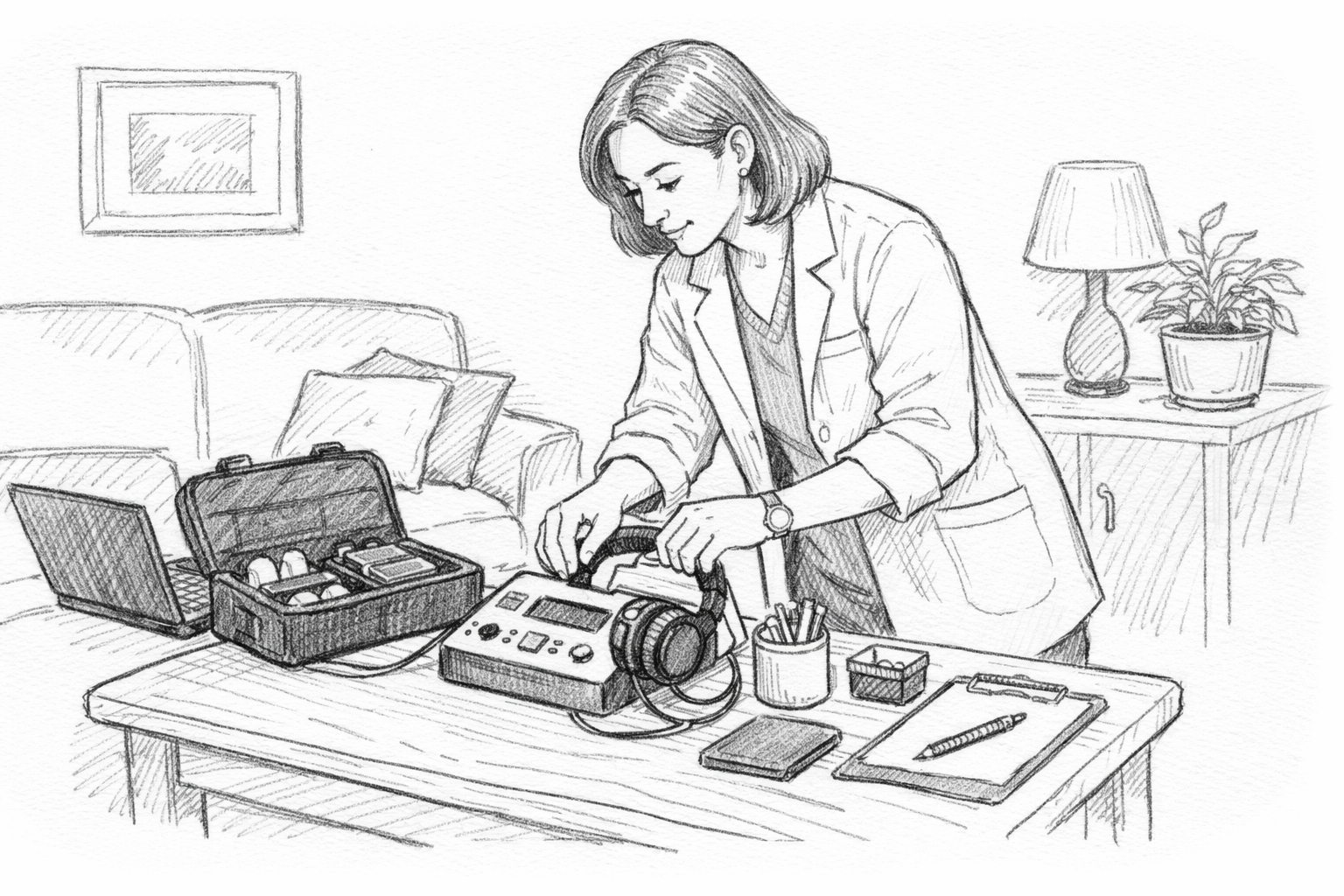
Home hearing care is a service where a qualified audiologist visits you at home to provide hearing-related support.
This can include:
- Hearing tests at home
- Earwax removal
- Hearing aid fitting and adjustment
- Ongoing aftercare
The service is designed to mirror clinic-based care, but in a more familiar and comfortable environment.
Why Home Hearing Care Is Increasing in Birmingham

In recent years, more people across Birmingham have chosen home-based hearing services.
There are several reasons for this.
Convenience
Travelling across Birmingham, particularly for older adults or those with mobility concerns, can be challenging.
Home visits remove the need for:
- Transport arrangements
- Waiting rooms
- Multiple appointments
Comfort and Familiarity
Being assessed at home allows individuals to feel more relaxed.
This often leads to:
- Clearer communication
- More accurate understanding of hearing needs
- Reduced anxiety
Personalised Care
Home visits allow audiologists to:
- Understand your real environment
- Assess how you hear in everyday settings
- Tailor recommendations more effectively
Family Involvement
Family members can be present during the appointment, helping to:
- Provide support
- Ask questions
- Understand recommendations
Who Can Benefit from Home Hearing Care?

Home hearing care is suitable for a wide range of individuals.
Older Adults
Many older residents in Birmingham benefit from:
- Reduced need for travel
- Familiar surroundings
- Slower, more comfortable pace
People with Mobility Difficulties
For those who find it difficult to attend clinics, home visits provide practical access to care.
Care Home Residents
Audiology services can be delivered directly within care homes, supporting residents without disruption.
Individuals Seeking Convenience
Even those without mobility concerns may prefer the ease of home-based appointments.
What Services Are Available at Home?
Home hearing care is not limited to testing.
It provides a complete support system.
Hearing Tests at Home
A full hearing assessment carried out using portable equipment.
Earwax Removal
Safe and effective removal of excess earwax, often using microsuction.
Hearing Aid Fitting
Devices can be fitted and adjusted during the home visit.
Ongoing Aftercare
Follow-up visits ensure:
- Devices remain comfortable
- Hearing levels are monitored
- Adjustments are made as needed
How a Home Hearing Test Works

A home hearing test is structured, but calm and flexible.
Step 1: Initial Discussion
The audiologist will begin with a conversation about:
- Hearing concerns
- Daily listening environments
- Any previous hearing history
This helps guide the assessment.
Step 2: Ear Examination
The ears are checked for:
- Earwax build-up
- Blockages
- General ear health
In some cases, wax may need to be removed before testing.
Step 3: Hearing Assessment
You will listen to:
- A range of tones
- Speech-based sounds
The process is simple and non-invasive.
Step 4: Results Explained Clearly
The audiologist will explain:
- Your hearing levels
- Whether support is needed
- Suitable options
There is no pressure to proceed.
Benefits of Hearing Tests at Home
Home-based assessments offer several advantages.
More Accurate Real-Life Insight
Testing in your own environment helps identify how hearing affects daily life.
Reduced Stress
Familiar surroundings create a more relaxed experience.
Flexible Scheduling
Appointments can be arranged at convenient times.
Improved Communication
You are more likely to:
- Feel comfortable asking questions
- Understand the process clearly
Earwax Removal at Home
Earwax build-up is a common cause of hearing difficulty.
In many cases, hearing improves immediately after removal.
Signs You May Need Earwax Removal
- Reduced hearing
- Feeling of blockage
- Muffled sounds
- Itching or discomfort
How Removal Works
Modern earwax removal typically involves:
- Microsuction (a gentle suction method)
- Safe, controlled procedure
- Minimal discomfort
Hearing Aids at Home: What to Expect
If hearing support is recommended, hearing aids can be provided during a home visit.
Fitting Process
- Devices are adjusted to your hearing levels
- Comfort is prioritised
- Clear instructions are provided
Ongoing Support
Follow-up visits ensure:
- Devices remain effective
- Adjustments are made if needed
- Questions are addressed
Choosing the Right Hearing Support in Birmingham
There are several options available locally.
NHS Services
- Free hearing aids
- Referral required
- May involve waiting times
Private Home Hearing Care
- Faster access
- Home-based appointments
- Wider choice of devices
- More personalised support
The right option depends on individual preference and circumstances.
Common Concerns About Home Hearing Care
“Is it as accurate as a clinic test?”
Yes. Portable equipment provides reliable results.
“Will it take longer?”
Appointments are often more flexible and paced appropriately.
“Do I need hearing aids straight away?”
Not necessarily. The focus is on understanding first.
“Is it suitable for elderly patients?”
Yes. Home care is often the most comfortable option.
Supporting a Family Member
If you are arranging care for someone else:
- Choose a calm time for the appointment
- Be present if possible
- Encourage without pressure
Support should feel natural, not forced.
Communication Tips While Awaiting Support
If hearing changes are present:
Speak Clearly
- Face the person
- Use natural tone
Reduce Background Noise
- Turn off television when speaking
Be Patient
Allow time for responses.
Frequently Asked Questions
How do I book a home hearing test in Birmingham?
You can contact a local home hearing care provider directly to arrange an appointment.
How long does a visit take?
Typically between 45 and 90 minutes.
Is earwax removal included?
Often, yes — depending on the provider.
Are hearing aids expensive?
There are a range of options, including affordable solutions.
Can care homes arrange visits?
Yes. Many providers offer services directly to care homes.
Is follow-up support available?
Yes. Ongoing care is usually part of the service.
Final Thoughts
Home hearing care in Birmingham offers a simple, practical approach to hearing support.
It removes barriers.
It reduces stress.
It allows care to take place where it matters most in a familiar environment.
Hearing changes are common.
Understanding them does not need to be complicated.
With the right approach, support becomes:
- Clear
- Comfortable
- Appropriate
Not urgent.
Not overwhelming.
Just considered care, delivered at home.
For appointment information rather than general guidance, see hearing tests in Birmingham. Check current postcode coverage before arranging a visit.
What a home hearing assessment can clarify
A hearing assessment connects everyday listening difficulties with measured results and practical next steps.
| Part of the visit | What it explores | Why it matters |
|---|---|---|
| Conversation and history | Changes, priorities and listening situations | Keeps the assessment relevant to everyday life |
| Ear examination | Visible wax and the condition of the outer ear | Helps identify whether another step is needed first |
| Appropriate hearing tests | Responses to sounds across useful frequencies | Provides results that can be explained and discussed |
Would a hearing assessment help?
Explore private hearing tests carried out at home, with results explained clearly.
View Birmingham hearing tests →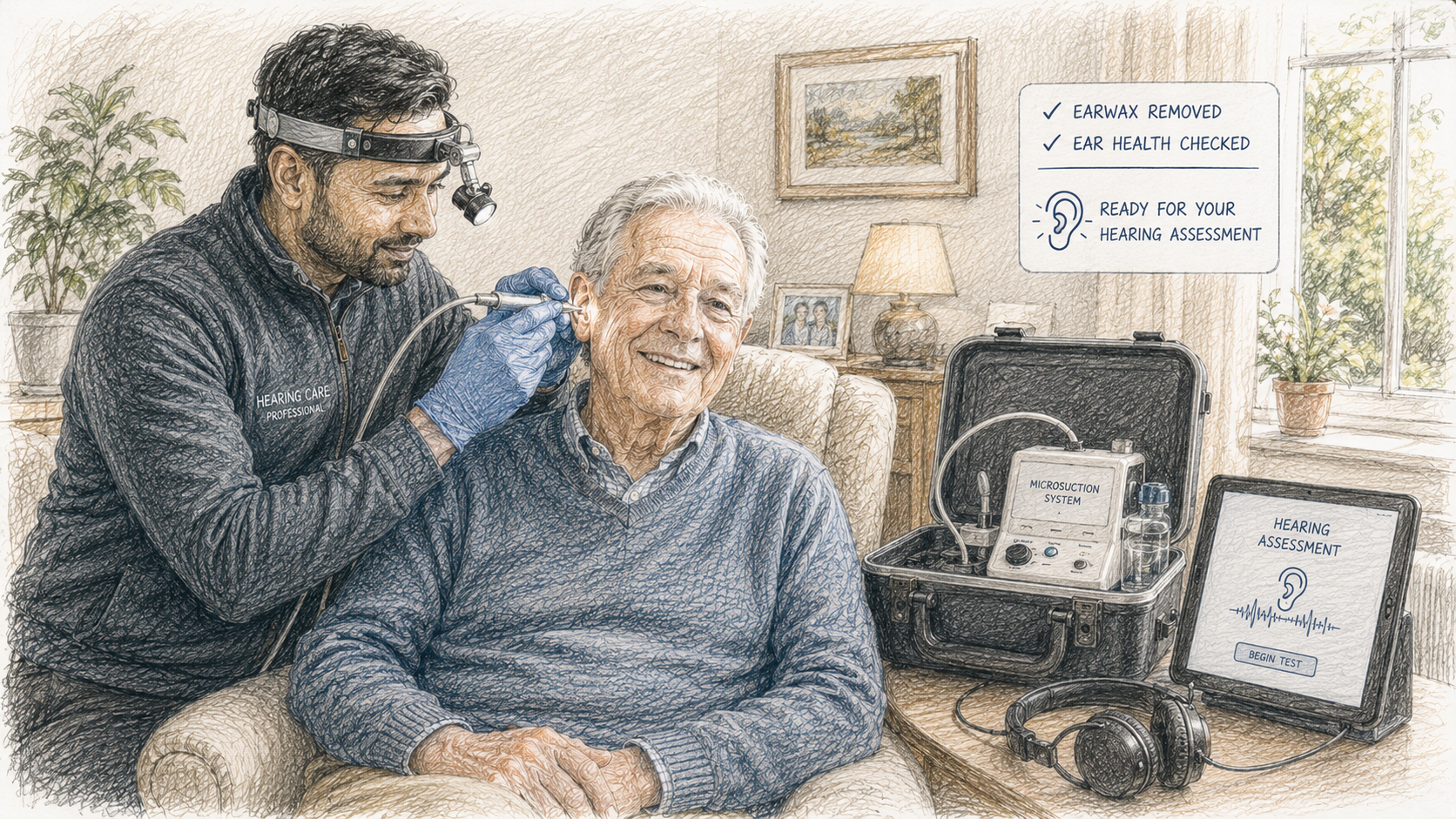 Hearing Test
 Hearing Test
 Hearing Test