

In brief
Understand why hearing and balance symptoms should be discussed together, what to tell your clinician and when to seek medical advice.
Key takeaways
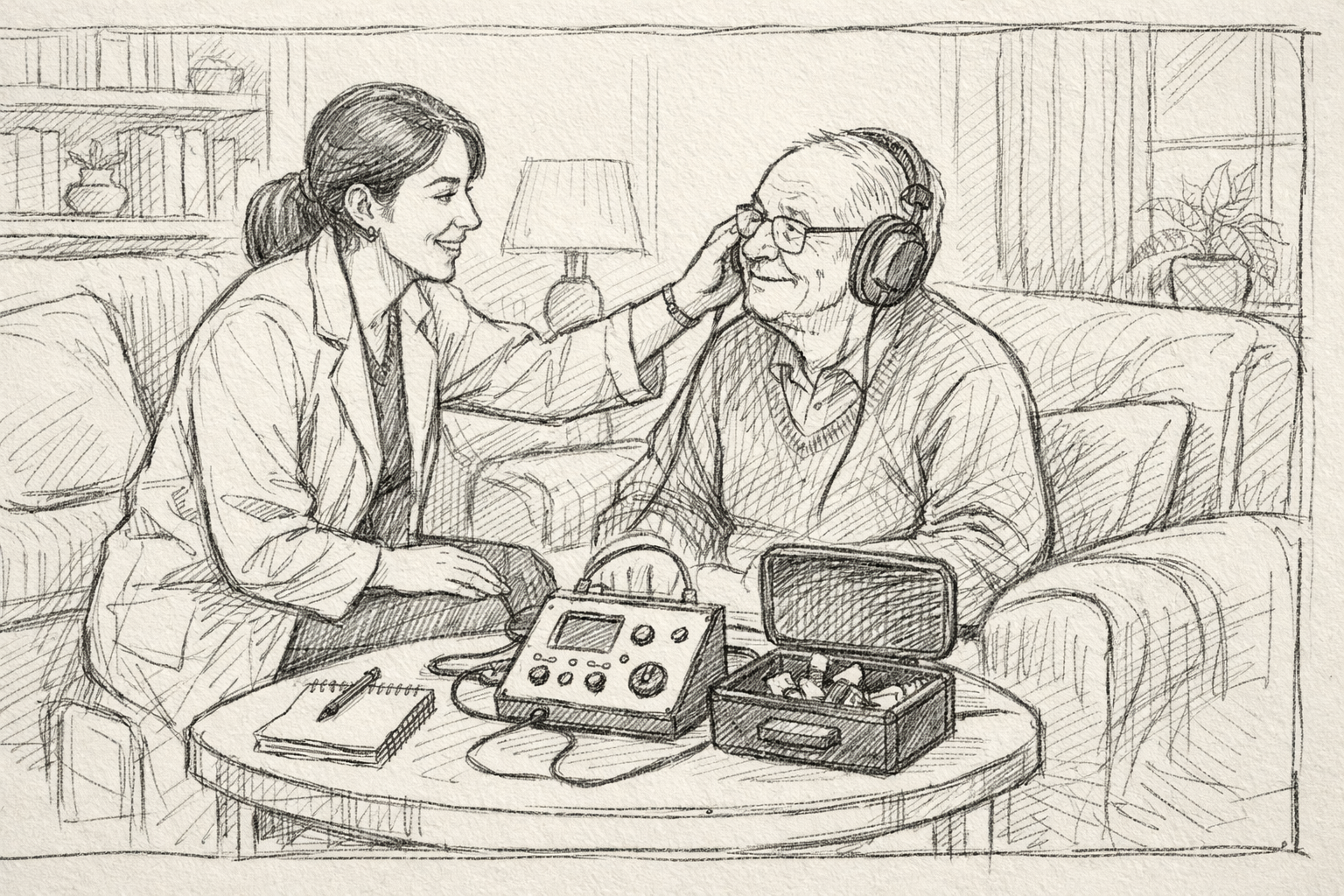
- A home hearing assessment considers the listening situations that matter to you.
- Your ears are checked before the hearing tests begin.
- Results and practical next steps are explained during the appointment.
How this guide answers your question
Use these points to move from the concern you noticed to a sensible next step.
Hearing and Balance Symptoms: What to Discuss at an AssessmentIt's well known that hearing loss makes communication difficult but did you know it can also undermine your sense of balance and spatial awareness? For many, untreated hearing loss increases the risk of stumbling or falling sometimes with serious consequences.
At Hazelwood Hearcare, we serve communities across the Midlands Leamington Spa, Mount Sorrel, Loughborough, Derby, Matlock, Crick, Rugby, Daventry, and beyond with holistic care that connects hearing and balance. This guide explains why these senses are intertwined and what you can do to protect both.
1. The Inner Ear: Where Hearing and Balance Meet
Your inner ear called the labyrinth is responsible for two vital functions:
- Hearing: via the cochlea, which transforms sound waves into nerve signals
- Balance: via the vestibular system (semicircular canals and vestibule), which detects head movement and orientation
These systems share common structures, fluids, and the vestibulocochlear nerve (cranial nerve VIII), so damage to one often impacts the other .
2. How Hearing Enhances Balance
2.1 Environmental Auditory Cues
Our ears pick up ambient sounds like footfalls and spatial echoes, helping us navigate. When sound input is impaired, the brain loses vital context for body positioning .
2.2 Cognitive Load and Dual‑Task Interference
When hearing is difficult, the brain allocates more resources to decode speech and ignore noise. This leaves less available for balance control, increasing fall risk
2.3 Gait and Posture Changes
People with hearing loss often develop altered head and body postures to focus on what they can hear. Over time, this can cause imbalance and impaired coordination .
2.4 Weakness from Reduced Activity
Hearing loss often discourages social and physical activity. Less movement means weaker muscles and coordination key ingredients for stable balance .
3. The Evidence: Hearing Loss Increases Fall Risk
- People with even slight hearing loss have up to 3× higher fall risk than those with normal hearing
- Systematic reviews show that individuals with hearing impairment perform worse on balance tests, particularly under conditions emphasizing spatial awareness
4. Children Are Not Exempt
Early studies reveal that order hearing loss and especially sensorineural hearing loss strongly correlates with balance disorders and delayed motor skills in children .
This highlights the importance of pediatric hearing screenings something we advocate strongly at Hazelwood Hearcare.
5. Diagnosing Hearing-Related Balance Issues
- Comprehensive Hearing Tests: Audiometry and speech-in-noise testing
- Vestibular Assessment: Including ENG, VEMP, VHIT, and caloric testing
- Balance Analysis: Gait, tandem stance, and Romberg assessments
- Cognitive-Dual Task Screening: To uncover hidden deficits that strain mobility
6. Treatment & Management Strategies at Hazelwood
6.1 Advanced Hearing Solutions
Hearing aids, CROS devices, and bone-anchored systems can restore auditory input vital for balance .
6.2 Vestibular Rehabilitation Therapy
Tailored exercises aim to re-train balance reflexes and build physical confidence.
6.3 Fall Prevention Best Practices
Home audits, strength training, visual aids all combined in a multidisciplinary prevention plan.
6.4 Pediatric Support
Early interventions for children including physiotherapy and tailored education can correct balance delays and reduce injury risk.
8. Regional Impact
- Leamington Spa & Rugby: Our Warwickshire hub serves clients with both rehab and diagnostics
- Mount Sorrel & Loughborough: Home visits available for elderly or mobility-limited residents
- Derby & Matlock: Our Derbyshire centre features vestibular testing and physiotherapy
- Crick & Daventry: Northamptonshire small-town clinics support personalised care plans
9. Prevention: What You Can Do Right Now
- Book annual hearing checks, starting from age 55
- Wear ear protection in noisy environments
- Stay physically active—balance improves with use
- Seek help promptly if tinnitus, vertigo, or hearing changes occur
10. FAQs
Q: Can treating hearing loss reduce falls?
Yes, hearing aids significantly reduce fall risk by restoring balance cues .
Q: My dizziness is mild is that still a concern?
Absolutely. Early vestibular issues can escalate testing now can prevent future incidents.
Q: What about children?
Yes—vestibular screening is essential for children with hearing loss to support proper motor development
11. Ready to Take the First Step?
If hearing loss or dizziness is impacting your life or that of a loved one don’t wait:
📞 Call Hazelwood Hearcare Today to book a joint hearing and balance evaluation.
🗓️ Book Online at your nearest Midlands clinic:
- Warwickshire (Leamington Spa, Rugby)
- Leicestershire (Mount Sorrel, Loughborough)
- Derbyshire (Derby, Matlock)
- Northamptonshire (Crick, Daventry)
12. Final Takeaway
Hearing isn't just about clarity in conversations—it's essential for physical stability. Impaired hearing disrupts balance systems, increases fall risk, and affects your quality of life. Hazelwood Hearcare offers comprehensive, regionally accessible solutions that bring together hearing care and balance support.
For appointment information rather than general guidance, see Arrange a home hearing test. Check current postcode coverage before arranging a visit.
What a home hearing assessment can clarify
A hearing assessment connects everyday listening difficulties with measured results and practical next steps.
| Part of the visit | What it explores | Why it matters |
|---|---|---|
| Conversation and history | Changes, priorities and listening situations | Keeps the assessment relevant to everyday life |
| Ear examination | Visible wax and the condition of the outer ear | Helps identify whether another step is needed first |
| Appropriate hearing tests | Responses to sounds across useful frequencies | Provides results that can be explained and discussed |
Would a hearing assessment help?
Explore private hearing tests carried out at home, with results explained clearly.
Arrange a home hearing test → Hearing Test
 Hearing Test
 Hearing Test