

In brief
Woke up with sudden hearing loss or muffled hearing? Learn what causes SSHL, symptoms to watch for, and why urgent treatment within 48 hours matters.
Key takeaways
- A home hearing assessment considers the listening situations that matter to you.
- Your ears are checked before the hearing tests begin.
- Results and practical next steps are explained during the appointment.
How this guide answers your question
Use these points to move from the concern you noticed to a sensible next step.
Why Sudden Hearing Loss Happens and What To Do NextSudden hearing loss, especially when one morning you wake up and can’t hear clearly, can be terrifying. It’s not just an inconvenience—it’s often a warning sign that requires urgent attention. In this comprehensive guide, we’ll explain:
- What sudden sensorineural hearing loss (SSHL) is
- Why it happens
- How to recognize warning signs
- Immediate treatments that make a difference
- Long-term solutions and prevention
- Recommendations for residents in Leamington Spa, Mount Sorrel, Loughborough, Derby, Matlock, Crick, Rugby, and Daventry
1. What Is Sudden Hearing Loss?
Sudden hearing loss (often called sudden deafness or SSHL) refers to a rapid loss of hearing over minutes to hours, typically in one ear. According to the NIDCD, it results from issues in the inner ear's sensory cells or auditory nerve
Key Characteristics:
- Rapid onset minutes to days
- Usually unilateral (one ear)
- Associated symptoms: fullness in the ear, tinnitus, dizziness
2. Common Symptoms to Watch For
If you experience any of the following, seek medical attention immediately:
- Noticeable drop in hearing in one ear
- Ear feels "full" or clogged
- Ringing (tinnitus) or buzzing
- Dizziness or balance issues
- Sounds seem muffled or distant
Most cases occur suddenly often when waking up, using a phone, or experiencing a pop before hearing fades
3. Core Causes of Sudden Hearing Loss
Sudden hearing loss can stem from a range of issues:
a) Idiopathic (Unknown)
Up to 85% of cases have no identified cause .
b) Viral Infections
Viruses such as CMV, rubella, mumps, or COVID-19 can inflame inner ear structures
c) Vascular Problems
Reduced blood flow to the inner ear can cause damage .
d) Trauma or Pressure Injury
Acoustic trauma, head injury, or barotrauma (e.g., diving or flying) can disrupt hearing suddenly
e) Autoimmune Inner Ear Disease
Immune attacks on inner ear tissues can cause episodes of sudden hearing loss .
f) Ménière's Disease
Characterized by vertigo, tinnitus, and fluctuating hearing loss, sudden dips can occur .
4. Types of Sudden Hearing Loss
Sensorineural Hearing Loss (SSHL)
Most common type caused by nerve or inner ear damage. Treated aggressively due to high urgency
Conductive Sudden Loss
Much less common; results from blockages like earwax, fluid, or eardrum issues
Mixed Loss
Combination of sudden inner-ear damage and middle-ear blockages
5. Diagnosing Sudden Hearing Loss
Swift diagnosis is critical. Expect:
- Pure-tone audiometry – To confirm ≥30 dB loss in 3 contiguous frequencies
- Physical ear exam – Detect blockages or structural damage
- Imaging (MRI/CT) – To rule out tumors or nerve issues, especially with unilateral loss
- Blood tests – For underlying conditions (e.g., autoimmune markers)
6. Effective Treatments You Need to Know
Corticosteroids
First-line therapy to reduce inflammation and aid recovery . Route options: oral or intratympanic injection.
Hyperbaric Oxygen Therapy (HBOT)
Used in specific trauma or severe cases to improve inner ear oxygenation .
Treat Underlying Causes
Earwax removal, antibiotics for infections, pressure equalization, or surgery for structural issues .
Hearing Rehabilitation
If hearing doesn't fully recover, options include:
- Modern hearing aids
- Cochlear implants for deep loss
- Tinnitus and balance therapy support
7. Why Speed Matters
Early treatment delivers the best results:
- Within 48 hours, steroid therapy shows significantly higher recovery chances
- Delay sharply lowers potential for hearing restoration
8. Long-Term Outlook & Follow-Up
- Spontaneous recovery occurs in ~50% of untreated cases within two weeks
- Persistent loss may require devices and rehabilitation
- Follow-up audiometry is vital to monitor recovery
9. Preventive Tips
- Use ear protection against loud noise and impulse sounds
- Manage chronic conditions like diabetes and hypertension
- Avoid ototoxic drugs when possible; monitor hearing during meds
- Treat ear infections promptly
- Equalize ear pressure during air travel or diving
10. Hearing Care in the Midlands - Hazelwood Hearcare
Residents in Leamington Spa, Mount Sorrel, Loughborough, Derby, Matlock, Crick, Rugby, or Daventry: sudden hearing loss signals a medical emergency.
📞 Call Hazelwood Hearcare now for urgent diagnostics and treatment
🗓️ Book appointments at your nearest Midlands clinic via our county hubs:
- Warwickshire Hub – Leamington Spa, Rugby
- Leicestershire Hub – Loughborough, Mount Sorrel
- Northamptonshire Hub – Crick, Daventry
- Derbyshire Services – Derby, Matlock
We offer:
- Immediate audiometry tests
- ENT referrals, steroid therapy, HBOT support
- Hearing rehabilitation and device fitting
- Tinnitus and balance aid
11. FAQs on Sudden Hearing Loss
Q: Is sudden hearing loss reversible?
A: Recovery depends on the cause and timing; early treatment improves outcomes but complete recovery isn’t guaranteed
Q: What if I only noticed partial hearing loss?
A: Even mild symptoms should trigger immediate evaluation—early intervention is key.
Q: Can stress cause sudden hearing loss?
A: While stress is not a direct cause, it may worsen underlying conditions leading to SSHL.
12. Final Takeaway
Sudden hearing loss is a medical emergency. Know the symptoms—muffled hearing, tinnitus, fullness, dizziness—and act fast. With timely treatment, your chances of recovery are highest. Hazelwood Hearcare is here to support you across the Midlands.
If you experience sudden hearing loss:
- Don’t wait seek help within 48 hours
- Call Hazelwood Hearcare for urgent assistance
- Book at your local clinic via Warwickshire, Leicestershire, or Northamptonshire hubs
For appointment information rather than general guidance, see Arrange a home hearing test. Check current postcode coverage before arranging a visit.
What a home hearing assessment can clarify
A hearing assessment connects everyday listening difficulties with measured results and practical next steps.
| Part of the visit | What it explores | Why it matters |
|---|---|---|
| Conversation and history | Changes, priorities and listening situations | Keeps the assessment relevant to everyday life |
| Ear examination | Visible wax and the condition of the outer ear | Helps identify whether another step is needed first |
| Appropriate hearing tests | Responses to sounds across useful frequencies | Provides results that can be explained and discussed |
Would a hearing assessment help?
Explore private hearing tests carried out at home, with results explained clearly.
Arrange a home hearing test →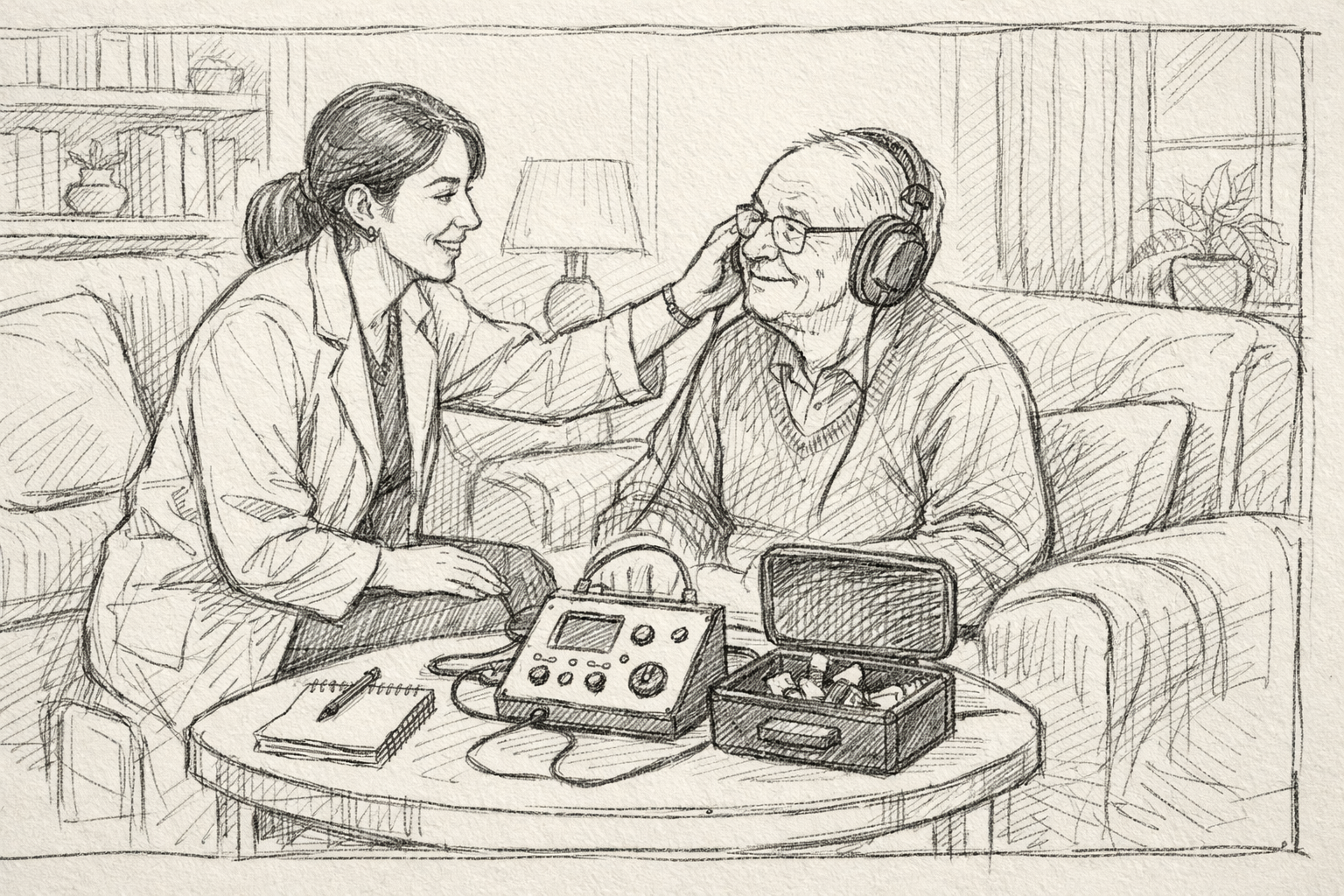 Hearing Test
 Hearing Test
 Hearing Test