
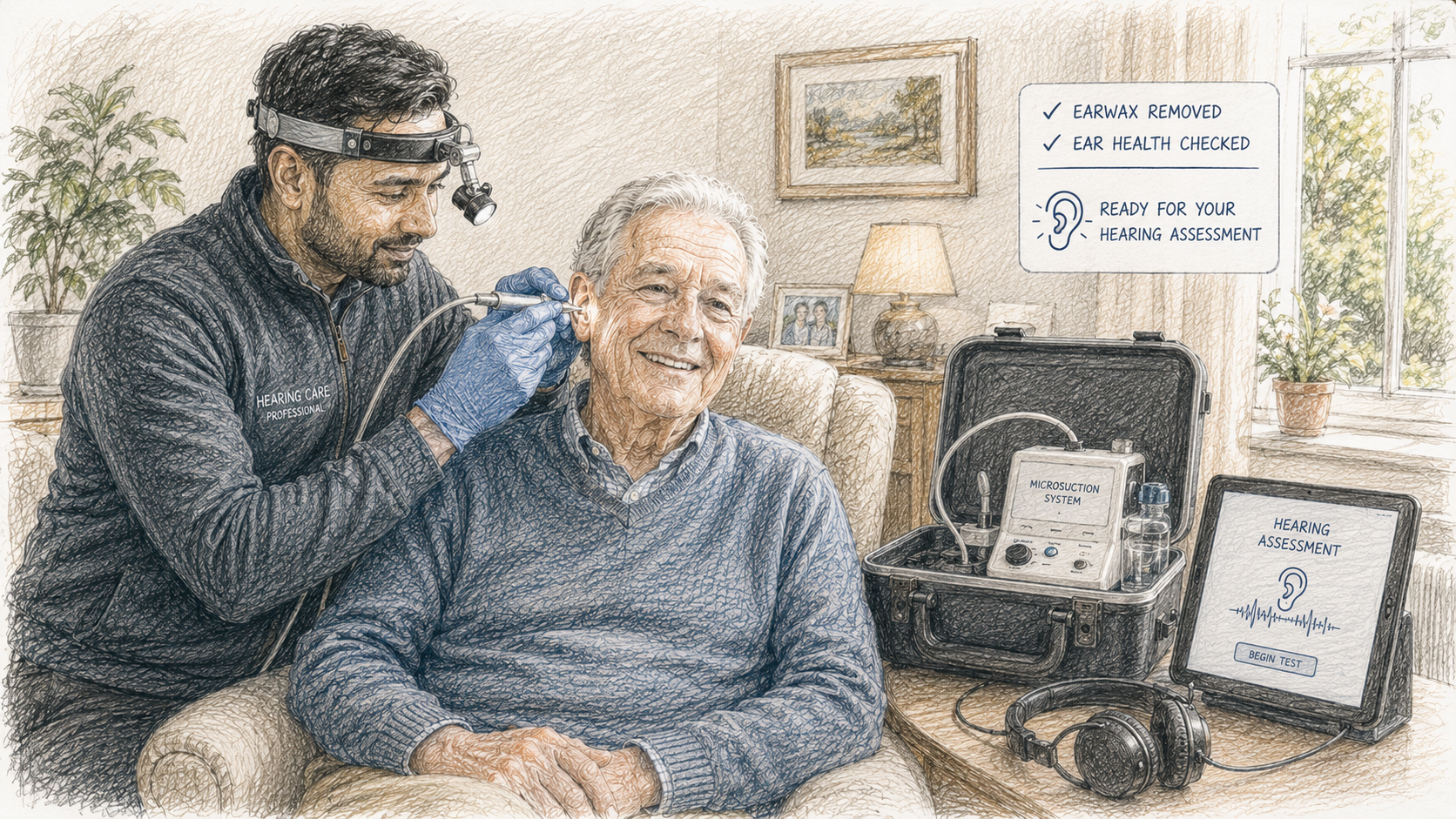
Many people believe earwax removal is the end of their hearing journey.
In reality, it is often just the beginning.
Removing impacted earwax is an important first step because it restores a clear ear canal and removes one of the most common causes of temporary hearing loss. For many people, hearing improves immediately after professional earwax removal.
But what happens if your hearing still isn't as clear as you expected?
Or what if your hearing improves, but conversations still feel difficult?
This is where a professional hearing test becomes incredibly valuable.
Once the ear canal is free from earwax, your hearing can be assessed accurately. The results provide a much clearer understanding of whether reduced hearing was caused entirely by wax or whether an underlying hearing loss is also present.
This guide explains why hearing tests after earwax removal are so important and how they can help you make informed decisions about your hearing health.
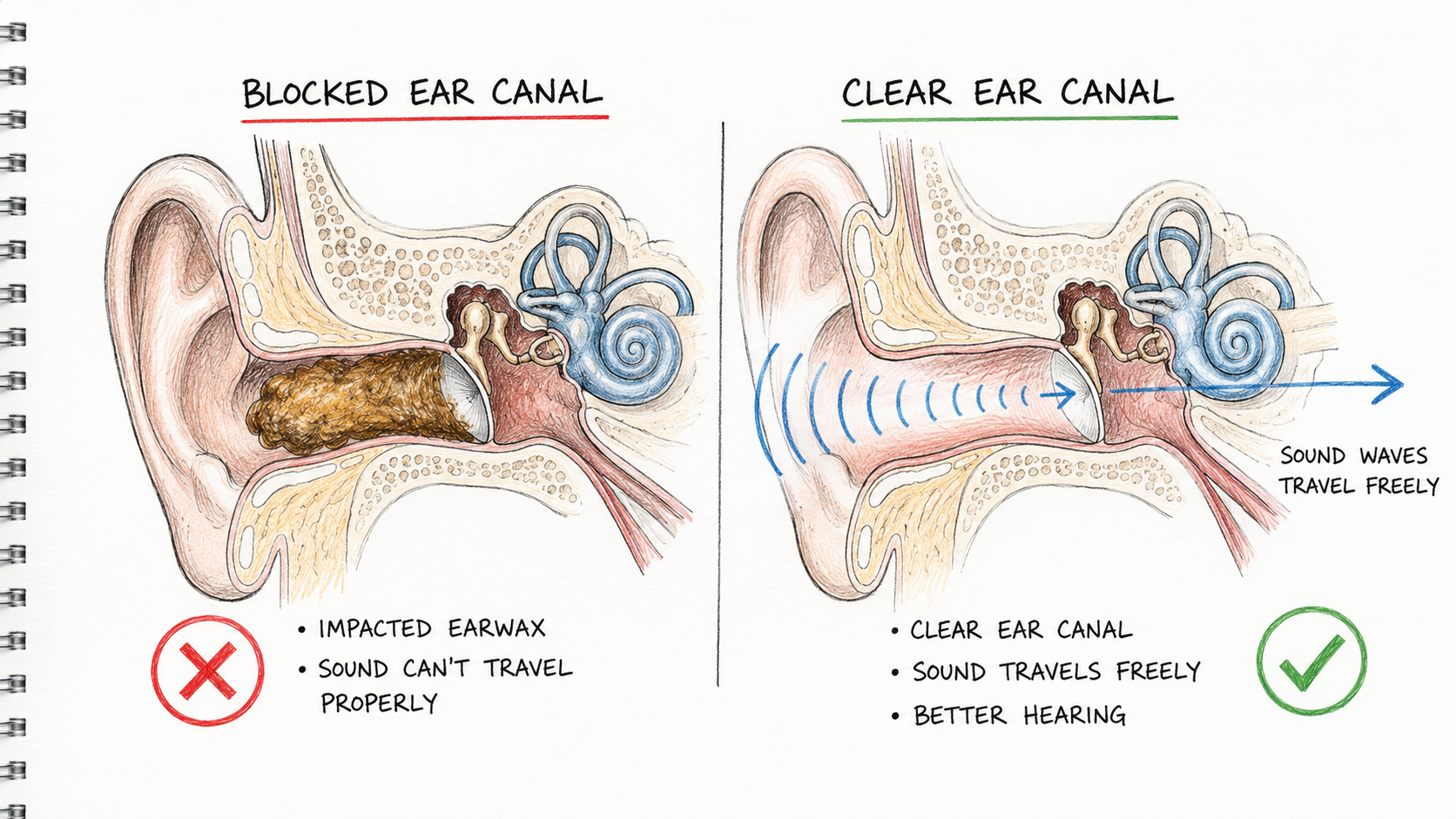
Earwax acts like a physical barrier.
When enough wax builds inside the ear canal, sound simply cannot travel as efficiently to the eardrum.
The result is reduced hearing that often feels similar to permanent hearing loss.
Because of this, it becomes impossible to know exactly how well your ears are hearing until the blockage has been removed.
Professional earwax removal removes that uncertainty.
It creates a clear pathway for sound and allows hearing to be measured accurately.
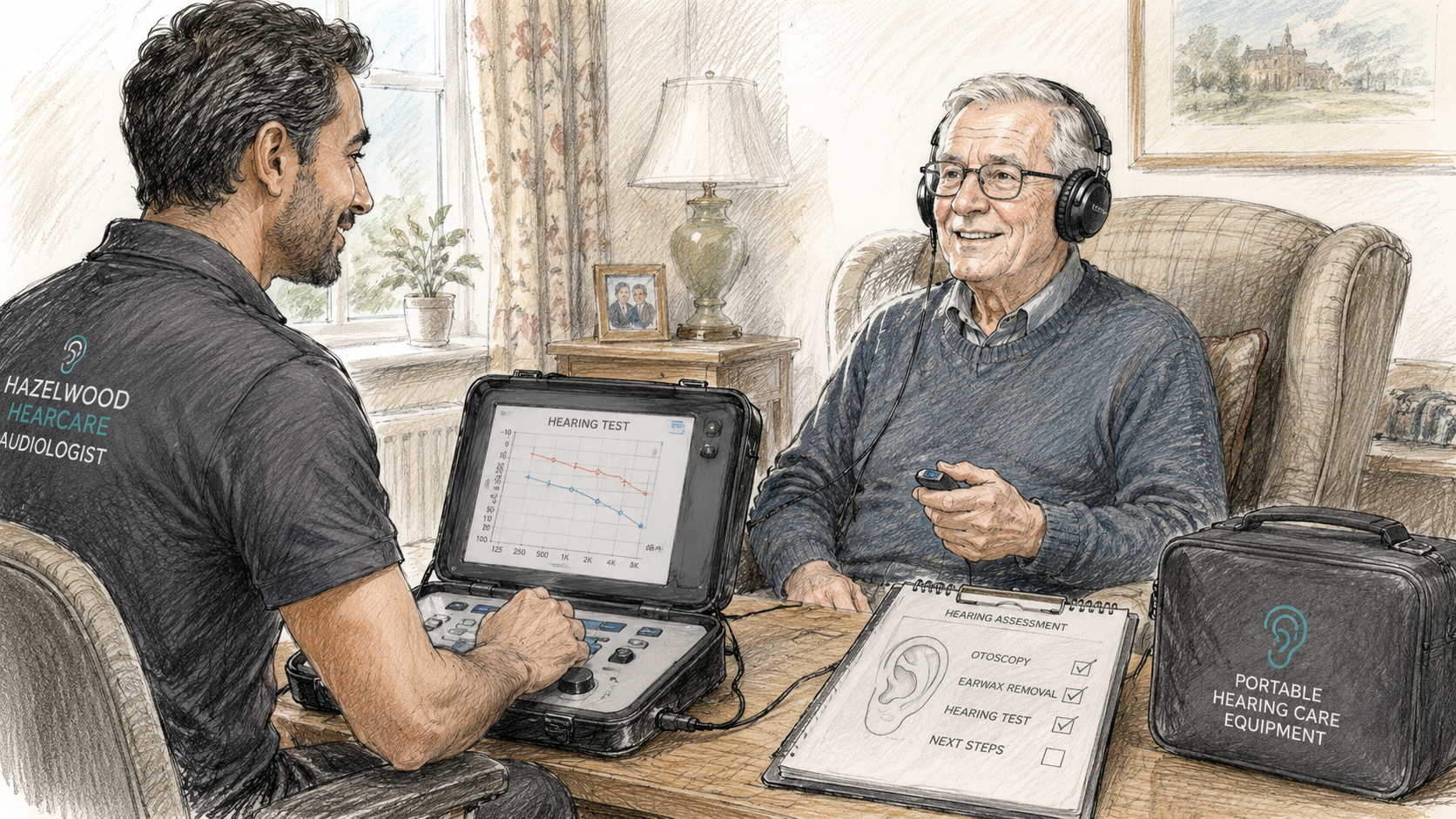
A hearing assessment measures how well sounds travel through your hearing system.
If the ear canal is blocked with impacted earwax, those results may not reflect your true hearing ability.
Instead, the test measures hearing through an obstruction.
That is why audiologists will often recommend removing significant earwax before carrying out a full hearing assessment.
Only once the ear canal is clear can hearing thresholds be measured reliably.
Many patients notice an immediate improvement in hearing.
Voices sound clearer.
Television volume becomes lower.
Everyday sounds feel sharper.
For some people, this is all that is needed.
Their hearing returns to normal because earwax was the only issue.
For others, hearing improves but still does not feel completely right.
This does not necessarily mean something is wrong.
It simply means further assessment may be worthwhile.
One reason hearing may still feel reduced after earwax removal is age-related hearing loss.
This develops gradually over many years.
Because it happens slowly, many people adapt without noticing.
They simply assume everyone around them is mumbling.
Or that noisy environments have become more difficult for everyone.
In reality, hearing may have changed long before earwax became part of the picture.
Removing the wax simply reveals what your hearing is actually doing.
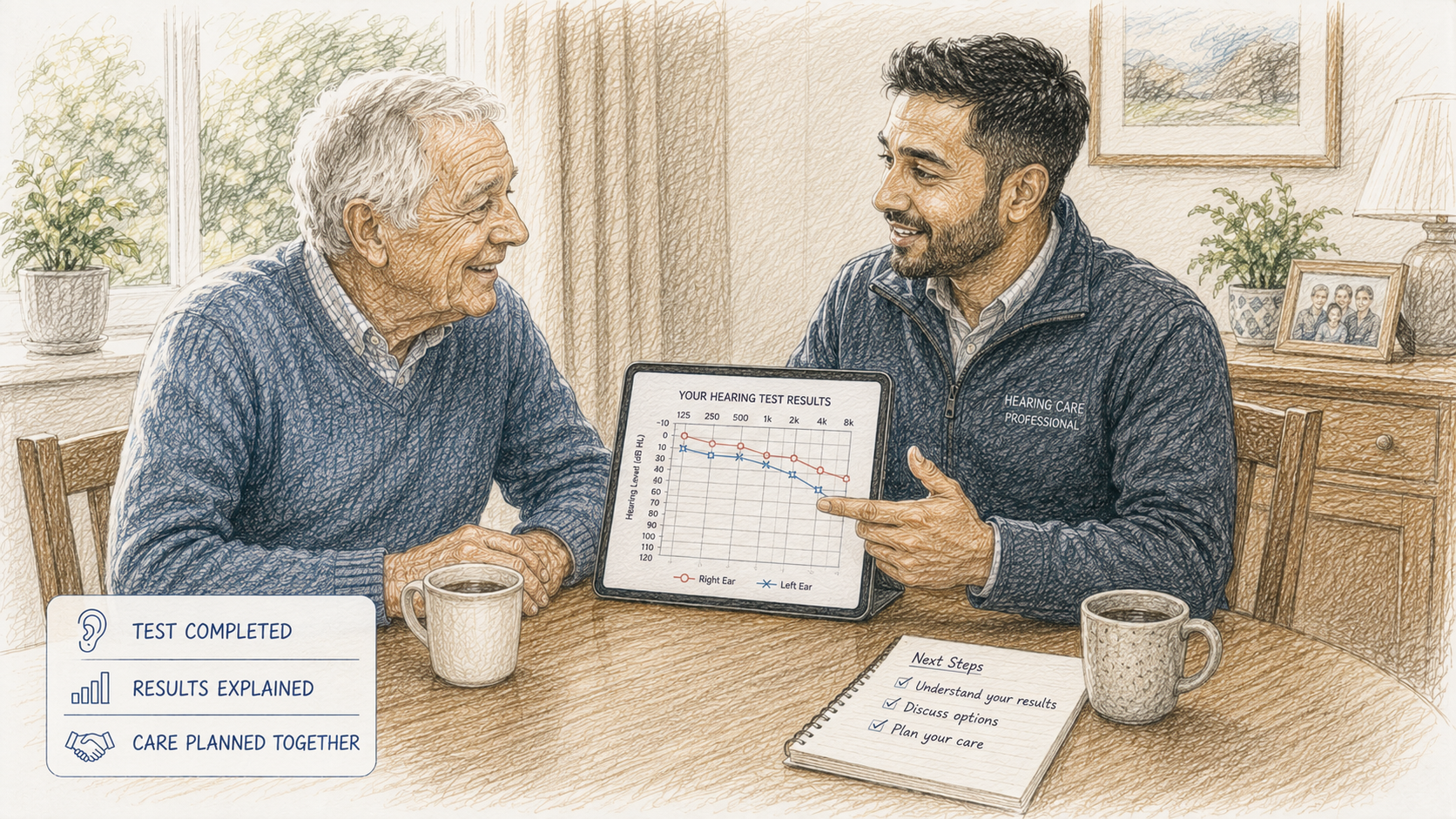
One of the biggest benefits of a hearing assessment is certainty.
Instead of guessing whether your hearing is normal, you receive accurate information.
The hearing test shows exactly how well different sounds are being heard.
It identifies whether hearing loss is present.
It measures the type and degree of hearing loss if one exists.
This allows future decisions to be based on evidence rather than assumptions.
Many people delay hearing tests because they assume hearing loss is simply part of getting older.
While hearing changes are common with age, identifying them early provides more options.
Early support can improve communication before hearing difficulties begin affecting confidence, relationships or independence.
The sooner hearing is understood, the easier it becomes to manage.
One reason hearing loss frequently goes unnoticed is because it develops slowly.
The brain adapts.
Family members often notice first.
You may find yourself asking people to repeat themselves more often.
Television volume gradually increases.
Telephone conversations become harder.
Background noise becomes frustrating.
These changes are easy to dismiss until a professional hearing assessment measures them accurately.
If a hearing test identifies hearing loss, many people immediately worry about hearing aids.
Modern hearing aids are nothing like those from years ago.
Today's technology is discreet, intelligent and highly personalised.
Many devices automatically adjust to different listening environments.
Some connect directly to smartphones and televisions.
Most importantly, they are programmed specifically for your hearing.
This is why an accurate hearing test is so important.
Without it, hearing aids cannot be programmed correctly.
One of the advantages of home hearing care is continuity.
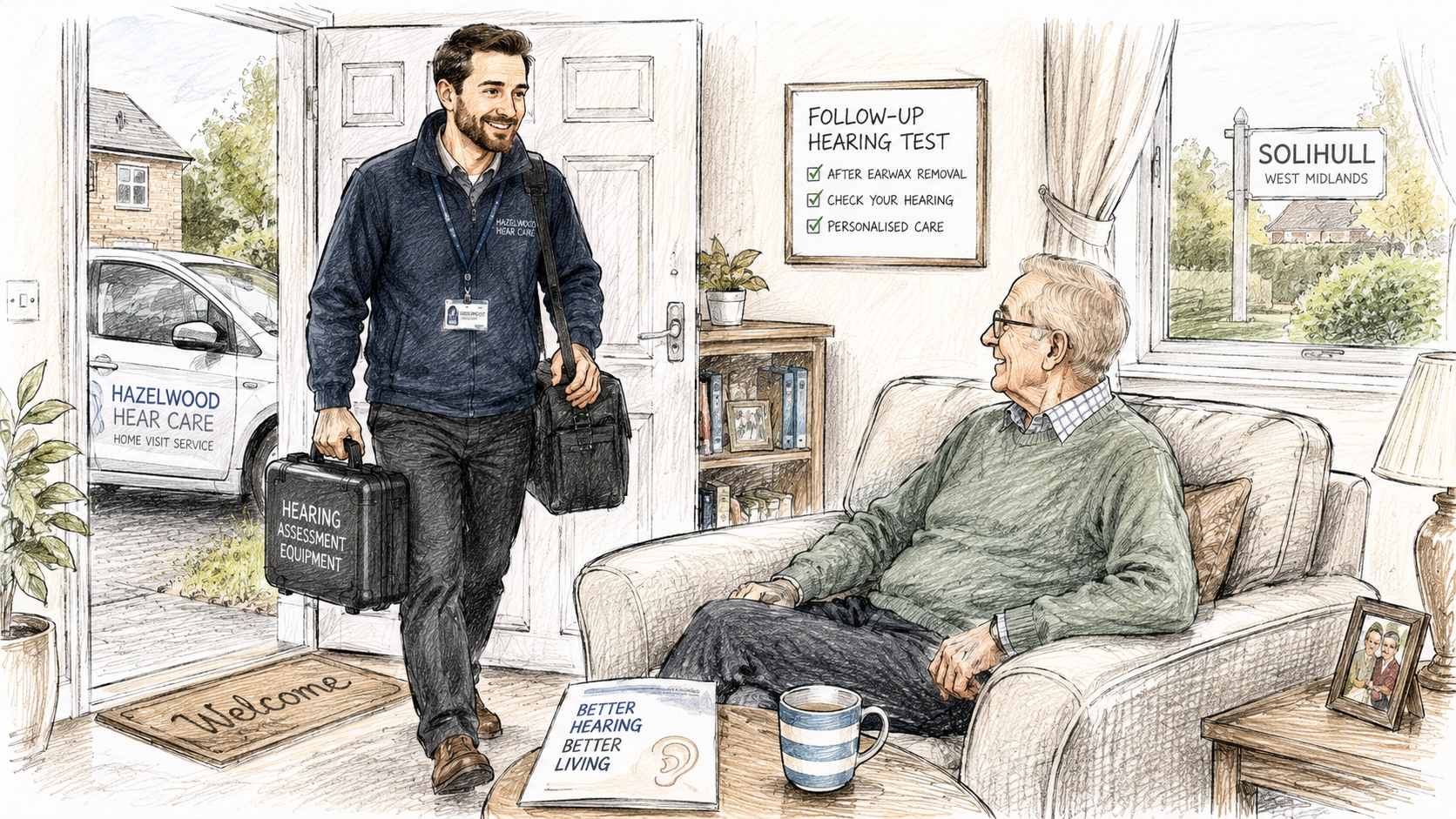
Following earwax removal, a hearing assessment can often be arranged in the comfort of your own home.
This removes unnecessary travel while allowing your hearing to be assessed in familiar surroundings.
For older adults, people with limited mobility and hearing aid users, this creates a much more relaxed experience.

Good hearing care is rarely one appointment.
It is a journey.
The journey often begins with earwax removal.
Next comes understanding your hearing through professional assessment.
If hearing loss is identified, appropriate hearing support can then be discussed.
Each stage builds on the previous one.
Rather than simply treating symptoms, the goal is to understand your hearing completely.
A hearing test is particularly worthwhile if:
Your hearing still feels reduced after earwax removal.
You regularly ask people to repeat themselves.
Television volume remains higher than others prefer.
You struggle in noisy environments.
Family members have commented on your hearing.
You simply want reassurance that your hearing is healthy.
There does not need to be a major problem before arranging a hearing assessment.
Sometimes reassurance is the best outcome.
Hearing affects almost every part of daily life.
Communication.
Relationships.
Confidence.
Safety.
Independence.
Understanding your hearing allows you to protect these areas before difficulties become more significant.
That is why hearing assessments should not be viewed as something to fear.
They are simply another part of looking after your overall health.
If your hearing does not fully improve or you simply want to understand your hearing accurately, a hearing test is often recommended once the ear canal is clear.
Yes. Impacted earwax can temporarily reduce hearing and make it difficult to identify any underlying hearing loss.
A blocked ear canal can affect hearing test accuracy. Removing earwax first provides much more reliable results.
Not always. Some people have underlying hearing loss as well as earwax build-up. A hearing test helps identify this.
Yes. Professional home hearing tests can be carried out using portable audiology equipment once the ears have been examined and cleared if necessary.
Removing earwax restores a clear pathway for sound.
But it also creates something equally important.
An opportunity.
An opportunity to understand your hearing properly.
Once the ear canal is clear, a hearing assessment provides accurate information about how well you are hearing today.
For many people, it offers reassurance.
For others, it identifies hearing loss early enough for effective support.
Either way, earwax removal should not always be viewed as the final step.
Sometimes it is simply the first step towards better hearing and better long-term hearing health.