

Hearing care should be accessible, comfortable and appropriate to the individual.
For many people in Birmingham, attending a clinic is not always the easiest option. Travel, mobility, and unfamiliar environments can all make appointments more difficult than they need to be.
Home hearing care offers a practical alternative.
It brings professional support directly into a familiar setting allowing hearing assessments, ear care and ongoing support to take place calmly, without disruption.
This guide explains:
The aim is simple: to provide clarity and reassurance.
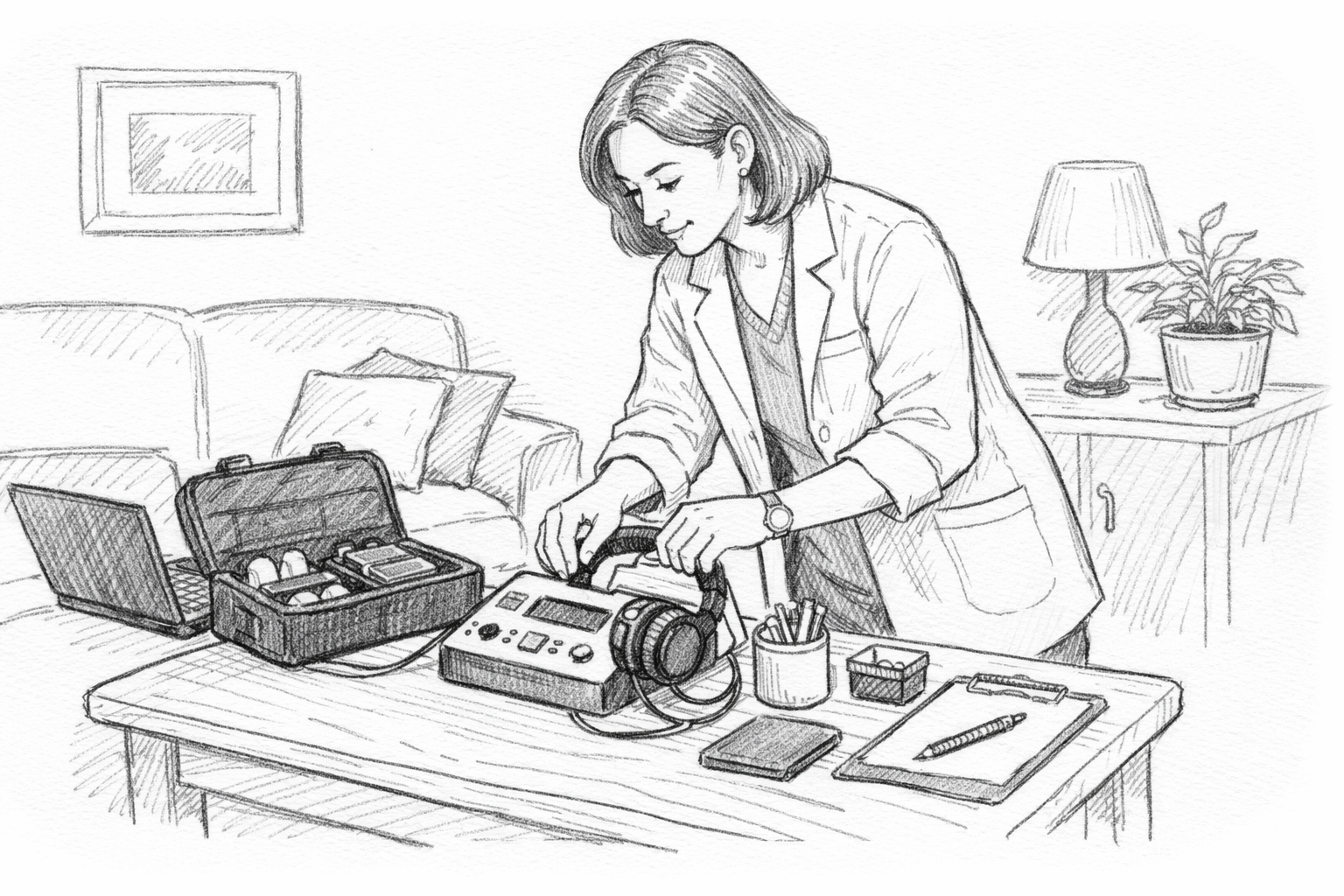
Home hearing care is a service where a qualified audiologist visits you at home to provide hearing-related support.
This can include:
The service is designed to mirror clinic-based care, but in a more familiar and comfortable environment.

In recent years, more people across Birmingham have chosen home-based hearing services.
There are several reasons for this.
Travelling across Birmingham, particularly for older adults or those with mobility concerns, can be challenging.
Home visits remove the need for:
Being assessed at home allows individuals to feel more relaxed.
This often leads to:
Home visits allow audiologists to:
Family members can be present during the appointment, helping to:

Home hearing care is suitable for a wide range of individuals.
Many older residents in Birmingham benefit from:
For those who find it difficult to attend clinics, home visits provide practical access to care.
Audiology services can be delivered directly within care homes, supporting residents without disruption.
Even those without mobility concerns may prefer the ease of home-based appointments.
Home hearing care is not limited to testing.
It provides a complete support system.
A full hearing assessment carried out using portable equipment.
Safe and effective removal of excess earwax, often using microsuction.
Devices can be fitted and adjusted during the home visit.
Follow-up visits ensure:

A home hearing test is structured, but calm and flexible.
The audiologist will begin with a conversation about:
This helps guide the assessment.
The ears are checked for:
In some cases, wax may need to be removed before testing.
You will listen to:
The process is simple and non-invasive.
The audiologist will explain:
There is no pressure to proceed.
Home-based assessments offer several advantages.
Testing in your own environment helps identify how hearing affects daily life.
Familiar surroundings create a more relaxed experience.
Appointments can be arranged at convenient times.
You are more likely to:
Earwax build-up is a common cause of hearing difficulty.
In many cases, hearing improves immediately after removal.
Modern earwax removal typically involves:
If hearing support is recommended, hearing aids can be provided during a home visit.
Ongoing Support
Follow-up visits ensure:
There are several options available locally.
The right option depends on individual preference and circumstances.
Yes. Portable equipment provides reliable results.
Appointments are often more flexible and paced appropriately.
Not necessarily. The focus is on understanding first.
Yes. Home care is often the most comfortable option.
If you are arranging care for someone else:
Support should feel natural, not forced.
If hearing changes are present:
Allow time for responses.
You can contact a local home hearing care provider directly to arrange an appointment.
Typically between 45 and 90 minutes.
Often, yes — depending on the provider.
There are a range of options, including affordable solutions.
Yes. Many providers offer services directly to care homes.
Yes. Ongoing care is usually part of the service.
Home hearing care in Birmingham offers a simple, practical approach to hearing support.
It removes barriers.
It reduces stress.
It allows care to take place where it matters most in a familiar environment.
Hearing changes are common.
Understanding them does not need to be complicated.
With the right approach, support becomes:
Not urgent.
Not overwhelming.
Just considered care, delivered at home.