
Hearing changes rarely happen suddenly.
For most people, the process is gradual. Conversations become slightly harder to follow. Background noise feels more distracting than before. Television volume increases little by little until family members begin noticing it first.
These changes are common and often develop quietly over time.
In many cases, people delay arranging a hearing test because the process feels inconvenient or unfamiliar. Travelling to a clinic may feel stressful. Waiting rooms can feel overwhelming. Some people worry about what the results might mean.
This is one reason home hearing tests in Solihull are becoming increasingly popular.
Home hearing care offers a calmer and more practical alternative. Instead of travelling to a clinic, patients receive professional hearing assessments in the comfort of their own home.
The experience feels more relaxed, more personal and often easier to understand.
This guide explains how home hearing tests work, who they help, what to expect during an appointment and why many people across Solihull now prefer hearing care delivered at home.

Hearing does not usually disappear all at once.
Most hearing changes develop gradually over months or years. Because the process is slow, many people adapt without fully realising how much their hearing has changed.
You may begin avoiding noisy environments because conversations feel tiring. You may ask people to repeat themselves more often. Some voices may sound less clear than others.
These small adjustments often become normal over time.
This is why hearing assessments are important.
They provide clarity.
They help identify whether hearing changes are present and whether support may improve communication and everyday comfort.
Across Solihull, more people are choosing home hearing tests instead of clinic appointments.
This shift is not only about convenience.
It reflects a growing preference for healthcare that feels calmer and more personal.
At home, patients are in familiar surroundings. There is no travel stress, no unfamiliar waiting area and no pressure to move quickly through an appointment.
The environment changes the experience completely.
People often feel more relaxed asking questions and discussing concerns. Family members can also be present, helping support communication and understanding throughout the assessment.
For older adults and those with mobility concerns, home visits can make hearing care significantly more accessible.
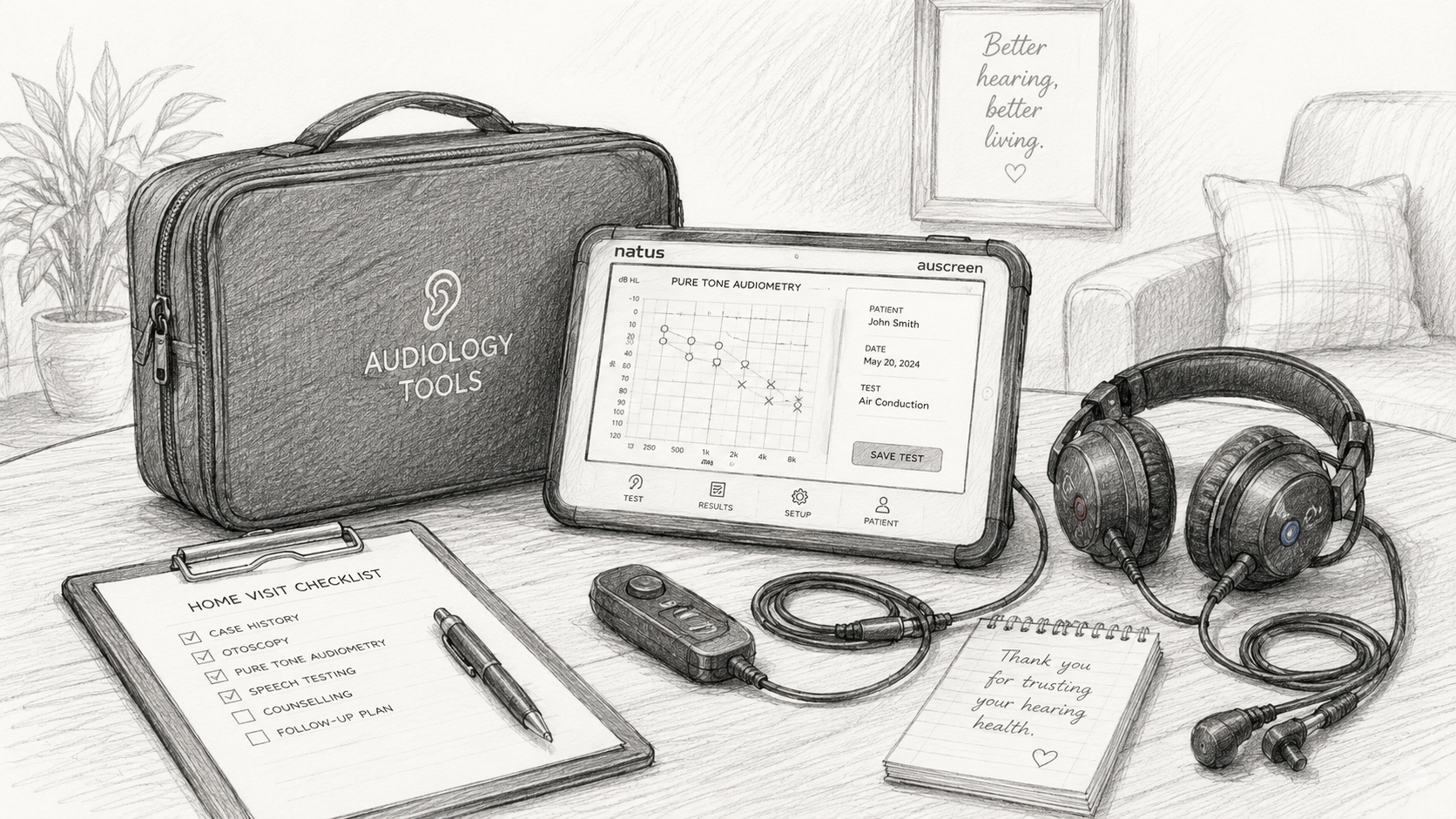
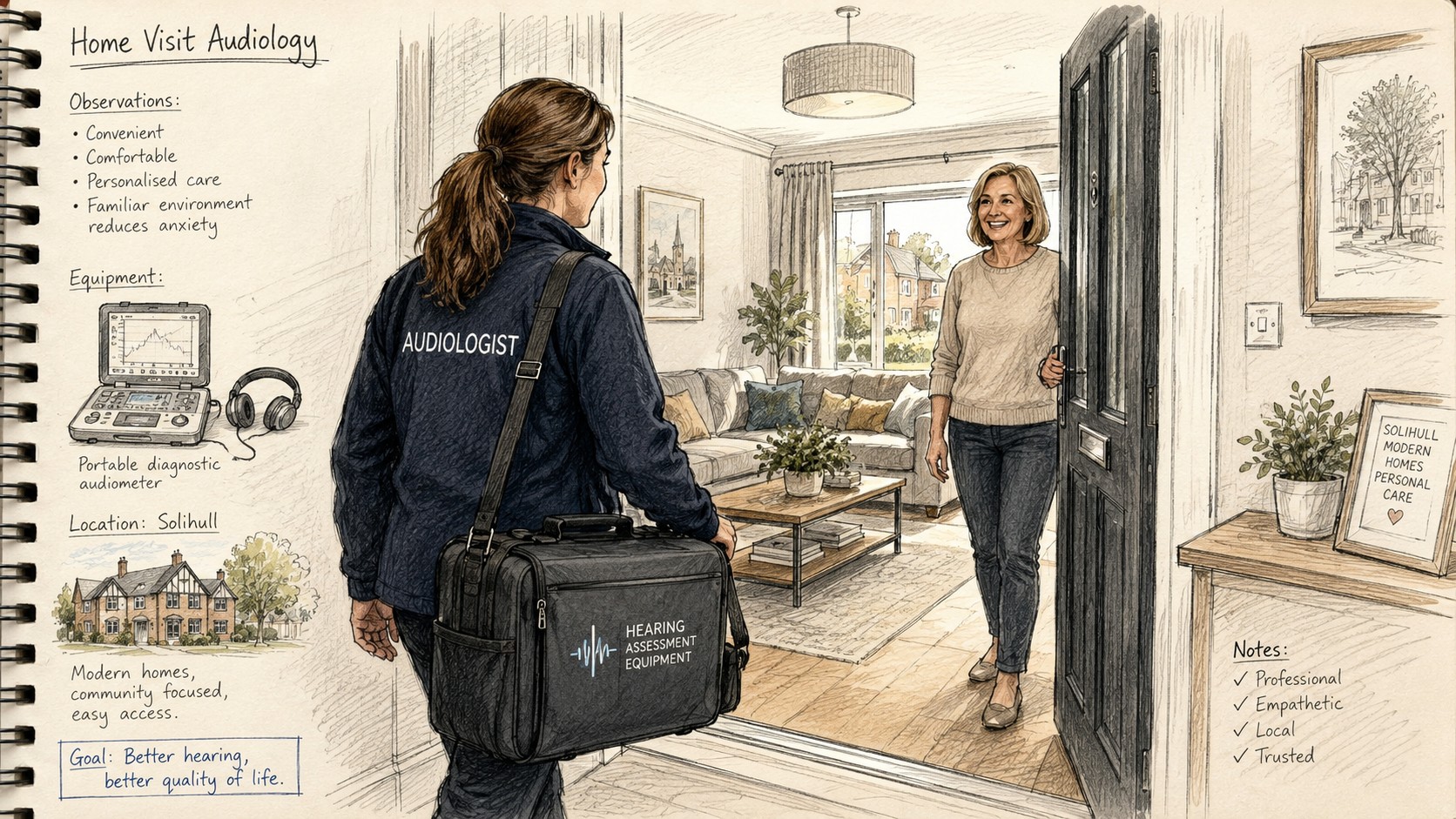
Home hearing assessments are designed to make hearing care more accessible for people who prefer support in familiar surroundings. Instead of attending a hearing clinic, a qualified audiologist visits your home with portable hearing test equipment capable of carrying out professional assessments safely and accurately.
The process focuses on understanding how hearing affects everyday communication in real life rather than only inside a clinical setting. Because the appointment takes place at home, conversations often feel more natural and less pressured, especially for older adults or people who feel anxious in medical environments.
Portable audiology technology now allows detailed hearing evaluations to be completed comfortably at home across Solihull without compromising professional standards.
One reason home hearing services are growing across Solihull is because the experience feels easier to manage from beginning to end.
Travelling to appointments can become tiring, particularly for older adults, hearing aid users or individuals with mobility concerns. Home visits remove that difficulty completely and allow hearing care to fit around daily life more naturally.
The home environment also creates calmer communication. Patients often feel more relaxed discussing hearing difficulties while sitting in their own living room rather than in a busy waiting area or unfamiliar clinic.
For family members, home appointments also provide an opportunity to be involved in conversations about hearing support and communication changes, which can be especially helpful when hearing difficulties have developed gradually over time.
A home hearing appointment is usually structured around understanding both hearing ability and everyday listening experiences.
The audiologist will first discuss situations where hearing has become more difficult. This may include conversations in noisy places, understanding television dialogue or hearing family members clearly at home.
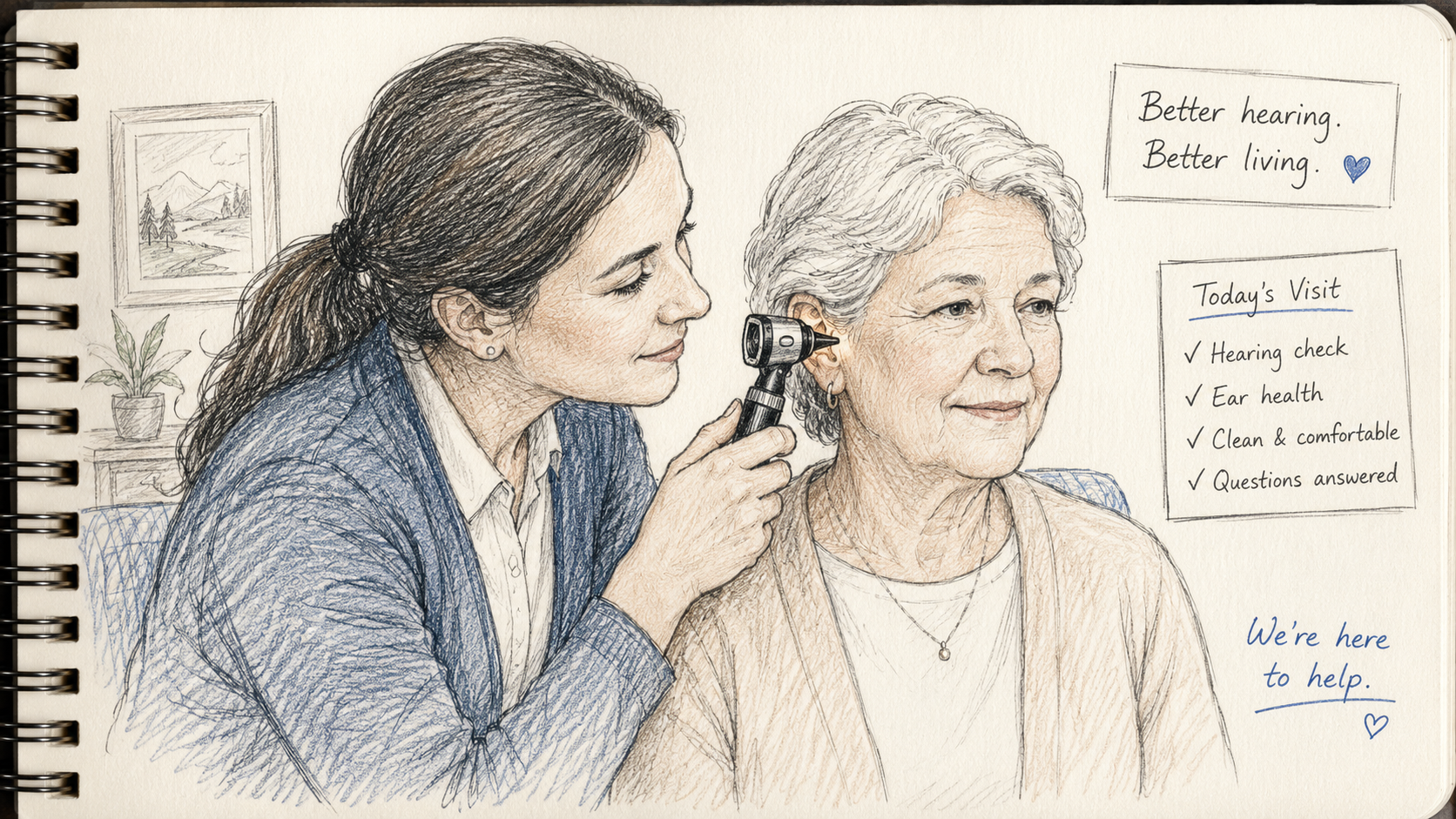
The ears are then examined carefully to check for issues such as earwax build-up, which can sometimes reduce hearing clarity temporarily.
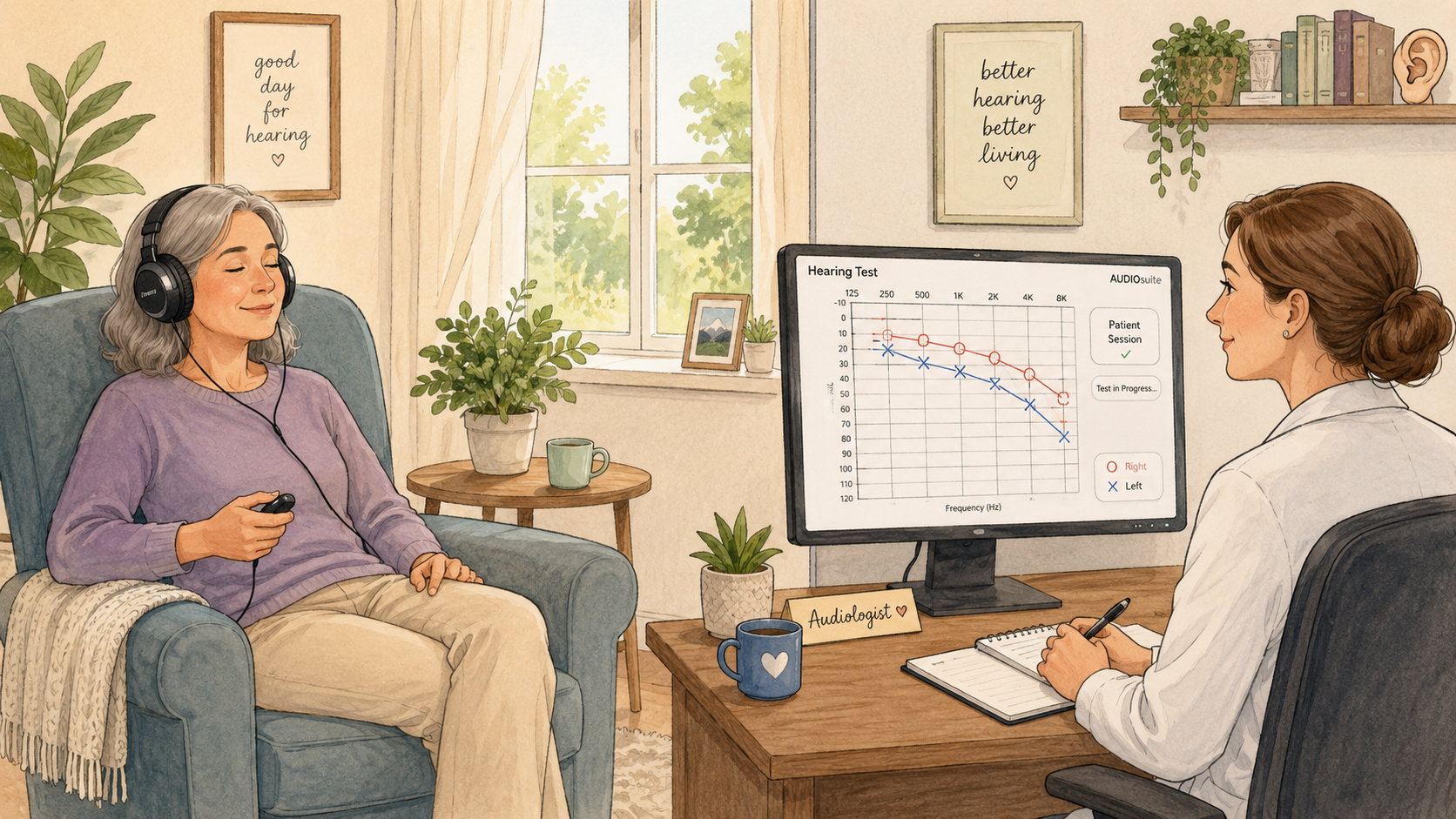
Once the ear examination is complete, the hearing assessment itself begins. Using specialist headphones and portable testing equipment, different tones and speech sounds are played to measure how well sounds are heard at different levels.
The appointment is calm, straightforward and designed to provide a clear understanding of hearing without feeling rushed or overwhelming.
Before hearing testing begins, the ears are examined carefully.
This allows the audiologist to check for earwax or other visible issues that may affect hearing clarity.
This step is important because earwax build-up can sometimes create symptoms that feel similar to hearing loss.
Identifying this early helps ensure the correct advice and care are provided.
The hearing test itself involves listening to a range of sounds through headphones.
You will respond when you hear tones at different volumes and pitches. Speech testing may also be included to understand how clearly words are heard.
The process is gentle and does not cause discomfort.
It is designed to provide a detailed understanding of your hearing ability.
Once testing is complete, the audiologist explains the results clearly and calmly.
You will be able to understand whether hearing changes are present and whether hearing support may help improve clarity.
There is no pressure to make immediate decisions.
The goal is understanding rather than urgency.
This often makes the process feel more reassuring and manageable.

One of the biggest advantages of home hearing care is the environment itself.
Hearing is part of daily life.
It affects conversations in the living room, listening to family members, hearing the television and communicating in normal surroundings.
Assessing hearing in the home environment often creates more realistic conversations about hearing challenges and practical solutions.
Patients also tend to feel more relaxed at home, which improves communication throughout the appointment.
Older adults often benefit significantly from home hearing care.
Travelling to clinics may become tiring or inconvenient. Busy waiting areas can feel stressful or uncomfortable.
Receiving care at home removes these difficulties.
Appointments feel calmer and easier to manage.
Family members can attend and help support communication during discussions about hearing and hearing support.
This creates a more supportive overall experience.
Mobility challenges should not prevent access to hearing care.
Home hearing appointments allow people to receive professional support without the difficulty of travelling to a clinic.
This makes hearing assessments more accessible and less physically demanding.
The focus remains on comfort, clarity and personalised care.
If hearing support is recommended, hearing aids can often be fitted during home appointments.
This allows adjustments to be made within the environment where hearing is experienced every day.
This is particularly useful because hearing aids can be adjusted based on real world listening situations rather than unfamiliar clinic settings.
Follow up appointments can also take place at home, allowing ongoing support and fine tuning where necessary.
Many people delay hearing tests for too long.
Often this happens because changes develop slowly and become normalised over time.
But untreated hearing difficulties can gradually affect communication, confidence and social interaction.
Early hearing assessments help identify small changes before they become more disruptive.
In many cases, support is simpler and more effective when hearing changes are identified early.
The purpose is not to create concern.
It is to provide clarity and reassurance.
Some people worry that hearing tests are uncomfortable or stressful.
In reality, hearing assessments are gentle and straightforward.
Others assume hearing tests automatically lead to hearing aids.
This is not true.
The purpose of the assessment is understanding.
Recommendations are based on individual needs and preferences.
There is no pressure to proceed with treatment unless support would genuinely improve hearing and communication.
Earwax is one of the most common causes of temporary hearing reduction.
This is why ear examinations are included as part of home hearing assessments.
If earwax is affecting hearing, removal may improve clarity significantly.
This ensures hearing problems are properly identified rather than assumed.
Many people arrange hearing tests for parents or relatives.
Home visits can make this process feel more supportive and less intimidating.
Family members can attend the appointment, help discuss concerns and better understand the results.
This creates reassurance for everyone involved.
When choosing a home hearing provider, professionalism and experience matter.
Look for services that focus on:
Qualified audiologists
Clear communication
Patient comfort
Professional equipment
Calm and personalised care
The appointment should feel supportive from beginning to end.
Most home hearing tests take between forty five minutes and ninety minutes depending on individual needs.
Yes. Modern portable audiology equipment provides reliable and clinically appropriate results.
Yes. Many providers offer hearing aid fittings and adjustments during home visits.
No. Hearing tests are comfortable and non invasive.
Yes. Many patients find this helpful and reassuring.
Most home hearing providers cover Solihull and surrounding areas.
Home hearing tests in Solihull offer a calmer and more practical way to understand your hearing.
They remove the stress of travelling to clinics and provide professional care within familiar surroundings.
The process is simple.
The environment is comfortable.
The outcome is clarity.
Hearing should feel natural.
When it changes, even gradually, it is worth understanding why.
Not with urgency.
Not with pressure.
But with professional support delivered in a way that feels reassuring, personal and appropriate.