
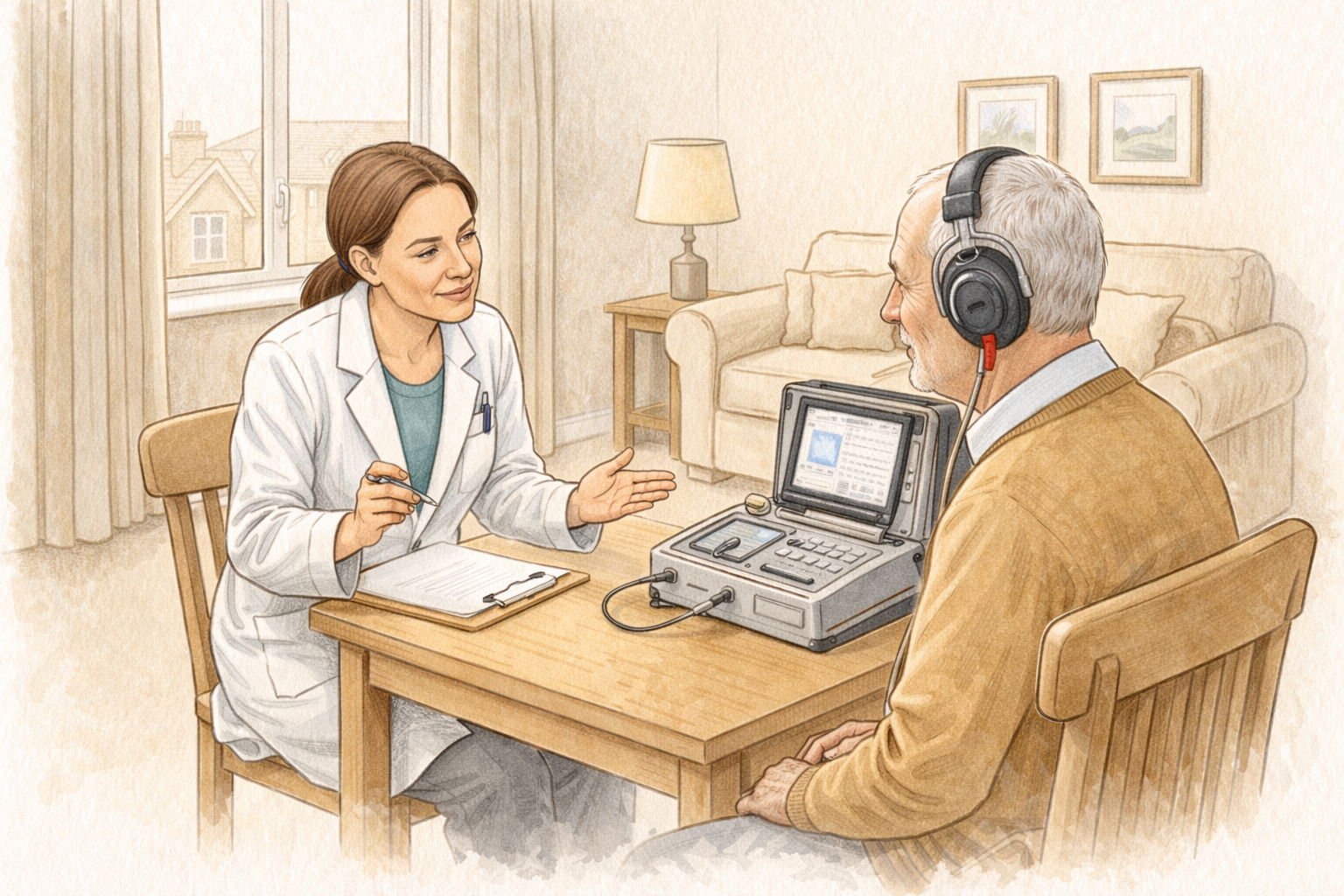
Hearing does not usually change all at once.
It shifts gradually, often without clear notice at first. Conversations may feel slightly less clear. Background noise may become more noticeable. Everyday listening may require more effort than it once did.
For many people in Dudley, recognising these changes is only part of the journey.
Arranging a hearing test can feel less straightforward. Travelling to a clinic may be inconvenient. Waiting rooms may feel unfamiliar. Appointments can feel rushed or impersonal.
Home visit hearing tests offer a different approach.
They allow hearing to be assessed in the comfort of your own home, in a setting that feels familiar and calm. This can make the entire experience more accessible and easier to understand.
This guide explains how home hearing tests in Dudley work, what to expect during a visit and why many people now prefer this form of care.
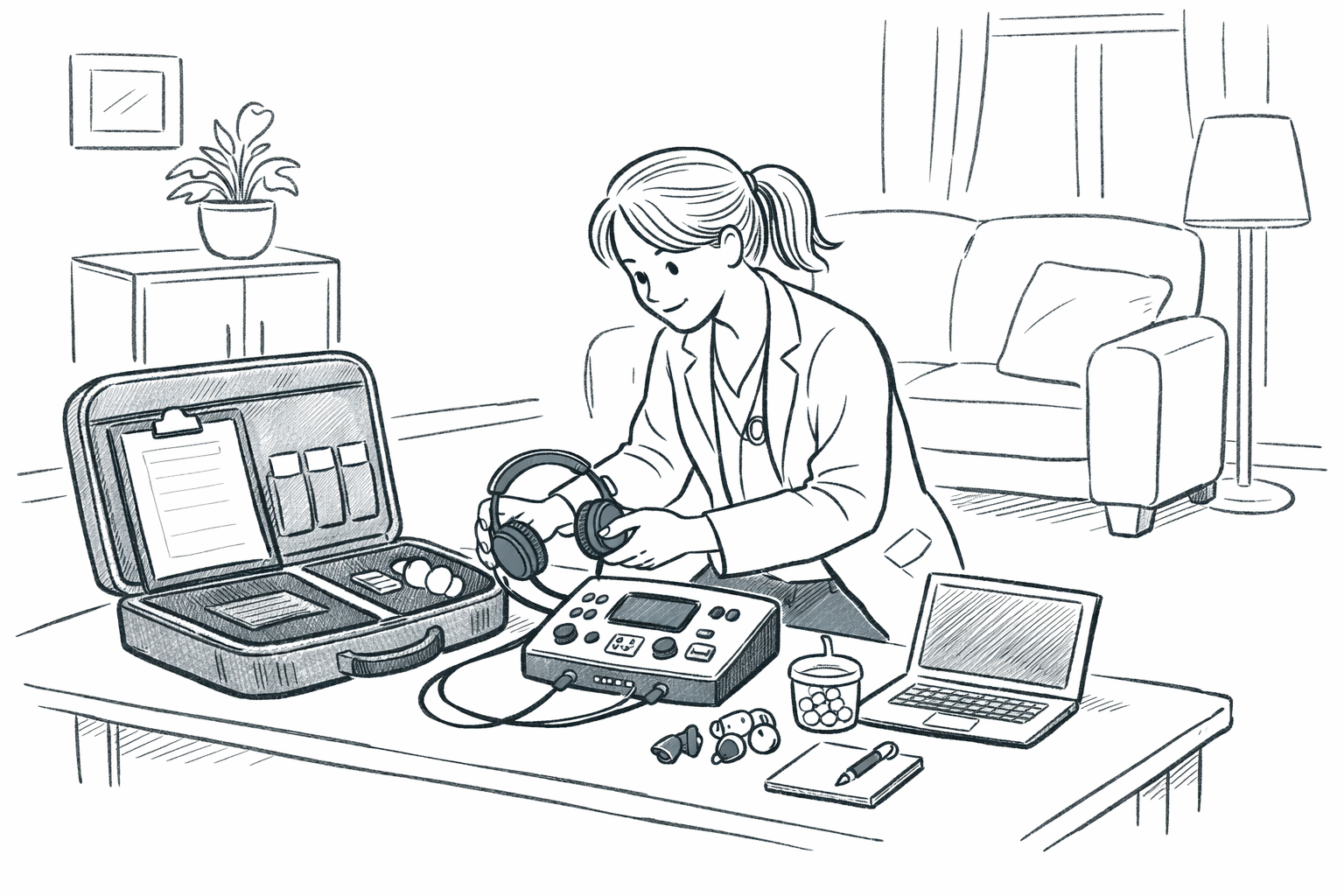
A home visit hearing test is a full hearing assessment carried out by a qualified audiologist in your own home.
It follows the same clinical standards as a clinic-based test, using portable equipment designed to provide accurate and reliable results.
The aim is to understand your hearing clearly and to identify whether any support may be helpful.
The difference is not in the quality of care.
It is in the environment.
At home, the experience is more relaxed. There is no need to travel. There is more time to talk, listen and understand.
This often leads to a clearer and more comfortable experience.

Across Dudley and the surrounding areas, more patients are choosing home hearing care.
This is not simply about convenience.
It reflects a preference for a more personal and supportive approach.
Being at home removes many of the barriers associated with clinic visits. There is no need to arrange transport or manage travel. Appointments can be arranged at a time that suits you.
For older adults, this can make hearing care more accessible.
For individuals with mobility concerns, it can make a significant difference.
Families also benefit, as they can be present during the appointment, helping to support communication and understanding.
Hearing is part of everyday life.
It is shaped by the environment around you.
At home, the audiologist can observe how you hear in your usual surroundings. This includes how you respond to conversations, television and background noise.
This context helps create a more accurate understanding of your hearing.
It also makes the process feel more natural.
There is no need to adjust to a clinical setting.
The assessment reflects real-life listening rather than a controlled environment.
A home hearing test is structured but unhurried.
It is designed to feel calm and easy to follow.

The appointment begins with a conversation about your hearing.
You may be asked about situations where hearing feels more difficult, such as conversations in groups or listening to the television.
This discussion helps the audiologist understand your experience.
It also provides an opportunity to ask questions.
Before the hearing test begins, the ears are examined.
This is a simple and gentle process.
The audiologist will check for earwax or any visible issues that could affect hearing.
In many cases, earwax can cause symptoms similar to hearing loss.
Identifying this early ensures that the correct approach is taken.

The hearing test itself involves listening to a range of sounds.
You will wear headphones and respond when you hear tones at different levels.
Speech-based sounds may also be used to assess clarity.
The process is straightforward and does not cause discomfort.
It is designed to provide a clear picture of your hearing.
After the test, the results are explained in a clear and simple way.
You will be able to understand whether your hearing is within a typical range or whether there are changes that may benefit from support.
There is no pressure to make immediate decisions.
The focus is on clarity and understanding.
One of the main advantages of home visits is the pace of the appointment.
At home, there is time.
Time to listen.
Time to ask questions.
Time to understand.
This often leads to a more meaningful experience.
It also helps patients feel more comfortable with the information they receive.
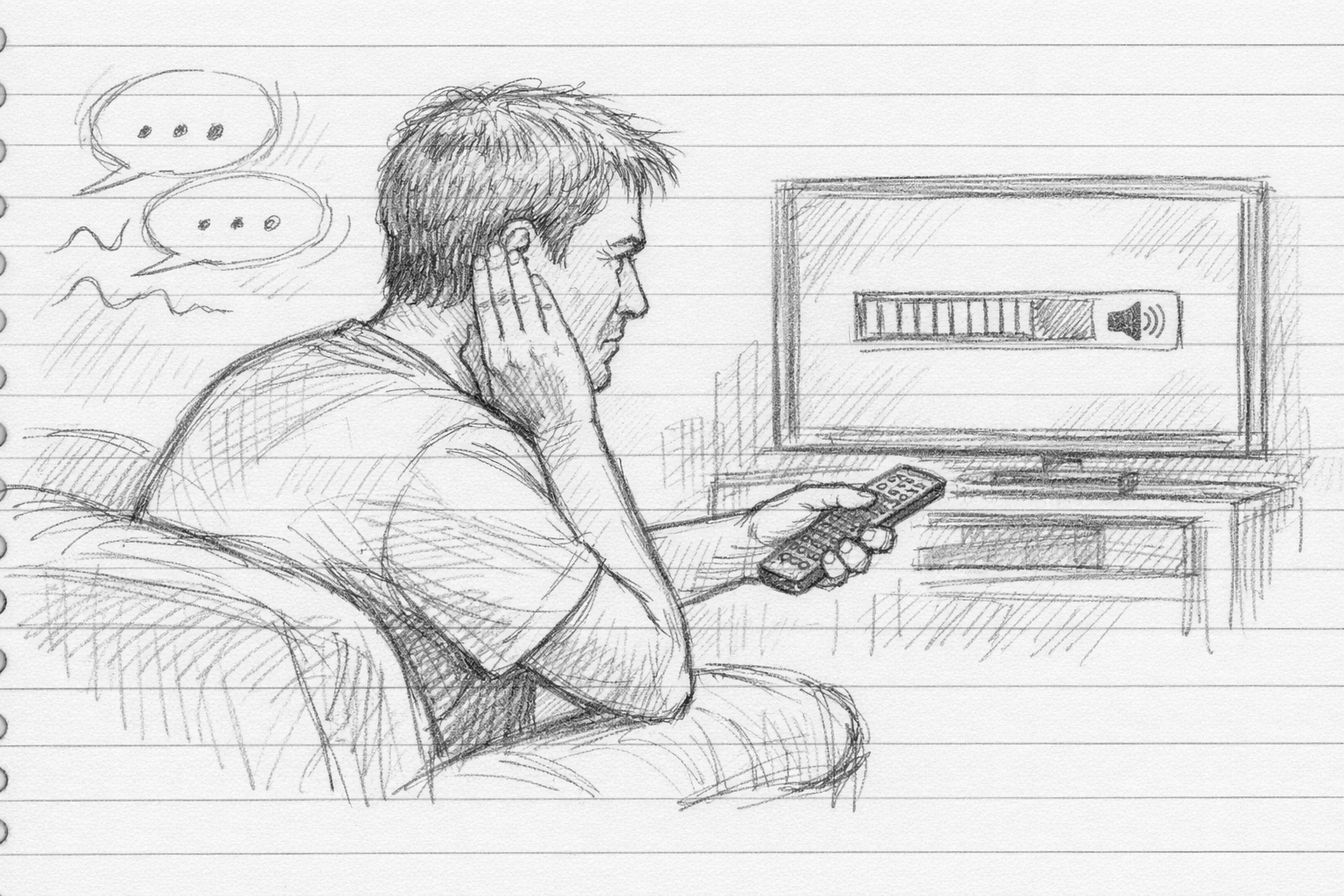
Earwax is a common cause of hearing difficulty.
Many people in Dudley who arrange a hearing test find that wax build-up is affecting their hearing.
This can create a feeling of blockage or reduced clarity.
When earwax is identified and removed, hearing often improves.
This is why ear examination is always part of the process.
It ensures that simple causes are not overlooked.
If the assessment shows that hearing support may be helpful, this is discussed carefully.
The audiologist will explain the options in a clear and balanced way.
This may include hearing aids or other forms of support.
There is no pressure to proceed.
The aim is to provide information so that you can make a decision at your own pace.
If hearing aids are appropriate, they can often be fitted at home.
This allows adjustments to be made in your own environment.
The process is gradual and focused on comfort.
Follow-up support can also be provided at home, ensuring that any changes can be made as needed.
This creates a more personalised approach to hearing care.
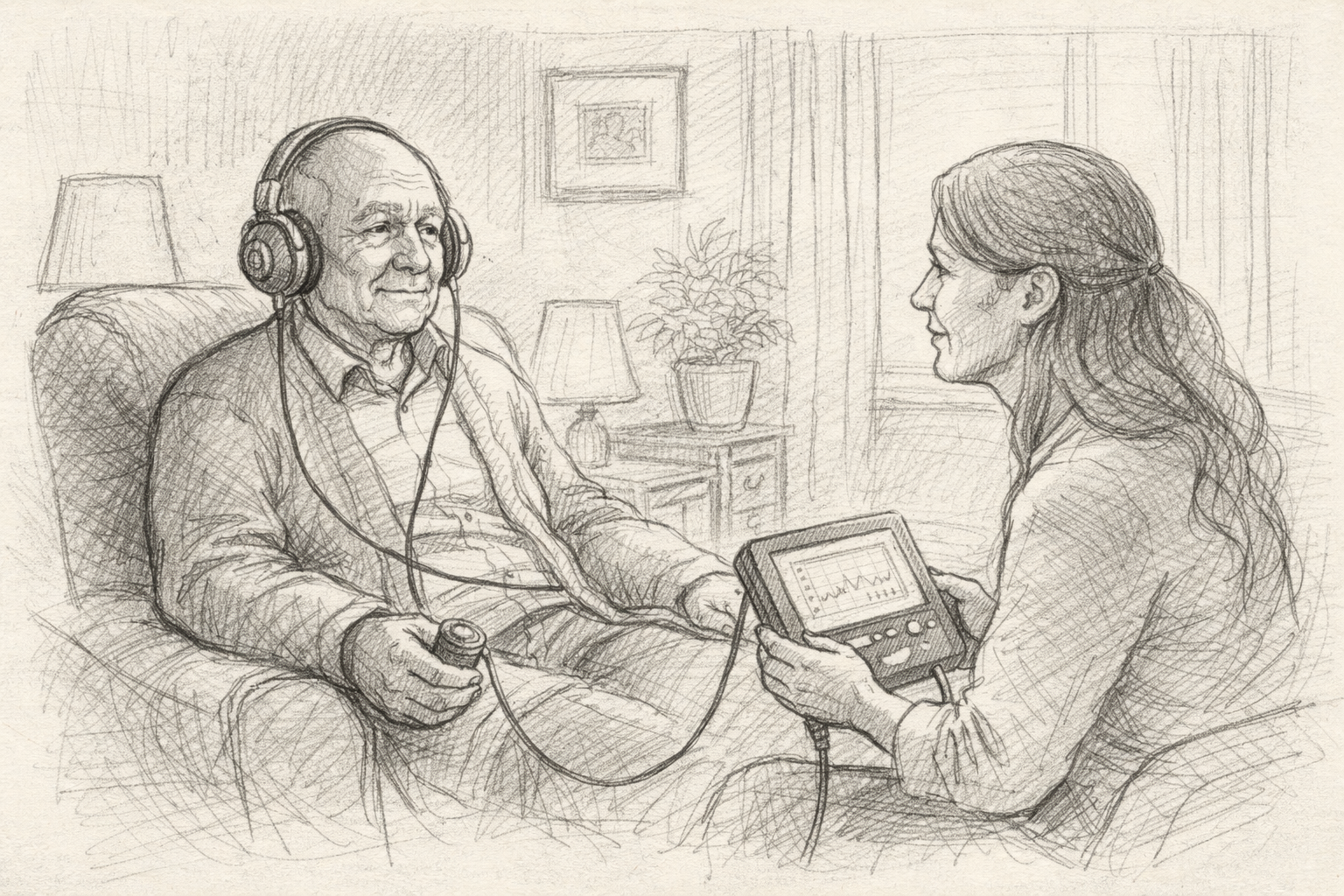
Home hearing tests in Dudley are suitable for many people.
They are particularly helpful for older adults who prefer to remain in a familiar setting.
They are also beneficial for individuals who find travel difficult.
Care home residents can receive support without leaving their surroundings.
Families often appreciate being involved, as it allows them to understand the process and support decisions.
However, home hearing care is not limited to specific groups.
Anyone who values comfort and clarity can benefit.
It is natural to have questions before arranging a hearing test.
Some people wonder whether a home hearing test is as accurate as a clinic-based test.
Modern portable equipment provides reliable and clinically appropriate results.
Others may be concerned about how the process will feel.
Most patients find the experience calm and straightforward.
The familiar environment helps reduce uncertainty.
There may also be concerns about what happens if hearing changes are identified.
Understanding your hearing does not mean committing to treatment.
It simply provides clarity.
If you are arranging a hearing test for a family member, the approach should feel supportive.
It can help to present the test as a way to understand hearing more clearly, rather than as a response to a problem.
Being present during the appointment can provide reassurance.
It also allows you to understand the results and any recommendations.
Hearing changes are often gradual.
Because of this, they can go unnoticed.
Early awareness allows small changes to be understood before they become more significant.
When hearing is supported appropriately, it helps maintain communication and confidence.
The aim is not urgency.
It is clarity.
A home hearing test usually takes between forty-five minutes and an hour and a half.
Yes. Portable audiology equipment provides reliable and clinically appropriate results.
Not necessarily. The test is designed to understand your hearing, not to require treatment.
Yes. This is why ear examination is always carried out before testing.
Most providers cover Dudley and nearby areas.
Yes. Many patients find it helpful to have someone with them during the appointment.
Home visit hearing tests in Dudley provide a calm and convenient way to understand your hearing.
They remove the need to travel.
They provide a familiar setting.
They allow time for clear and thoughtful communication.
The process is simple.
The experience is comfortable.
The outcome is clarity.
Hearing should feel natural.
When it changes, even slightly, it is worth understanding why.
Not urgently.
Not with concern.
But with the right care, delivered in a way that feels appropriate and reassuring.