
Most people only think about earwax when something feels wrong.
Their hearing suddenly seems muffled.
Their ears feel blocked.
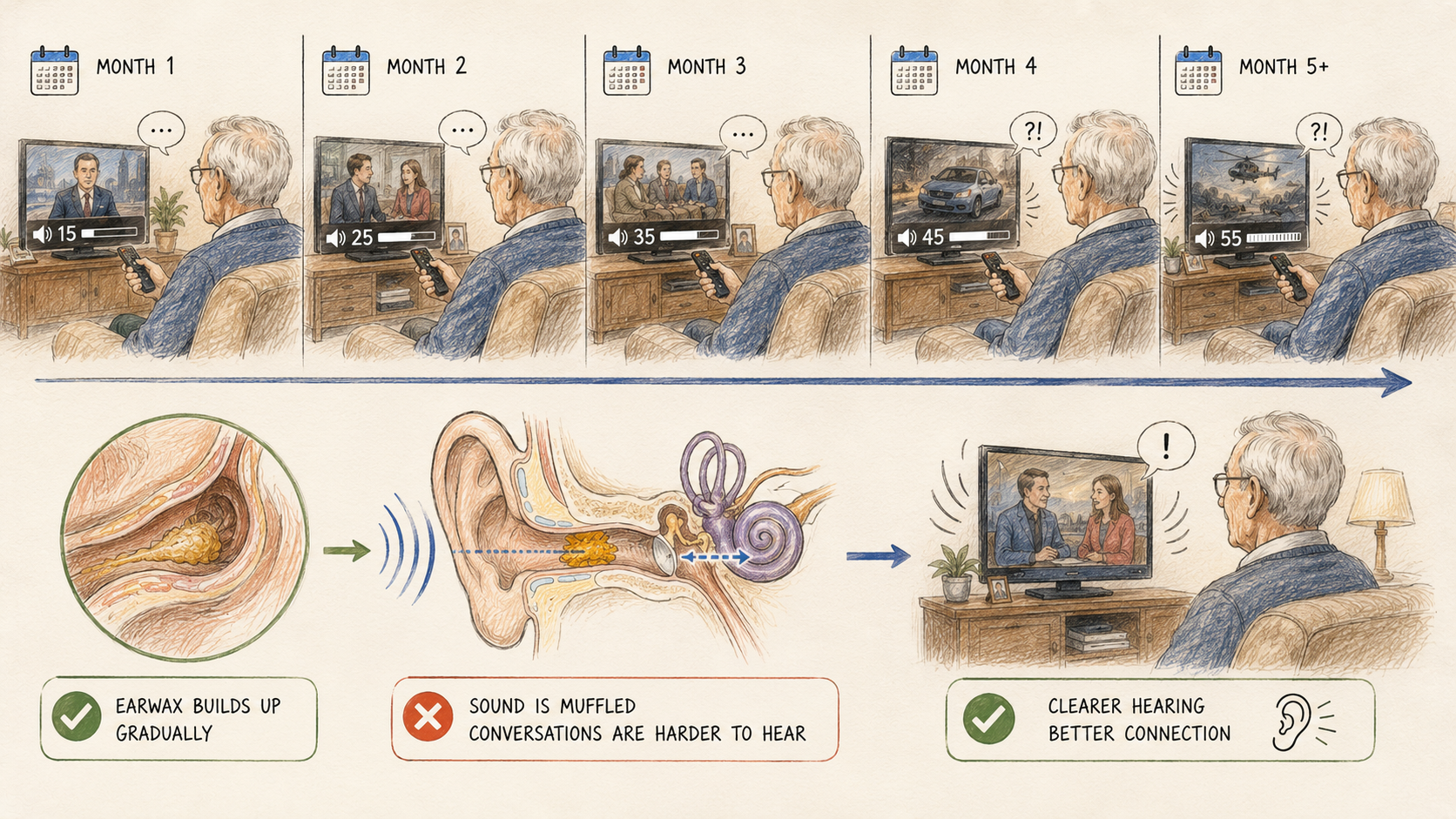
The television volume keeps creeping higher.
Family members begin asking why the television is so loud.
Sometimes dizziness appears.
Sometimes hearing aids stop working as clearly as they should.
Only then do many people book an earwax removal appointment.
The problem with this approach is simple.
By the time symptoms become obvious, the earwax has often been building up for weeks or even months.
Like many health conditions, earwax problems usually develop gradually.
That is why taking a proactive approach to ear health can make a significant difference.
Rather than waiting until hearing is noticeably affected, regular ear examinations can identify earwax build-up early and help prevent unnecessary hearing difficulties.
This guide explains why earwax develops slowly, why symptoms are often difficult to recognise and why many people benefit from regular professional ear checks instead of waiting for problems to appear.
Earwax often gets a bad reputation.
In reality, it performs an important job.
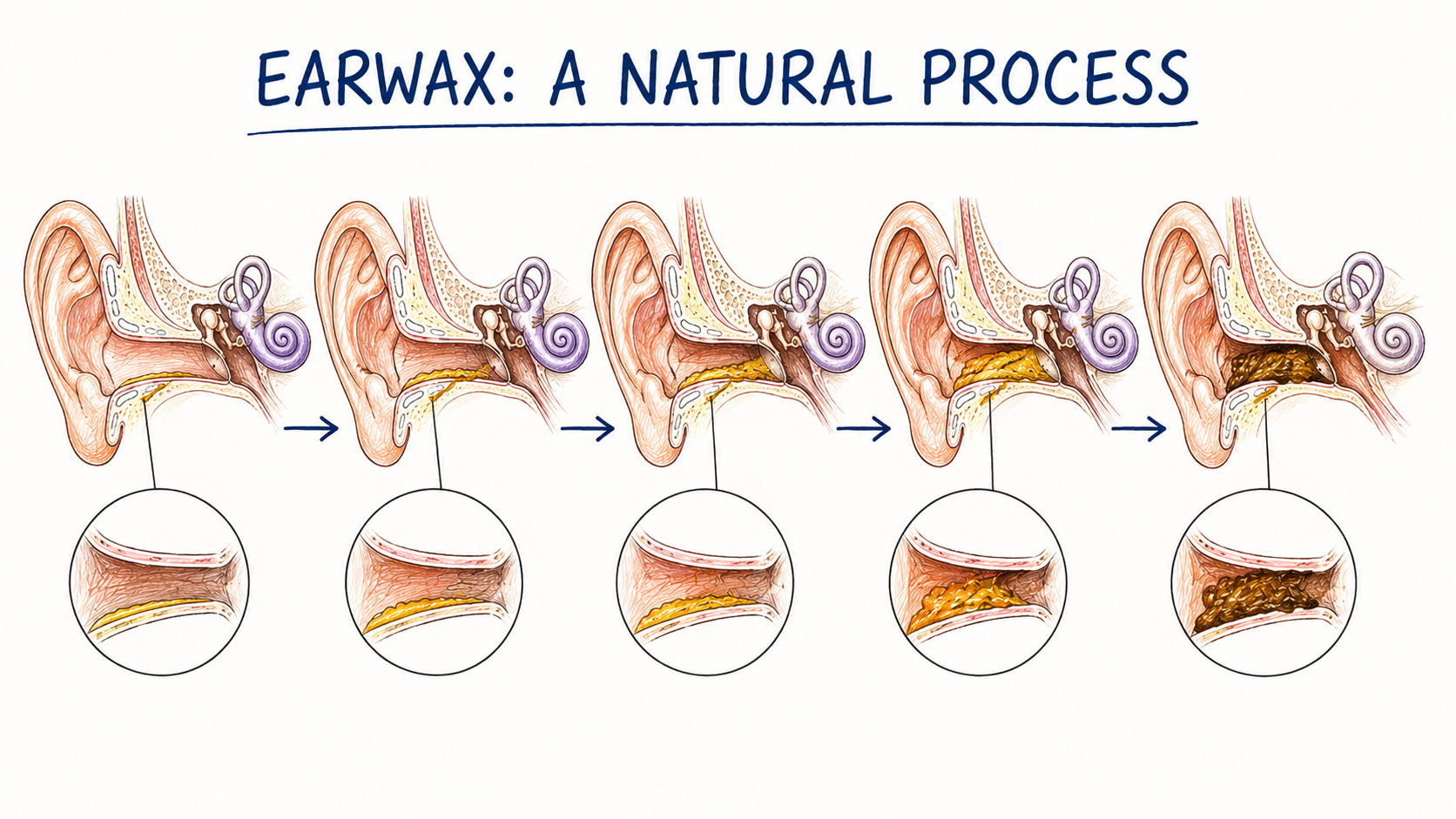
Earwax protects the ear canal by trapping dust, dirt and tiny particles before they reach the delicate structures deeper inside the ear.
It also helps keep the ear canal healthy by providing natural lubrication and creating an environment that discourages infection.
Most ears are designed to clean themselves.
As we chew, talk and move our jaw, old earwax slowly works its way towards the opening of the ear where it naturally falls away.
For many people, this process works perfectly throughout life.
However, not everyone's ears behave the same way.
Some people naturally produce more earwax than others.
Some have narrower ear canals.
Others wear hearing aids, earbuds or earplugs regularly, which can prevent wax from moving naturally out of the ear.
As we age, earwax can also become drier and harder, making it less likely to clear on its own.
Instead of leaving the ear naturally, it slowly builds up.
Because this happens gradually, many people never notice the change until hearing has already been affected.
One of the biggest challenges with earwax build-up is how subtle the changes can be.
Unlike sudden hearing loss, earwax blockage usually develops little by little.
You might notice that conversations become slightly harder to follow.
You may turn the television up a little more each week.
Telephone calls may seem less clear.
Family members might notice changes before you do.
Because the brain adapts remarkably well, reduced hearing often becomes your new normal.
This makes earwax build-up surprisingly easy to overlook.
Many patients tell us they had no idea how much hearing they had lost until the wax was removed.
Although every patient experiences symptoms differently, impacted earwax commonly causes:
Muffled hearing.
A feeling of blocked ears.
Reduced hearing in one or both ears.
Ringing in the ears.
Pressure inside the ear.
Itching.
Occasionally dizziness or feelings of imbalance.
These symptoms often appear gradually rather than all at once.
That is one reason professional ear examinations are so valuable.
Many people adopt a reactive approach to ear health.
They wait until symptoms become severe before seeking help.
Unfortunately, this often means living with reduced hearing for much longer than necessary.
Blocked hearing can affect everyday conversations.
It can reduce confidence.
It can make social situations more tiring.
For hearing aid users, earwax can also reduce hearing aid performance, making expensive devices appear less effective than they actually are.
Early identification prevents these problems from becoming more disruptive.
There is a simple question worth asking.
Would you rather remove earwax before it affects your hearing or wait until hearing has already become difficult?
For many aspects of healthcare, prevention is better than treatment.
We attend dental check-ups before toothache develops.
We service our cars before they break down.
We have our eyes tested even when we think our vision is fine.
Our ears deserve the same level of attention.
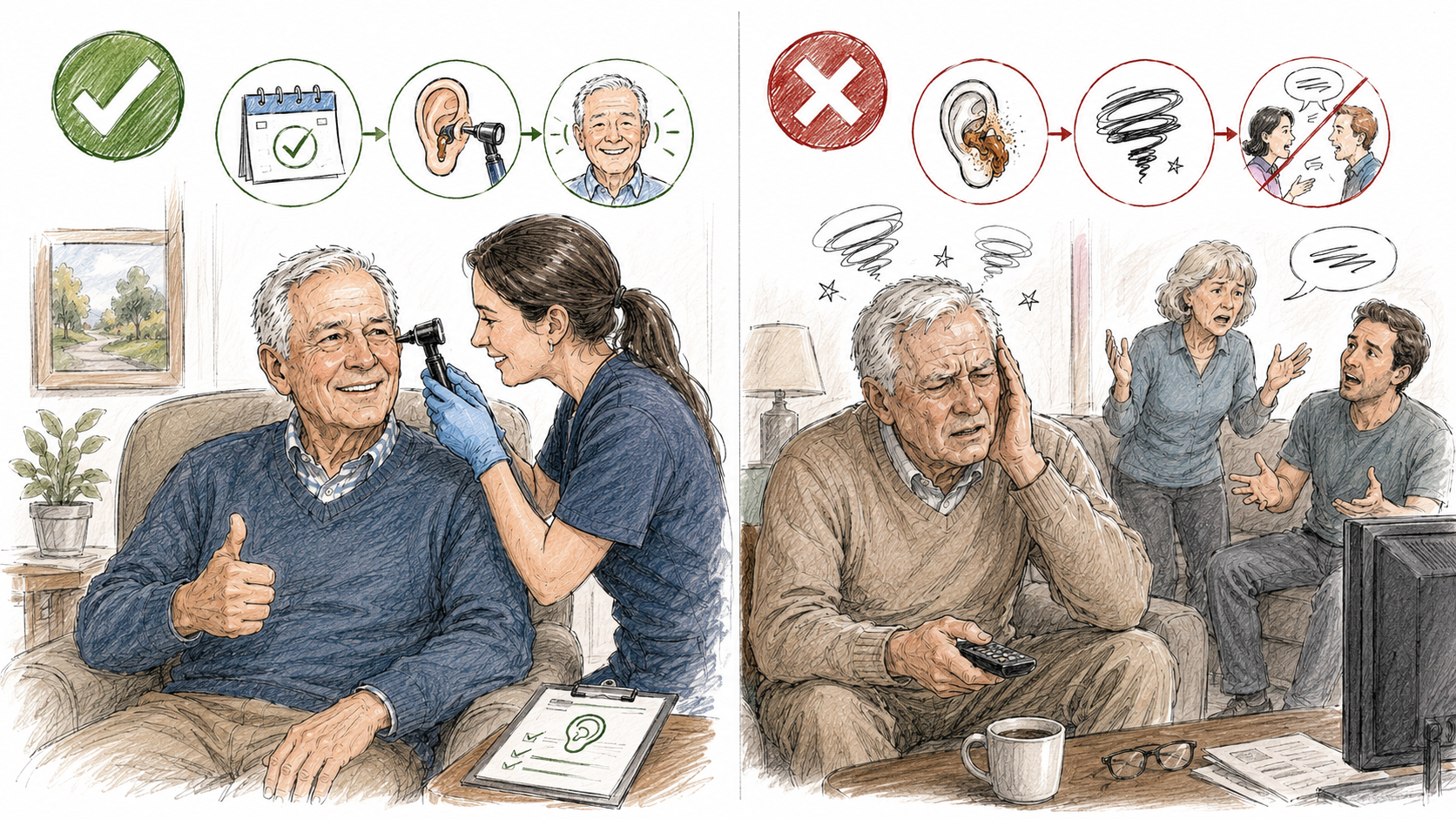
Regular ear examinations allow earwax to be monitored before it becomes a significant problem.
Sometimes no treatment is needed at all.
Sometimes only a small amount of wax is present.
The important thing is knowing rather than guessing.
Not everyone needs routine earwax removal.
However, some people are much more likely to develop recurring earwax build-up.
This includes people who wear hearing aids, regularly use earphones or earplugs, have naturally narrow ear canals or have previously experienced impacted earwax.
Older adults may also benefit because earwax often becomes harder and less able to clear naturally with age.
If you regularly experience blocked ears or have required professional earwax removal in the past, routine ear examinations can be a sensible part of maintaining your hearing health.
There is no single answer that suits everyone.
Some people may never require professional earwax removal.
Others naturally develop build-up every few months.
For people with recurring earwax problems, a professional ear examination every six to twelve months is often a sensible way to monitor ear health.
The aim is not to remove earwax unnecessarily.
The aim is to identify build-up before it begins affecting hearing.
During the appointment, an audiologist can examine your ears and advise whether removal is actually needed.
Sometimes reassurance is all that is required.
Hearing aids sit inside or close to the ear canal.
While they improve hearing, they can also affect the ear's natural ability to move wax outwards.
Earwax may build up more quickly around hearing aids.
Even small amounts of wax can block sound, reduce hearing quality or interfere with hearing aid performance.
Routine ear checks help ensure both your ears and your hearing aids continue performing as they should.
Many people delay appointments because travelling is inconvenient.
Home ear care removes that barrier.
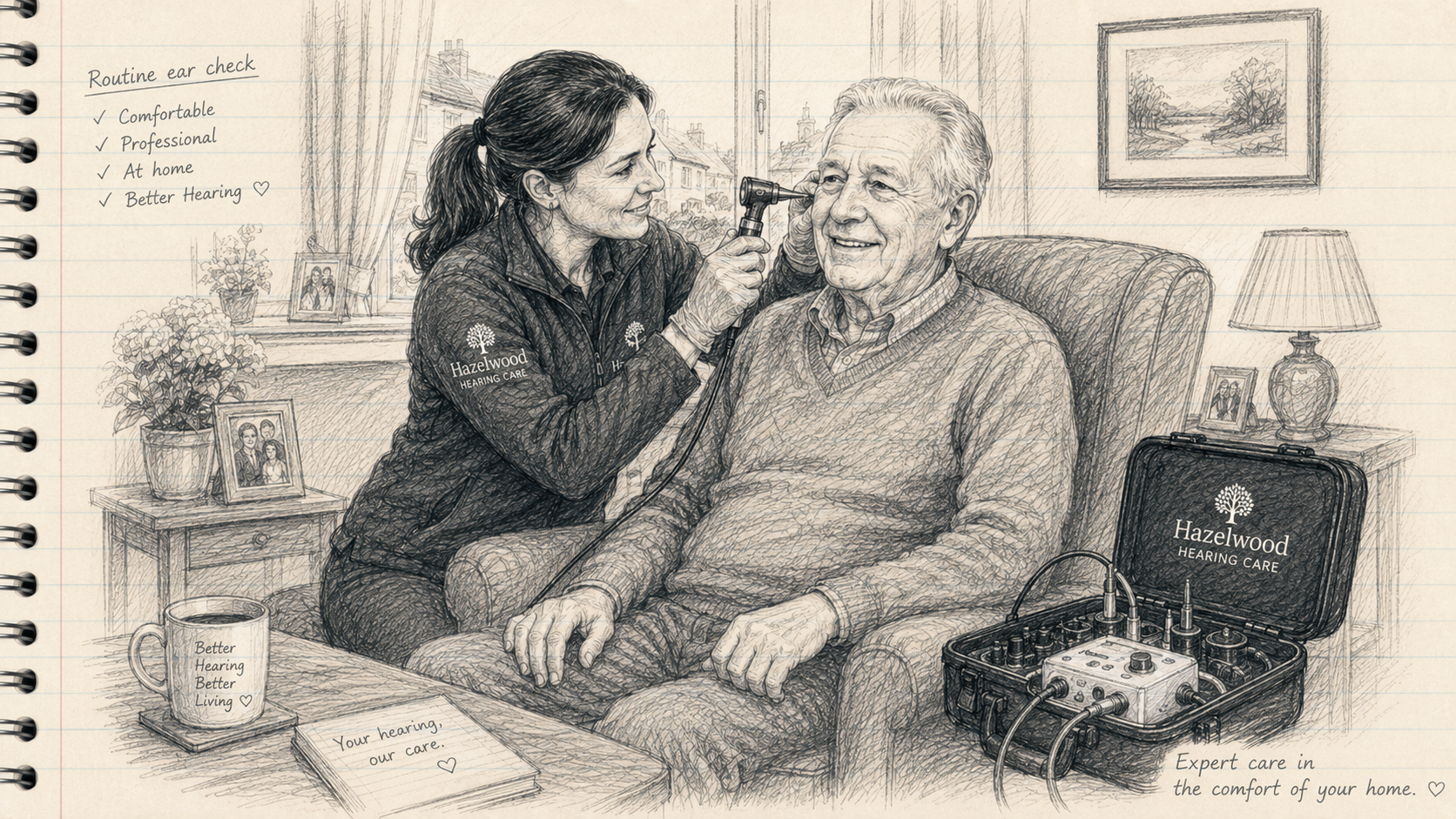
Professional ear examinations can be carried out in the comfort of your own home, allowing hearing health to be monitored without unnecessary travel.
Home visits are especially helpful for older adults, people with limited mobility and those who simply prefer a more relaxed environment.
The quality of care remains professional.
The only difference is where it takes place.
A professional ear examination is quick and comfortable.
The audiologist uses specialist equipment to look carefully inside the ear canal.
This allows them to see whether earwax is present, how much has accumulated and whether removal is appropriate.
If significant wax is found, microsuction is often recommended because it allows wax to be removed carefully under direct vision.
If little or no wax is present, no treatment may be needed.
That is one of the benefits of regular monitoring.
You receive advice based on what your ears actually need.
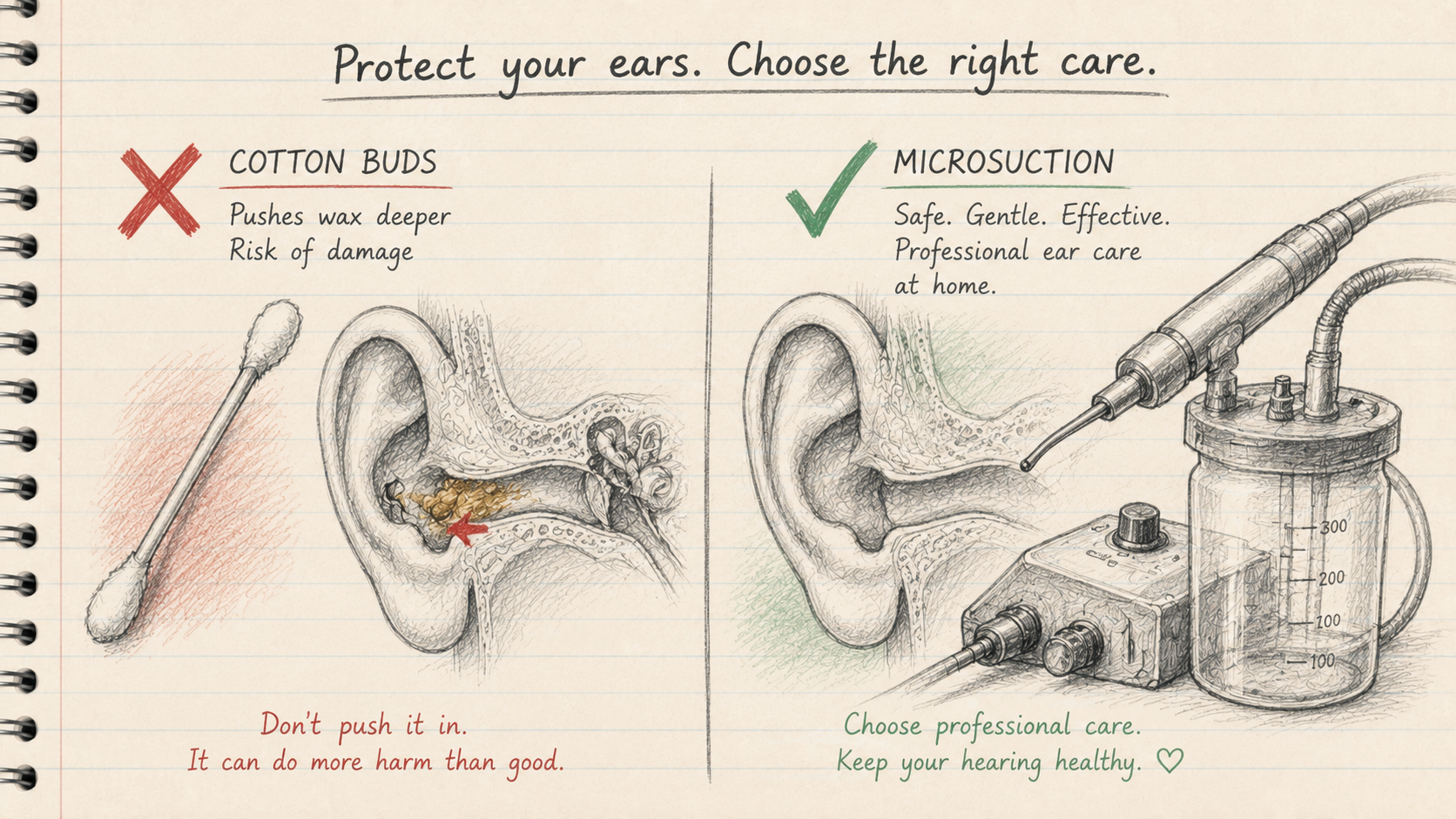
Many people attempt to clean their ears using cotton buds.
Unfortunately, this usually pushes wax deeper into the ear canal instead of removing it.
Other objects can also damage the delicate skin inside the ear or even injure the eardrum.
Professional assessment is always safer than guessing.
If your ears feel blocked, it is better to understand why before trying to remove wax yourself.

One of the most common things patients say after earwax removal is:
"I didn't realise how blocked my hearing had become."
That is because hearing often declines so gradually that people adapt without noticing.
A simple ear examination can identify problems before they begin affecting communication, confidence and quality of life.
Sometimes treatment is needed.
Sometimes it isn't.
Either way, you have certainty.
No. Earwax removal should only be carried out when there is a clinical need. However, people who regularly experience earwax build-up may benefit from routine ear examinations.
If you have recurring earwax problems or wear hearing aids, an ear examination every six to twelve months is often a sensible approach. Your audiologist can recommend a schedule based on your individual needs.
Yes. Earwax often accumulates gradually, meaning many people do not notice changes until hearing has already been affected.
Yes. Microsuction is a professional method of removing earwax safely, while cotton buds often push wax deeper into the ear.
Many do, as hearing aids can affect the natural movement of earwax and small amounts of wax can reduce hearing aid performance.

Earwax problems rarely happen overnight.
They develop slowly.
So do the symptoms.
That is why waiting until your hearing feels blocked is not always the best approach.
A proactive approach to ear health allows small problems to be identified before they become frustrating interruptions to everyday life.
For people who are prone to recurring earwax build-up, a simple professional ear examination every six to twelve months can help keep hearing clear and provide peace of mind.
Looking after your ears is not just about removing earwax.
It is about protecting one of your most important senses before problems begin.