
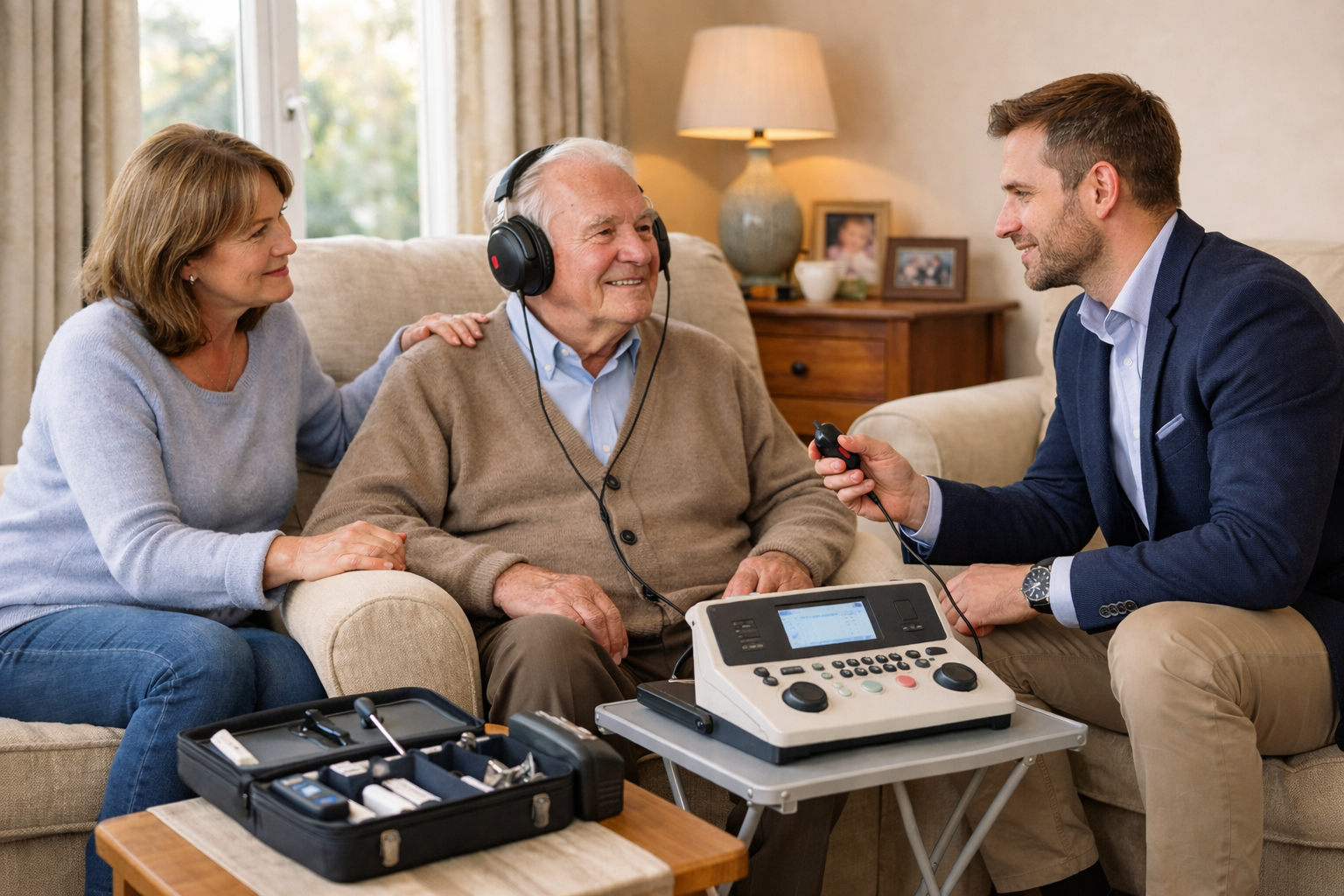
A Complete Guide to Professional Hearing Tests at Home in the UK
When considering a hearing assessment, many families ask the same question:
“Is a home hearing test really accurate?”
It is a sensible concern. Hearing is an essential part of communication, independence and quality of life. If you are arranging a hearing test for elderly parents, a spouse, or even for yourself, you understandably want reassurance that results will be reliable.
The short answer is yes an accurate hearing test at home is entirely achievable when delivered by a qualified professional using calibrated equipment and proper clinical standards.
In this guide, we will explore:
To understand whether a home hearing test is accurate, it helps to first understand how any professional hearing test works.
A professional hearing test in the UK typically includes:
These elements form the foundation of accurate diagnosis. Importantly, they do not depend on a hospital building. They depend on:
When these conditions are met, testing can be performed reliably in a home setting.
Modern portable audiometers are designed for clinical use. They are:
A reputable mobile audiologist uses equipment that meets the same technical standards as those used in many high street clinics.
Calibration is essential. Without it, results would not be trustworthy. This is why professional audiologists maintain strict calibration schedules in line with UK regulatory guidance.
One common concern is background noise.
While clinics may use sound-treated booths, research shows that accurate results can still be obtained outside of booths when:
An experienced audiologist will assess the environment before testing begins. If unexpected noise occurs (for example, passing traffic or a doorbell), testing is paused.
For the majority of elderly patients experiencing gradual age-related hearing changes, this approach provides dependable results.
Accuracy does not come from equipment alone.
A qualified audiologist understands:
Private audiology services delivered at home rely heavily on clinical expertise. Interpretation of results is just as important as measuring them.

For routine age-related hearing loss, the answer is yes.
Numerous studies have shown that portable audiometric testing, when performed correctly, provides results consistent with clinic-based testing.
Where differences may arise is in highly specialised investigations, such as:
These are hospital-based investigations and are rarely required for typical age-related hearing concerns.
For most individuals requiring a hearing test for seniors in the UK, a home assessment is entirely appropriate and reliable.

Age-related hearing loss is common, affecting around 40% of people over 50 and increasing significantly with age.
A hearing test for elderly individuals at home is particularly helpful when:
Home-based care removes unnecessary stress.
Arthritis, balance issues and general frailty can make travel difficult.
A hearing check at home ensures assessment can take place in comfort, without navigating car parks or waiting rooms.
Research suggests that untreated hearing loss may increase listening effort and contribute to fatigue and social withdrawal.
For those living with cognitive changes:
A mobile audiologist can adapt testing appropriately.
Often, family members notice hearing changes first:
Arranging a home hearing assessment can feel more supportive and less confrontational than insisting on a clinic appointment.

Private audiology services provide flexibility and personalised care.
In the UK, audiologists are commonly registered with:
This ensures professional standards are upheld.
Private services often allow:
For many families across the Midlands, this approach feels more reassuring and dignified.
When conducted by a qualified professional using calibrated equipment, results are dependable.
No. A professional home visit includes full audiometric testing and speech assessment — not merely a screening.
A hearing test provides information. Decisions about hearing aids remain entirely with the individual.
Comfort supports concentration and cooperation.
Advice can be tailored to:
Travel fatigue can affect concentration. A home visit eliminates this factor.
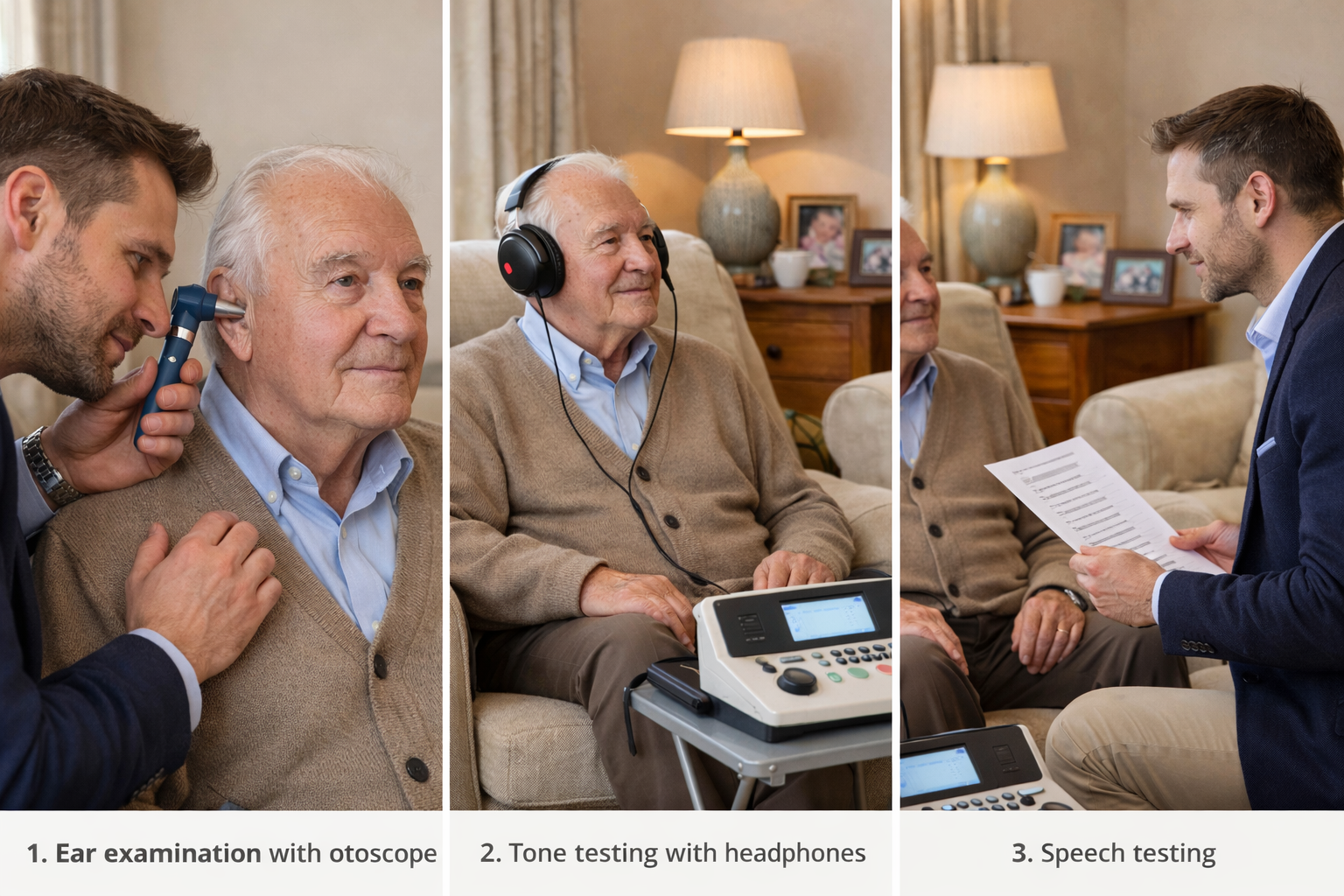
A comprehensive home appointment typically includes:
A discussion about:
Checking for earwax or signs of infection.
Testing ability to hear tones at different pitches and volumes.
Assessing clarity of speech understanding.
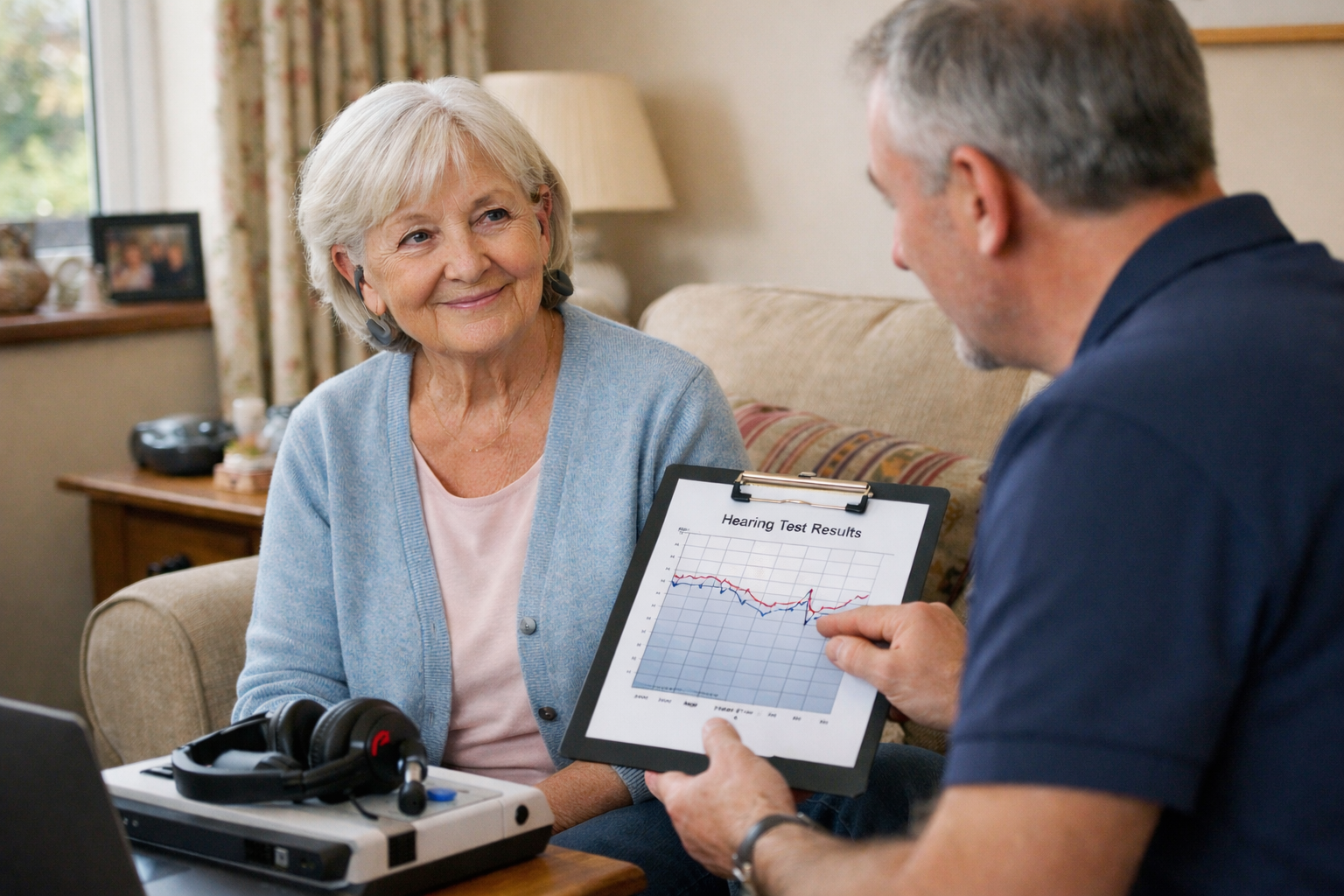
Results are explained clearly, using an audiogram chart.
If hearing aids are recommended, options are discussed without pressure.

Untreated hearing loss can affect:
Research has shown links between untreated hearing loss and increased cognitive strain.
Early intervention supports:
Referral may be advised if hearing loss is:
Your audiologist will provide guidance if further medical investigation is required.
Across the Midlands, many older adults prefer care delivered at home.
Home hearing assessments offer:
Mobile audiology services provide accessible care to individuals who may otherwise delay assessment.
An accurate hearing test at home is entirely achievable when:
A professional hearing test in the UK is defined by standards and expertise not by the building in which it occurs.
Private audiology services across the Midlands provide dependable, respectful, home-based care for seniors and elderly patients seeking clarity about their hearing.

Hearing changes are common with age. They develop gradually and are often subtle.
A home hearing assessment offers:
If you are considering a hearing test for seniors UK, a home visit may provide exactly the reassurance you are seeking.
For further information about arranging a professional home hearing test across the Midlands, please visit:
👉 Book your Home Visit Hearing Test Now
We are always pleased to offer guidance with care and clarity.