
Earwax Removal
8 min read

Signs of Impacted Earwax: What to Look For and When to Seek Support

March 26, 2026
Learn the common signs of impacted earwax, what causes it and when to seek help. A clear UK guide to safe ear care and treatment options.
Written by
Rizwan Makda
Published on
March 29, 2026

Earwax is a normal and necessary part of ear health.

It protects the ear canal, traps dust and debris, and helps prevent infection. In most cases, earwax moves out of the ear naturally without any need for intervention.

However, sometimes wax can build up and become impacted.

When this happens, it may begin to affect hearing, comfort and daily communication. The changes are often gradual, which means they can be easy to overlook.

This guide explains:

  • The signs of impacted earwax
  • Why it happens
  • How it affects hearing
  • When to seek help
  • What safe treatment looks like

The aim is simple: clear, calm understanding.
What Is Impacted Earwax?

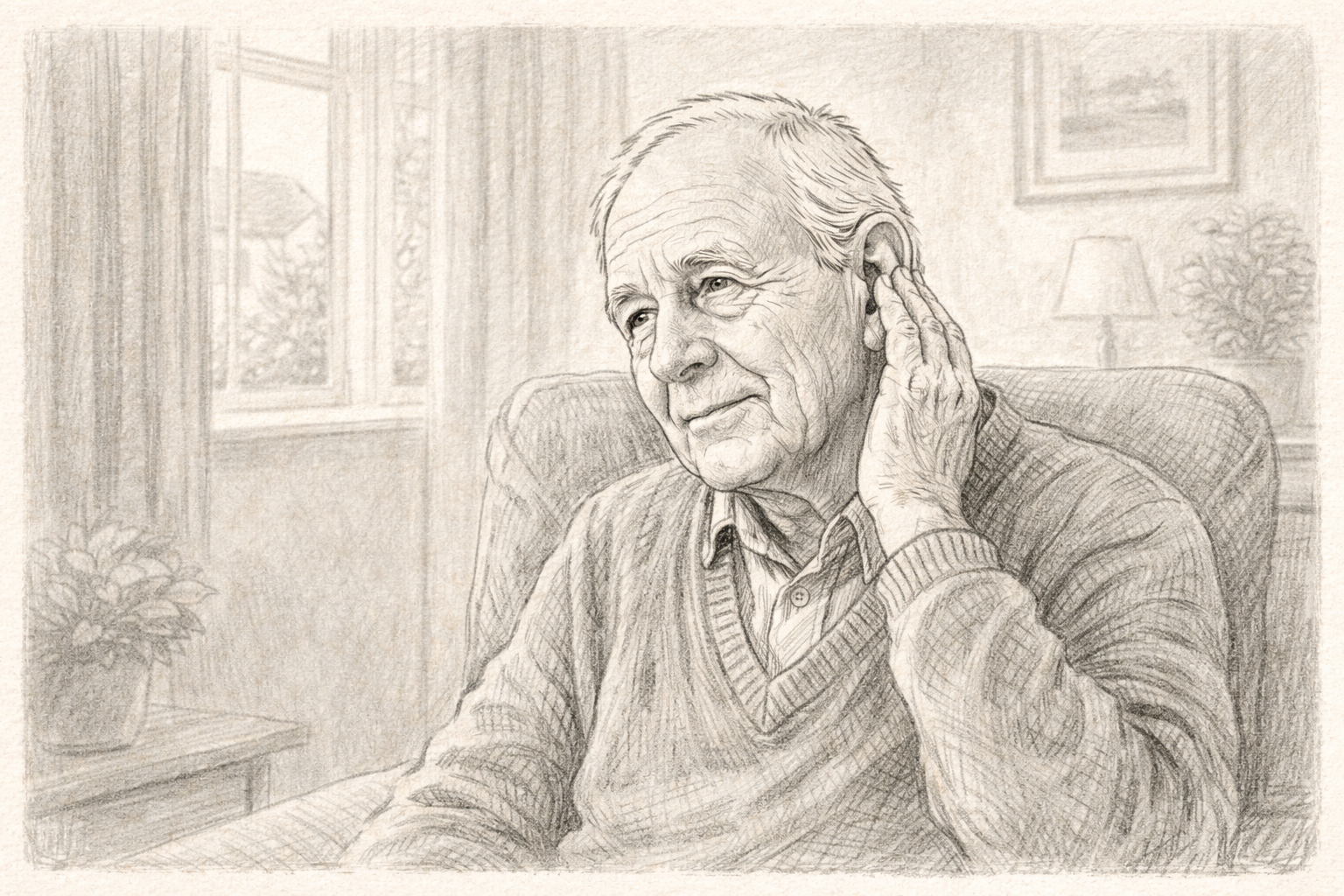
Hand-drawn illustration of an elderly person in a quiet living room touching their ear, showing thoughtful awareness of hearing.

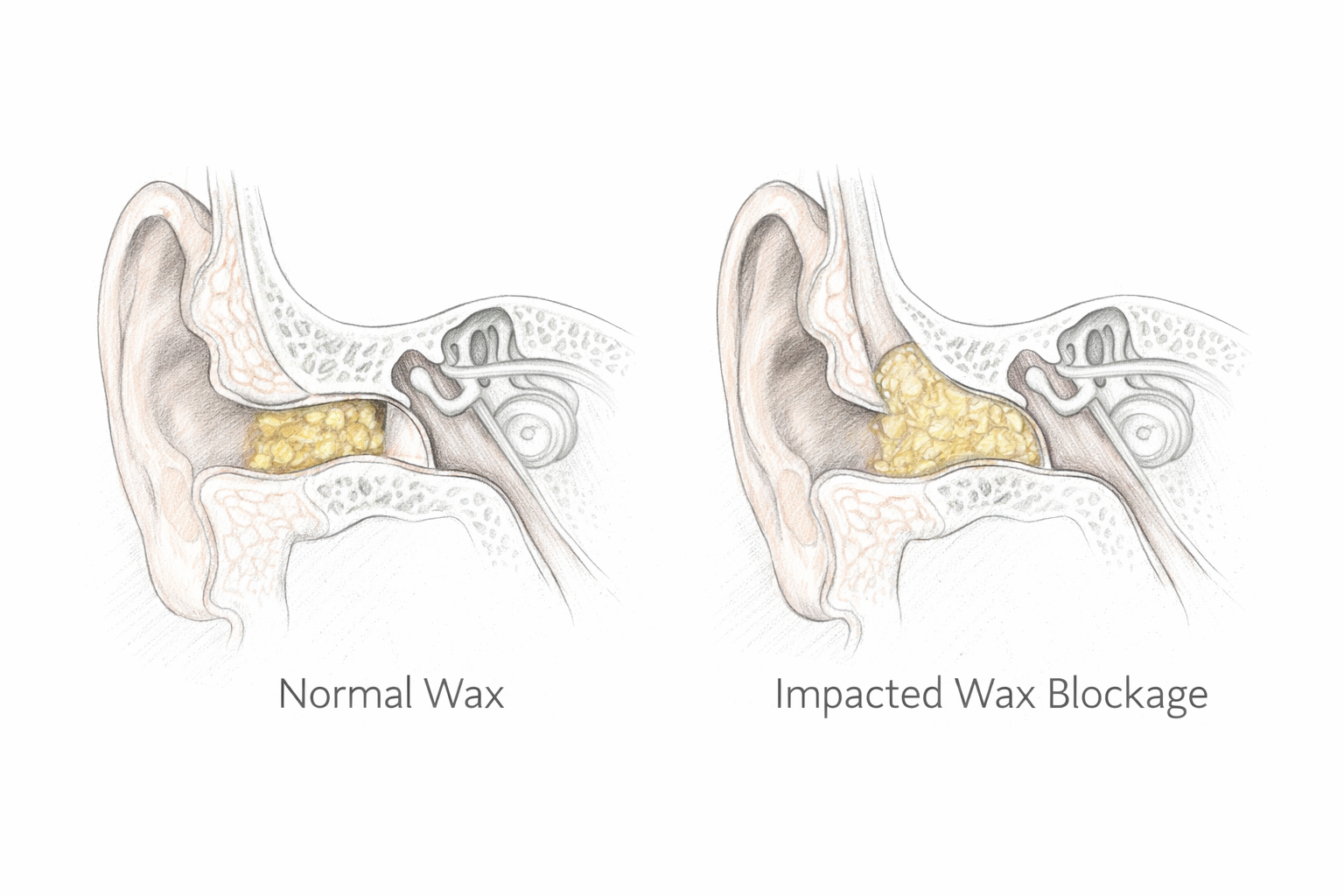
Impacted earwax occurs when wax accumulates and becomes too hard or too large to leave the ear naturally.

Instead of moving outward, it remains in the ear canal and begins to block sound.

This can lead to:

  • Reduced hearing clarity
  • A feeling of blockage
  • Changes in how sounds are perceived

It is common, particularly in older adults, and is usually straightforward to manage once identified.

Why Does Earwax Become Impacted?

There is rarely a single cause.

Common contributing factors include:

  • Narrow or curved ear canals
  • Use of hearing aids or earplugs
  • Attempting to clean ears with cotton buds
  • Naturally dry or hard earwax
  • Reduced natural movement of wax with age

In many cases, well-intentioned cleaning actually pushes wax deeper into the ear.
Common Signs of Impacted Earwax

Hand-drawn ear diagram comparing normal wax and impacted blockage

The symptoms can vary, but certain patterns are typical.

1. Gradual Hearing Loss

One of the most noticeable signs is a reduction in hearing.

You may find:

  • Sounds seem quieter than usual
  • Speech is harder to follow
  • One ear feels different from the other

This change is often subtle at first.

2. A Feeling of Fullness in the Ear

Many people describe:

  • A blocked or “plugged” sensation
  • Pressure in the ear
  • A sense that something is inside

This feeling can come and go, or remain constant.

3. Muffled or Distorted Sounds

Impacted wax can affect how sound travels.

You may notice:

  • Voices sounding unclear
  • Difficulty understanding speech
  • Sounds lacking sharpness

This is often mistaken for general hearing loss.

4. Ringing or Buzzing (Tinnitus)

Some individuals experience:

  • Ringing
  • Buzzing
  • Humming sounds

This can occur when wax interferes with normal sound processing.

5. Ear Discomfort or Mild Pain

While earwax is not usually painful, build-up can cause:

  • Mild discomfort
  • Irritation
  • Occasional aching

Pain is typically not severe, but it should not be ignored if persistent.

6. Itching in the Ear Canal

Impacted wax may lead to:

  • Persistent itching
  • Irritation inside the ear

This can encourage further attempts to clean the ear, which often worsens the problem.

7. Dizziness or Balance Changes

In some cases, impacted wax may affect balance slightly.

You may feel:

  • Light dizziness
  • Unsteadiness

This is less common, but still important to recognise.

8. Hearing Aid or Earphone Issues

If you use hearing aids, you may notice:

  • Reduced performance
  • Feedback or whistling
  • Difficulty fitting properly

Wax build-up can interfere with how devices function.
How Impacted Earwax Affects Daily Life

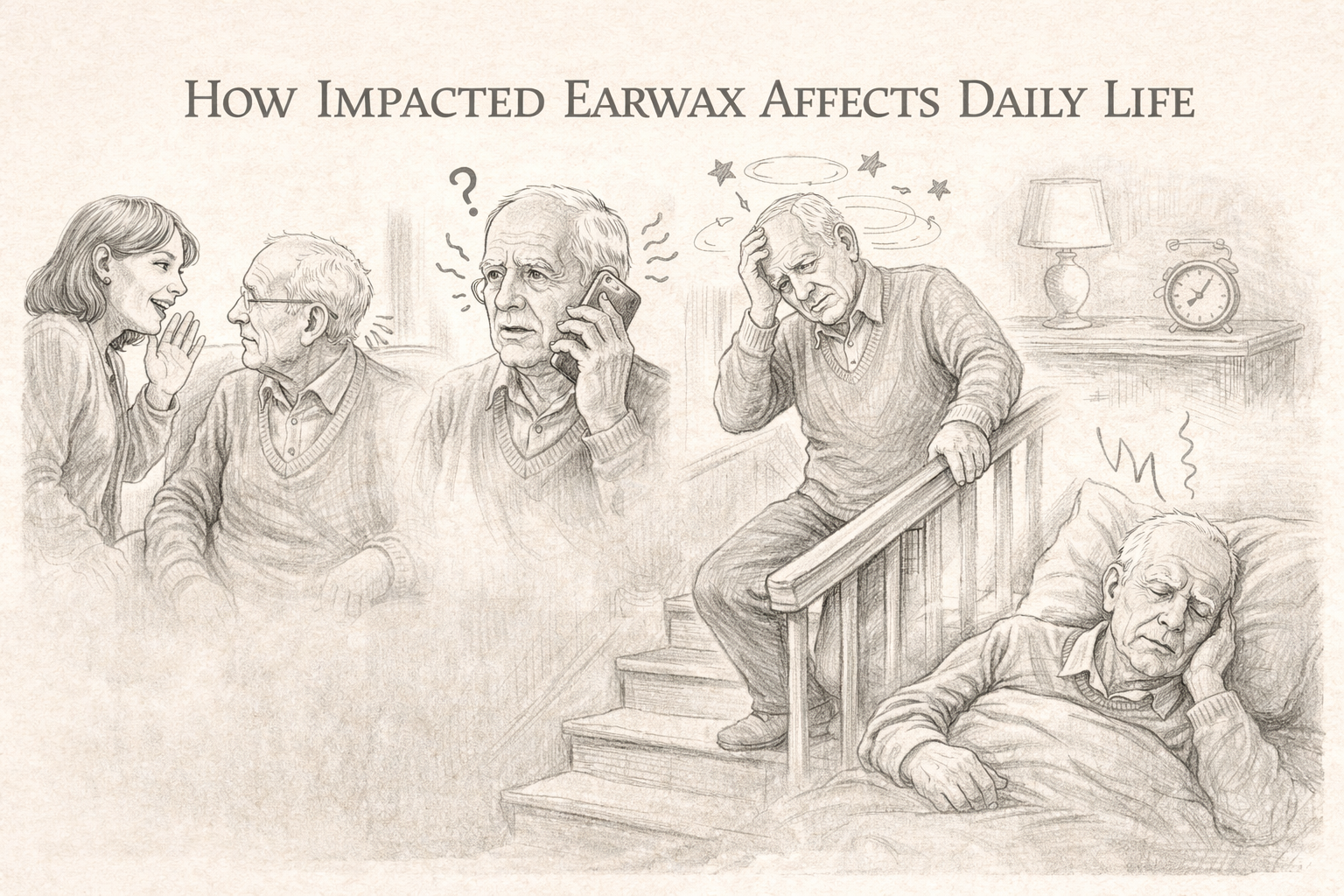
Hand-drawn illustration showing how impacted earwax affects daily life, including hearing difficulty, confusion, and disrupted sleep.

Even mild symptoms can have a noticeable effect.

You may find:

  • Conversations require more effort
  • Television volume increases
  • Social interaction becomes tiring
  • Confidence in communication reduces

These changes are often gradual, which is why they are sometimes attributed to ageing rather than earwax.

When Should You Seek Help?

It is sensible to seek support if:

  • Hearing changes suddenly
  • Symptoms persist for more than a few days
  • One ear feels significantly different from the other
  • Hearing aids are not working as expected
  • You feel unsure about what is causing the issue

A simple assessment can confirm whether earwax is the cause.

What Does Earwax Removal Involve?

Modern earwax removal is safe, gentle and effective.

Common methods include:

Microsuction

A small, controlled suction device removes wax.

  • Precise
  • Dry method
  • Comfortable for most people
Irrigation (Where Appropriate)

Warm water is used to flush wax out.

  • Suitable in certain cases
  • Not always recommended for everyone

The method used depends on the individual.
Why You Should Avoid DIY Removal

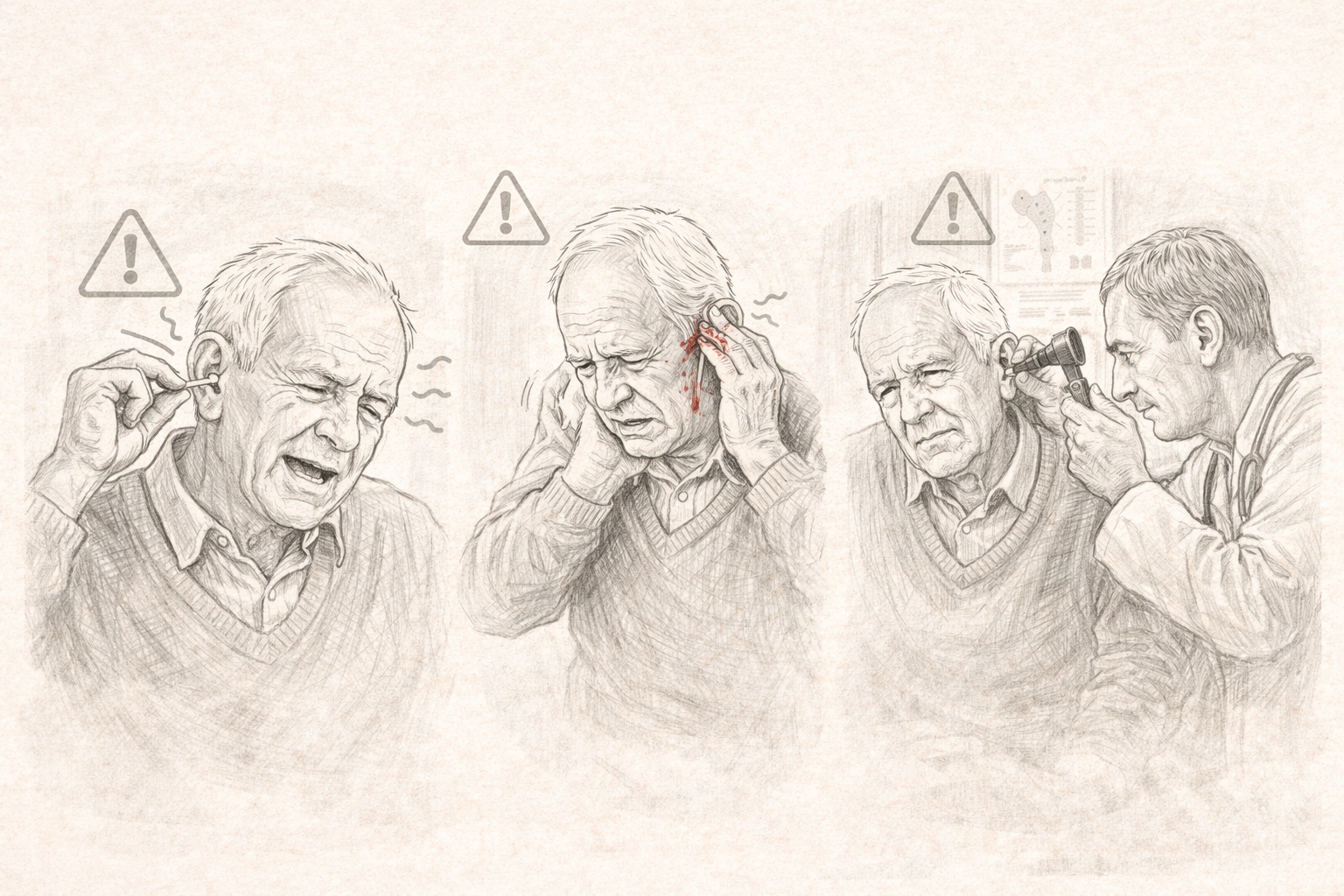
Hand-drawn illustration showing risks of DIY earwax removal, including pain, injury, and need for professional care.

It is understandable to want to resolve the issue quickly.

However, inserting objects into the ear can:

  • Push wax deeper
  • Cause irritation
  • Risk injury to the ear canal

Avoid:

  • Cotton buds
  • Hairpins or similar objects
  • Excessive use of drops without guidance

Safe removal is best carried out by trained professionals.

Earwax and Hearing Tests

Impacted earwax can affect hearing test results.

For this reason:

  • Ears are often checked before testing
  • Wax may need to be removed first

This ensures results reflect true hearing ability.

Who Is More Likely to Experience Impacted Earwax?

Hand-drawn illustration showing people at higher risk of impacted earwax, including elderly individuals, hearing aid users, and cotton bud use.

Certain groups are more affected:

  • Older adults
  • Hearing aid users
  • People who use earplugs regularly
  • Individuals with naturally narrow ear canals

Understanding this helps with early recognition.

Preventing Earwax Build-Up

Complete prevention is not always possible.

However, simple habits can help:

Keep Ear Care Minimal

The ear is self-cleaning.

Avoid unnecessary cleaning.

Avoid Inserting Objects

Do not place anything inside the ear canal.

Monitor Changes

Be aware of:

  • Hearing changes
  • Sensation of blockage

Early awareness prevents build-up becoming severe.

Routine Checks

For those prone to build-up, periodic checks are helpful.

Emotional Impact of Hearing Changes

Even temporary hearing changes can feel unsettling.

You may notice:

  • Reduced confidence
  • Frustration during conversations
  • Withdrawal from social settings

It is important to recognise that:

These effects are often reversible when caused by earwax.

Supporting a Family Member

If you suspect someone may have impacted earwax:

  • Raise the topic gently
  • Focus on support, not correction
  • Suggest a simple check rather than treatment

Reassurance makes the process easier.

Frequently Asked Questions

How do I know if it is earwax or hearing loss?

Only an ear examination can confirm this. Symptoms can overlap.

Is earwax removal painful?

No. Modern methods are designed to be comfortable.

Can earwax clear on its own?

Sometimes, yes. But impacted wax often requires assistance.

How long does removal take?

Typically 20–30 minutes, depending on the amount of wax.

Is it safe for older adults?

Yes. Professional removal is safe and commonly performed.

Should I use ear drops regularly?

Only if advised. Overuse may not be helpful.

Final Thoughts

Impacted earwax is common.

It is also manageable.

The signs are usually subtle:

  • Reduced hearing clarity
  • A feeling of blockage
  • Mild discomfort

Recognising these early allows for simple, effective support.

Hearing should feel natural.

When it changes, even slightly, it is worth understanding why.

Not urgently.
Not with concern.
But with calm, appropriate care.

Complete Hearing Care Near You
We provide professional earwax removal, accurate hearing tests, and expert hearing aid services all in one place. Our experienced team is here to help you hear clearly, comfortably, and with confidence.
Read about our privacy policy.
Thank you! Your submission has been received!
Oops! Something went wrong while submitting the form.

Struggling with Your Hearing? We're Here to Help.

Struggling with your hearing? We offer safe, professional earwax removal across the Midlands — with home visits in Leamington Spa, Nottingham, Leicester, Dudley, Peterborough, Corby, Coventry, and Nuneaton.

A English young man point at book an appointment