

In brief
Learn how to compare hearing aid quotes, check whether prices cover one aid or a pair, and understand fitting, accessories, trials and aftercare.
Key takeaways
- Hearing aids are selected using your hearing results and everyday listening needs.
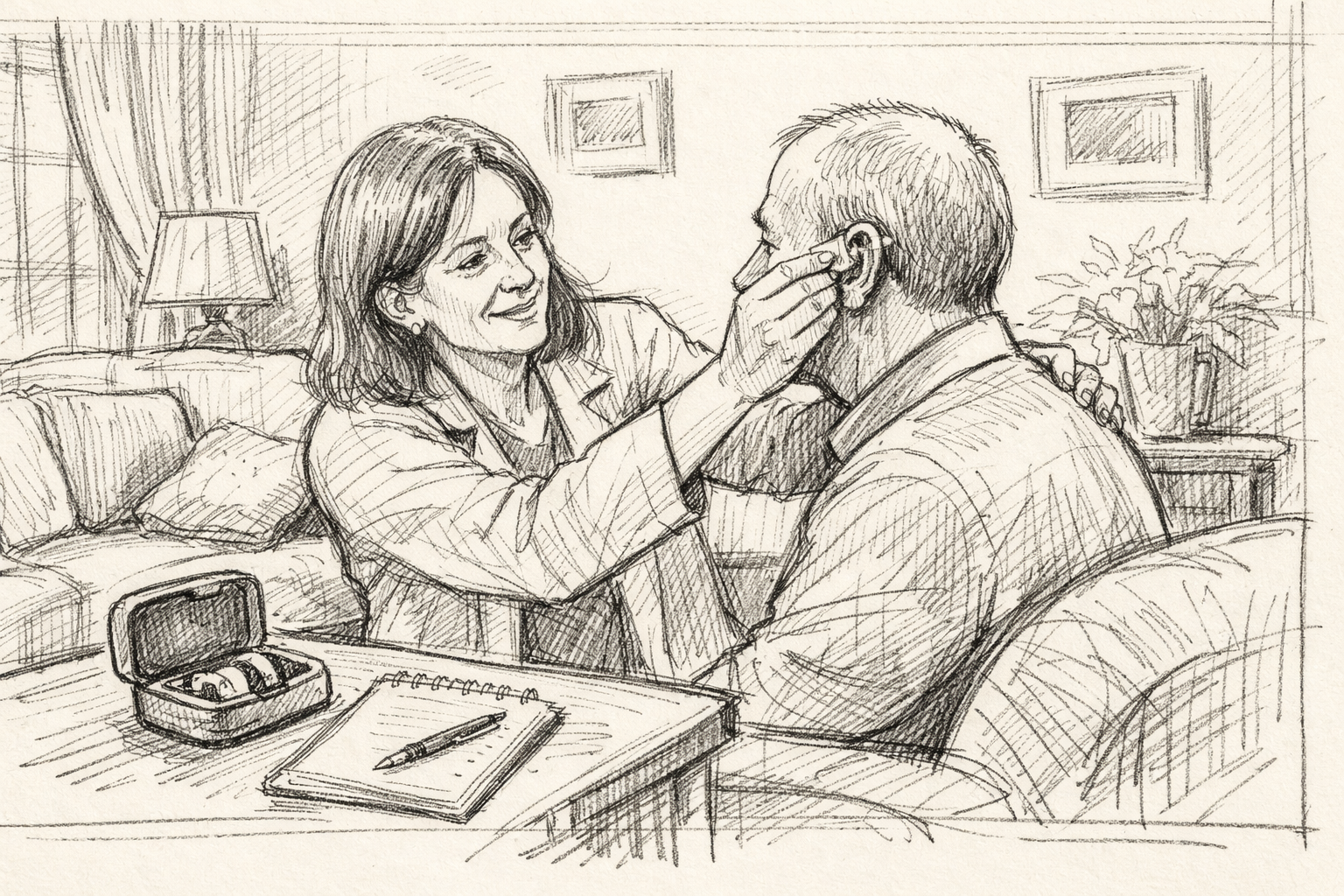
- Devices can be fitted and programmed in your own surroundings.
- Follow-up adjustments and aftercare support comfortable long-term use.
How this guide answers your question
Use these points to move from the concern you noticed to a sensible next step.
How to Compare Hearing Aid Quotes: Devices, Fitting and SupportHearing support should be clear, appropriate and accessible.
For many people in Birmingham, Coventry and the wider Midlands, the concern is not only about hearing loss itself — but also about cost, convenience and understanding available options.
Hearing aids are often associated with high expense or complicated processes.
In reality, there are a range of affordable solutions, particularly when care is delivered through home visits.
This guide explains:
- What “affordable” hearing aids really mean
- Options available in Birmingham and Coventry
- How home hearing care works
- What to expect in terms of cost
- How to choose the right solution without pressure
The aim is to provide clarity, not complexity.
What Does “Affordable Hearing Aids” Actually Mean?

Affordability is not simply about the lowest price.
It involves:
- Transparent pricing
- Appropriate technology (not excessive features)
- Long-term value
- Ongoing support
A lower-cost device that does not meet your needs may not be cost-effective in the long run.
Equally, the most advanced option is not always necessary.
The right balance depends on:
- Your level of hearing change
- Your daily environment
- Your comfort with technology
Hearing Care Options in Birmingham & Coventry

Residents in Birmingham and Coventry generally have two main pathways:
1. NHS Hearing Aids
Available through referral.
They provide:
- Reliable, standard technology
- No direct cost for the device
- Ongoing NHS support
However, there may be:
- Waiting times
- Limited choice of styles
- Less flexibility in appointment location
2. Private Hearing Care
Private providers offer:
- Faster access
- Wider range of devices
- Home visit services
- More personalised fitting
This is where affordability varies.
Private care is often more flexible particularly for those who prefer assessments at home.
Why Home Hearing Care Is Increasing in the Midlands

For many individuals, travelling to a clinic is not practical.
This is especially true for:
- Older adults
- Those with mobility concerns
- Care home residents
Home hearing care allows:
- Assessment in familiar surroundings
- Reduced stress
- More accurate understanding of real-life hearing needs
- Involvement of family members
In Birmingham and Coventry, demand for home visits has increased significantly.
How a Home Hearing Assessment Works

A home visit hearing test is structured, but calm.
Step 1: Initial Conversation
The audiologist will discuss:
- Hearing concerns
- Daily environments (home, social, television use)
- Any previous hearing history
This ensures the assessment is tailored.
Step 2: Ear Examination
The ears are checked for:
- Earwax build-up
- Blockages
- General ear health
In many cases, hearing difficulty may be linked to wax rather than hearing loss.
Step 3: Hearing Test
You will listen to:
- A range of tones
- Speech clarity tests
The process is simple and non-invasive.
Step 4: Results Explained Clearly
The audiologist will explain:
- Your hearing levels
- Whether support is recommended
- Suitable options based on your needs
There is no obligation.
The focus is understanding.
Types of Affordable Hearing Aids Available

Hearing aids vary in both design and technology.
Behind-the-Ear (BTE)
- Sits behind the ear
- Suitable for most levels of hearing loss
- Often more affordable
- Easy to handle
Receiver-in-Canal (RIC)
- Smaller and more discreet
- Comfortable for daily use
- Balanced performance and cost
In-the-Ear (ITE)
- Custom fitted
- More discreet
- Slightly higher cost in some cases
Choosing the right type depends on:
- Comfort
- Dexterity
- Hearing needs
What Affects the Cost of Hearing Aids?
Several factors influence pricing.
Technology Level
More advanced features may include:
- Background noise reduction
- Directional microphones
- Connectivity with phones
However, not everyone requires these.
Fitting and Aftercare
Cost often includes:
- Hearing test
- Fitting
- Adjustments
- Follow-up support
Ongoing care is part of value.
Number of Devices
- One hearing aid vs two
- Bilateral fitting often improves balance and clarity
Customisation
Tailored devices may cost more but offer:
- Better comfort
- Improved sound quality
How to Choose the Right Hearing Aid Without Overspending

A structured approach helps.
Focus on Your Daily Needs
Consider:
- Do you spend time in quiet or noisy environments?
- Do you watch television frequently?
- Do you attend social gatherings?
Your lifestyle determines the level of technology required.
Avoid Over-Specification
More features do not always mean better outcomes.
Choose what you will use consistently.
Ask About Ongoing Support
Affordable care includes:
- Adjustments
- Maintenance
- Advice
Prioritise Comfort and Simplicity
A hearing aid that is easy to use is more likely to be worn consistently.
The Role of Earwax Removal in Hearing Care
Before considering hearing aids, it is important to rule out earwax.
In many cases:
- Hearing improves significantly after removal
- No device is required
Earwax removal is often part of a complete hearing assessment.
Benefits of Early Hearing Support
Addressing hearing changes early can:
- Improve communication
- Reduce listening fatigue
- Support social engagement
- Maintain confidence
Hearing support is not about urgency.
It is about appropriate timing.
Common Concerns About Hearing Aids
“Are they difficult to use?”
Modern hearing aids are designed to be simple and intuitive.
“Will they be noticeable?”
Many designs are discreet.
Comfort and performance are prioritised over visibility.
“Do I need them immediately?”
Not always.
Some individuals benefit from monitoring rather than immediate use.
“Are affordable options reliable?”
Yes.
Affordable does not mean ineffective.
It means appropriate.
Hearing Care in Care Homes and Assisted Living
In Birmingham and Coventry, many care home residents benefit from home-based hearing services.
This allows:
- Assessment without travel
- Familiar environment
- Involvement of staff and family
Care is adapted to the individual.
Frequently Asked Questions

How much do hearing aids cost in Birmingham or Coventry?
Costs vary depending on type and features. Affordable options are available, particularly through home visit providers.
Can I get a hearing test at home?
Yes. Home hearing assessments are widely available in the Midlands.
Are NHS hearing aids enough?
For many people, yes. Others may prefer private options for flexibility and additional features.
How long does a hearing test take?
Typically between 45 and 90 minutes.
What if I’m unsure about getting hearing aids?
There is no obligation. A hearing test provides clarity without pressure.
Do hearing aids require maintenance?
Yes, but it is simple. Regular cleaning and occasional adjustments are usually sufficient.
Final Thoughts
Affordable hearing care is not about compromise.
It is about choosing what is appropriate.
In Birmingham and Coventry, there are now more accessible options than ever — particularly through home visit services.
The process is:
- Calm
- Structured
- Personal
A hearing test provides understanding.
From there, decisions can be made with clarity.
Not quickly.
Not under pressure.
But with confidence.
For appointment information rather than general guidance, see hearing aid care in Birmingham. Check current postcode coverage before arranging a visit.
What shapes a suitable hearing-aid choice
The right option depends on more than device size. Hearing results, daily listening needs, handling and aftercare all contribute.
| Decision area | What to consider | How it helps |
|---|---|---|
| Hearing results | The pattern and degree of hearing change | Guides appropriate programming and technology |
| Daily listening | Conversation, television, telephone and background noise | Focuses the fitting on real situations |
| Comfort and handling | Fit, controls, charging and maintenance | Supports confident, consistent use |
Considering hearing aids at home?
Learn about assessment, fitting and ongoing support in your own surroundings.
View Birmingham hearing-aid support → Hearing Aids
 Hearing Aids
 Hearing Aids