

In brief
Compare hearing aid features such as charging, connectivity and controls against everyday listening needs, suitability and package support.
Key takeaways
- Hearing aids are selected using your hearing results and everyday listening needs.
- Devices can be fitted and programmed in your own surroundings.
- Follow-up adjustments and aftercare support comfortable long-term use.
How this guide answers your question
Use these points to move from the concern you noticed to a sensible next step.
How to Compare Hearing Aid Features for Everyday ListeningChoosing hearing aids is one of the most important healthcare decisions you can make but where and how they are fitted matters just as much as the device itself.
For many people across the UK, particularly older adults or those with mobility challenges, travelling to a clinic isn’t ideal. That’s why home visit hearing aid services are becoming increasingly popular.
But here’s the real question:
What are the best hearing aids available through home visit services and how do you know which one is right for you?
This guide explains:
- What defines a “best” hearing aid
- The most advanced hearing aid features available today
- The types of hearing aids typically supplied during home visits
- How private hearing aids compare to NHS models
- What to expect from expert fitting at home
- How to avoid common mistakes
Let’s break it down properly.
What Makes a Hearing Aid “The Best”?

The best hearing aid is not the most expensive one.
It is the one that:
- Matches your specific hearing loss
- Fits comfortably
- Works in your daily environments
- Is programmed accurately
- Comes with strong aftercare support
The quality of fitting often matters more than the brand itself.
Technology is powerful but only when set up correctly.
Why Home Visit Services Change the Experience

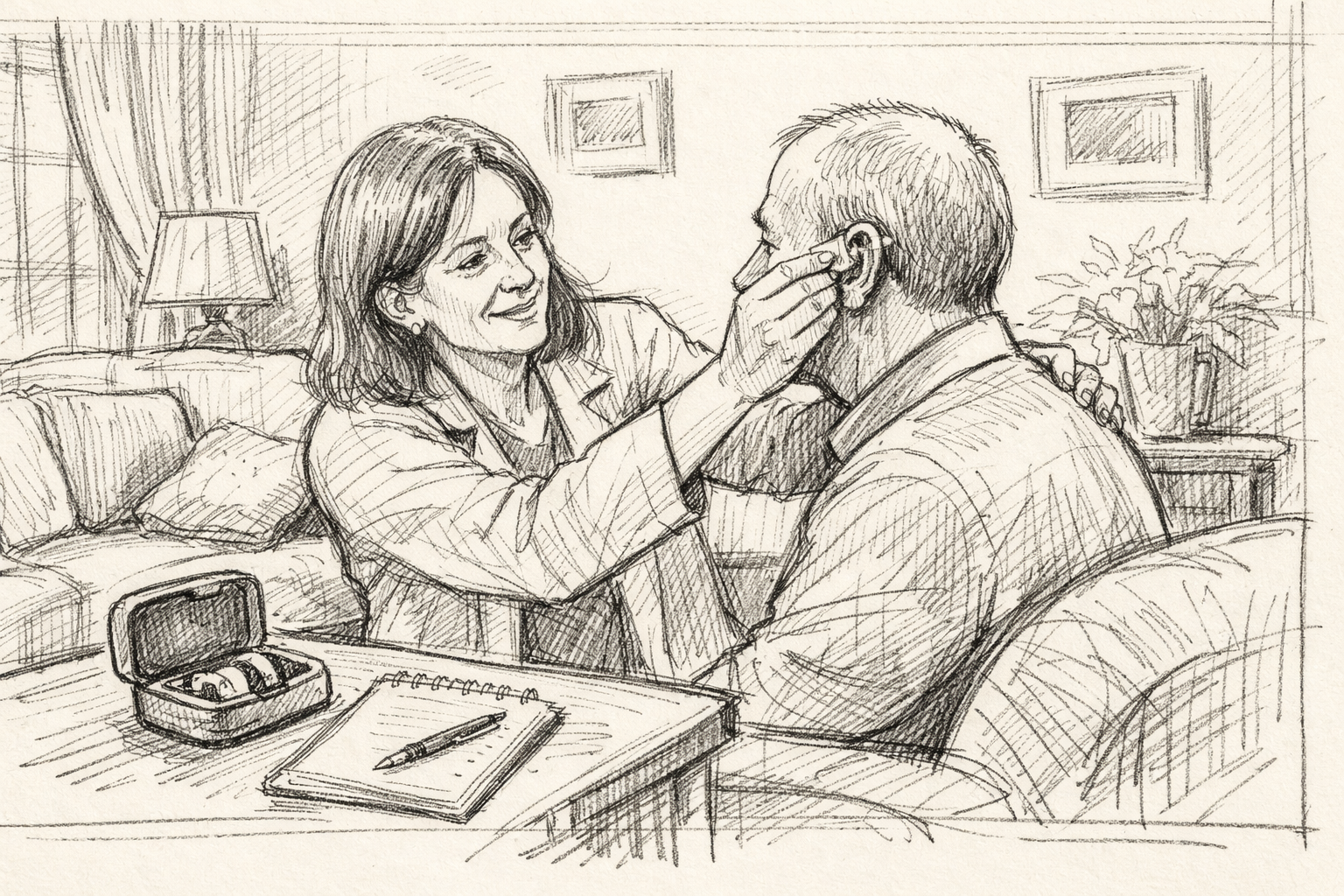
When hearing aids are fitted at home:
- You’re in a relaxed environment
- Adjustments reflect real-life acoustics
- There is more time for fine-tuning
- Family members can be present
- Privacy is maintained
Home visit services often provide longer appointments than high-street clinics.
That matters more than most people realise.
The Main Types of Hearing Aids Available Through Home Visit Services

Home visit providers typically supply the same premium models available in clinics.
1. Receiver-in-Canal (RIC) Hearing Aids
These are among the most popular modern devices.
Benefits:
- Lightweight
- Discreet
- Excellent sound clarity
- Suitable for mild to severe loss
RIC devices are often rechargeable and Bluetooth-enabled.
2. Behind-the-Ear (BTE) Hearing Aids
More powerful and slightly larger.
Best for:
- Moderate to severe hearing loss
- Dexterity challenges
- Long battery life needs
They are reliable and easy to handle.
3. Invisible / In-the-Ear Hearing Aids
Custom-moulded to sit inside the ear canal.
Benefits:
- Highly discreet
- Minimal visibility
- Natural sound positioning
However, they are not suitable for all hearing loss types.
4. Rechargeable Hearing Aids
Now considered standard in premium models.
Advantages:
- No small batteries to change
- Overnight charging
- Eco-friendly
- Easier for elderly users
Rechargeable models are especially popular in home visit services.
Advanced Features in the Best Modern Hearing Aids

If you’re exploring private hearing aids through home visit services, expect features such as:
Background Noise Reduction
Improves speech clarity in busy environments.
Directional Microphones
Focus on voices in front of you.
Feedback Cancellation
Reduces whistling sounds.
Bluetooth Connectivity
Connects directly to smartphones, TVs, and tablets.
Automatic Environment Adjustment
Adapts to quiet rooms, restaurants, and outdoor spaces automatically.
Rechargeable Lithium-Ion Batteries
Full-day use from one charge.
The best hearing aids combine these features seamlessly without feeling complicated.
Private Hearing Aids vs NHS Hearing Aids
This is a common question.
NHS Hearing Aids
- Free of charge
- Standard technology
- Limited cosmetic choice
- Clinic-based fitting only
- Longer waiting times
Private Hearing Aids (Home Visit)

- Wider range of advanced technology
- Faster access
- More discreet options
- Home-based assessment and fitting
- Ongoing aftercare
Private hearing aids often offer greater flexibility and comfort especially for those who value personalised care.
What Happens During a Home Hearing Aid Appointment?
A professional home visit typically includes:
- Full hearing test
- Ear health examination
- Discussion of lifestyle needs
- Technology recommendation
- Hearing aid fitting and programming
- Education and hands-on training
- Scheduled follow-ups
The process is unhurried and tailored.
Are Home-Fitted Hearing Aids as Accurate as Clinic Fittings?
Yes.
Modern portable audiology equipment provides:
- Accurate hearing assessments
- Precise programming
- Real-ear measurements (where appropriate)
The environment may actually improve comfort and communication during fitting.
Hearing Aids for Elderly Patients at Home
Home fitting is particularly beneficial for:
- Over 70s
- Mobility-limited patients
- Care home residents
- Individuals with anxiety
Advantages include:
- No travel fatigue
- Familiar surroundings
- Family support present
- Reduced stress
Comfort increases acceptance and daily usage.
Best Hearing Aids for Different Needs

For Mild Hearing Loss
Discreet RIC models with Bluetooth and rechargeable features.
For Moderate Hearing Loss
Powerful RIC or BTE devices with adaptive sound processing.
For Severe Hearing Loss
High-power BTE devices with custom moulds.
For Active Lifestyles
Automatic environmental adjustment + water resistance.
For Tech Users
Bluetooth streaming + smartphone control apps.
There is no single “best” only best matched.
How Pricing Works with Home Visit Hearing Aids
Private hearing aids vary depending on:
- Technology level
- Feature set
- Brand
- Aftercare package
What matters most is not initial price but long-term support.
Avoid choosing based purely on cost.
Aftercare: The Hidden Factor in “Best” Hearing Aids
Even the best hearing aids fail without proper support.
Look for:
- Included follow-up appointments
- Hearing aid cleaning
- Adjustment visits
- Warranty coverage
- Access to advice
Home visit services often include aftercare in package pricing.
Questions to Ask Before Choosing
- What technology level suits my hearing?
- Is aftercare included?
- How many follow-up visits are provided?
- Are hearing tests included long-term?
- What happens if my hearing changes?
A reputable provider will answer clearly.
How to Avoid Common Mistakes
Avoid:
- Buying purely online without fitting
- Choosing invisible models for severe loss
- Skipping aftercare
- Ignoring earwax management
- Choosing cheapest option over best fit
Hearing is long-term not a quick purchase.
Final Thoughts: Choosing the Best Hearing Aids Through Home Visit Services

The best hearing aids are:
- Correctly prescribed
- Precisely fitted
- Properly adjusted
- Supported with aftercare
Home visit services combine professional expertise with comfort and privacy creating an environment where hearing solutions can truly be personalised.
If you value expert care without clinic stress, hearing aids fitted at home may be the most effective and comfortable option available.
For appointment information rather than general guidance, see Explore private hearing aids. Check current postcode coverage before arranging a visit.
What shapes a suitable hearing-aid choice
The right option depends on more than device size. Hearing results, daily listening needs, handling and aftercare all contribute.
| Decision area | What to consider | How it helps |
|---|---|---|
| Hearing results | The pattern and degree of hearing change | Guides appropriate programming and technology |
| Daily listening | Conversation, television, telephone and background noise | Focuses the fitting on real situations |
| Comfort and handling | Fit, controls, charging and maintenance | Supports confident, consistent use |
Considering hearing aids at home?
Learn about assessment, fitting and ongoing support in your own surroundings.
Explore private hearing aids → Hearing Aids
 Hearing Aids
 Hearing Aids