

In brief
A home hearing assessment can use suitable portable equipment, but the room, background noise, test method and clinician interpretation all matter. Ask which tests are included and how results will be checked.
Key takeaways
- A home hearing assessment considers the listening situations that matter to you.
- Your ears are checked before the hearing tests begin.
- Results and practical next steps are explained during the appointment.
How this guide answers your question
Use these points to move from the concern you noticed to a sensible next step.
Can a Hearing Test at Home Be Accurate?A home hearing assessment can use suitable portable equipment, but the room, background noise, test method and clinician interpretation all matter. Ask which tests are included and how results will be checked.
What affects hearing-test accuracy?
Equipment, test conditions and the way a test is carried out affect its usefulness. A quiet room helps reduce interference from traffic, television and other household noise. A clinician considers these conditions when deciding which checks can be completed and whether further assessment is needed.
Is a home assessment the same as an online test?
An online hearing screen may highlight a possible difficulty, but headphones, device settings and background noise can affect the result. A clinician-led visit includes a conversation about symptoms and an ear examination alongside appropriate testing. Do not use a screening score alone to diagnose or choose hearing aids.
How should you prepare the room?
Choose the quietest available room, turn off television and music, and let other people know a test is taking place. Tell the clinician if you cannot reduce noise. Bring existing aids, relevant ear history and a list of situations where you struggle to hear.
How are results explained?
Ask what your results show, whether both ears were assessed and what limitations apply. Further investigation may be appropriate for some findings. A useful assessment ends with a clear explanation, an opportunity to ask questions and a practical next step rather than a device recommendation alone.
When to seek medical advice
Sudden hearing loss, rapidly worsening hearing, or hearing loss with pain or discharge needs urgent medical advice. Contact your GP or NHS 111 rather than waiting for a routine appointment. Read the NHS hearing loss guidance.
Explore assessment and local support
For practical appointment information, read about home hearing assessments. If you live locally, see hearing tests in Leicester or hearing aid fitting and support in Leicester. These service pages explain booking and availability.
What a home hearing assessment can clarify
A hearing assessment connects everyday listening difficulties with measured results and practical next steps.
| Part of the visit | What it explores | Why it matters |
|---|---|---|
| Conversation and history | Changes, priorities and listening situations | Keeps the assessment relevant to everyday life |
| Ear examination | Visible wax and the condition of the outer ear | Helps identify whether another step is needed first |
| Appropriate hearing tests | Responses to sounds across useful frequencies | Provides results that can be explained and discussed |
Would a hearing assessment help?
Explore private hearing tests carried out at home, with results explained clearly.
Check availability and book →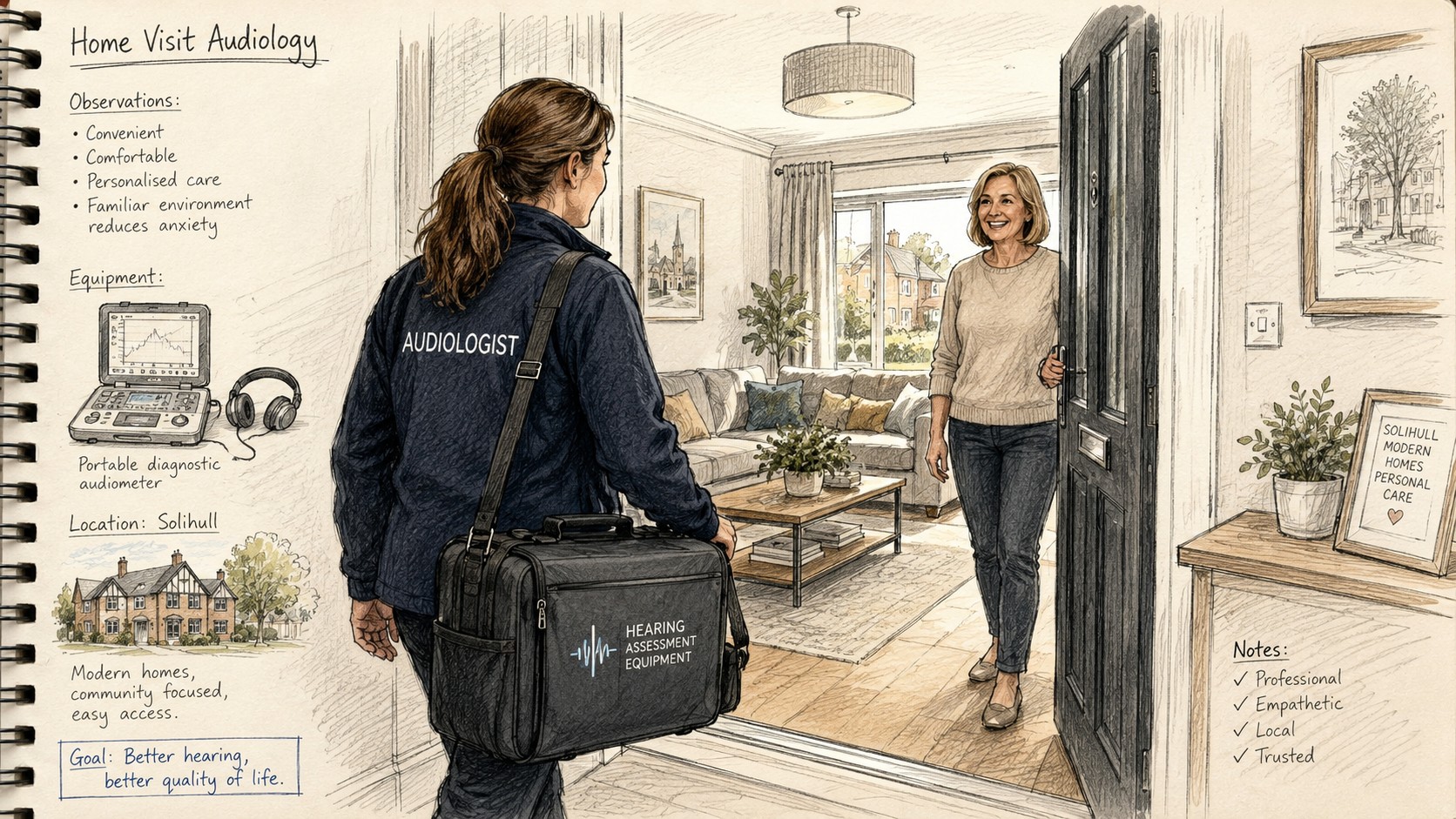 Hearing Test
 Hearing Test
 Hearing Test