
In brief
Ask which communication changes help, reduce background noise and support an assessment when the person is ready. Respect their preferences and consent; family support should not take over decisions about hearing care.
Key takeaways
- A home hearing assessment considers the listening situations that matter to you.
- Your ears are checked before the hearing tests begin.
- Results and practical next steps are explained during the appointment.
How this guide answers your question
Use these points to move from the concern you noticed to a sensible next step.
How Can Family Support Someone With Hearing Difficulties?Ask which communication changes help, reduce background noise and support an assessment when the person is ready. Respect their preferences and consent; family support should not take over decisions about hearing care.
How can you start a helpful conversation?
Describe specific situations kindly rather than labelling someone as difficult or inattentive. Ask what they have noticed and what would help. Hearing changes can be gradual, and an assessment may clarify the cause without committing anyone to treatment.
Which everyday communication changes help?
Face the person, keep your mouth visible and reduce competing television or music. Speak clearly without shouting. Rephrase a missed sentence rather than repeating it louder, and take turns in group conversations. Ask whether these changes are useful.
Can a family member attend a hearing appointment?
A relative or carer can join if the patient agrees. They can help recall questions and describe situations, while the clinician addresses the patient directly. Agree beforehand what support is welcome and respect privacy.
What support is useful after the assessment?
Help review the explanation and practical next steps if asked. If aids are chosen, allow time to learn their handling and discuss difficulties at follow-up. Seek urgent medical advice for sudden hearing loss rather than waiting for a routine appointment.
When to seek medical advice
Sudden hearing loss, rapidly worsening hearing, or hearing loss with pain or discharge needs urgent medical advice. Contact your GP or NHS 111 rather than waiting for a routine appointment. Read the NHS hearing loss guidance.
Explore assessment and local support
For practical appointment information, read about home hearing assessments. If you live locally, see hearing tests in Leicester or hearing aid fitting and support in Leicester. These service pages explain booking and availability.
What a home hearing assessment can clarify
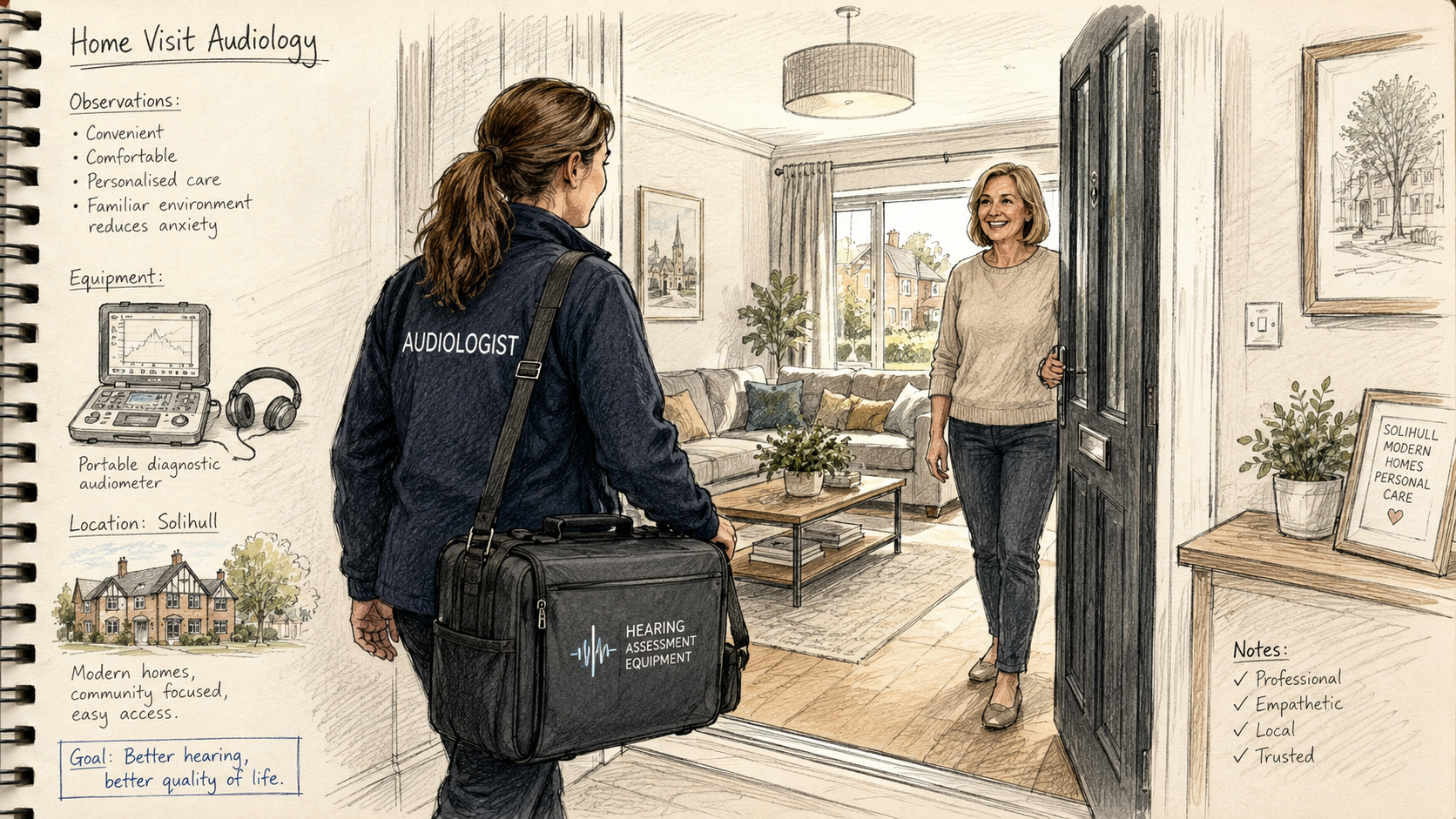
A hearing assessment connects everyday listening difficulties with measured results and practical next steps.
| Part of the visit | What it explores | Why it matters |
|---|---|---|
| Conversation and history | Changes, priorities and listening situations | Keeps the assessment relevant to everyday life |
| Ear examination | Visible wax and the condition of the outer ear | Helps identify whether another step is needed first |
| Appropriate hearing tests | Responses to sounds across useful frequencies | Provides results that can be explained and discussed |
Would a hearing assessment help?
Explore private hearing tests carried out at home, with results explained clearly.
View Solihull hearing tests → Hearing Test
 Hearing Test
 Hearing Test