
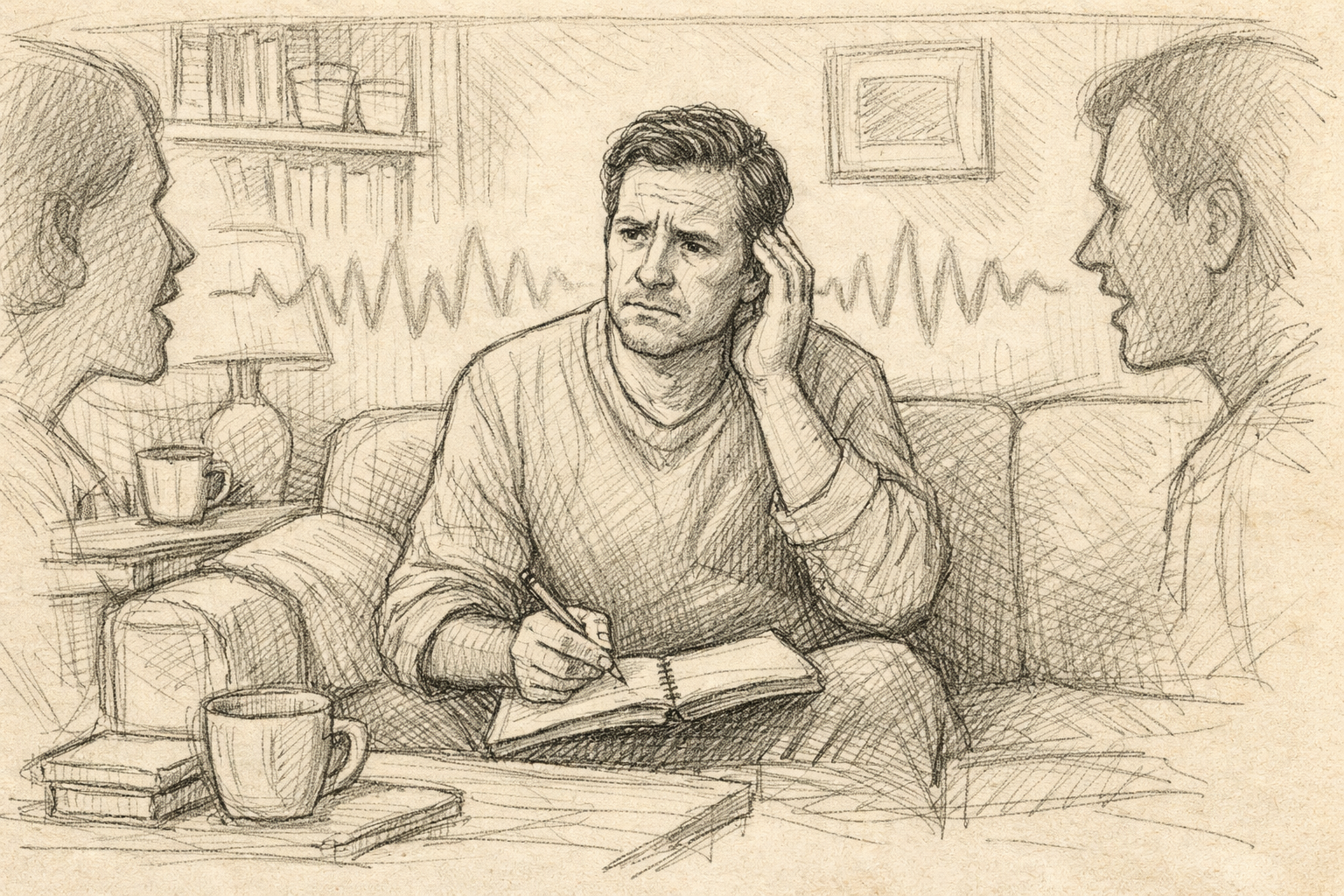
Hearing loss rarely announces itself clearly. For most people, it develops slowly and quietly, blending into everyday life until simple conversations start to feel frustrating or exhausting.
You may still hear sounds doorbells, traffic, music but speech feels unclear. You might notice yourself guessing words, watching people’s lips more closely, or withdrawing from noisy environments. Often, family members notice these changes before you do.
In the UK, hearing tests are frequently delayed. Many people assume hearing problems are just part of ageing, or they put off testing because clinic visits feel inconvenient, intimidating, or unnecessary.
Modern home hearing tests remove those barriers entirely. They offer professional, accurate hearing assessments in a calm, familiar environment without travel, waiting rooms, or pressure.
This guide explains the most important signs that suggest it’s time to book a hearing test, why early testing matters, and how a home visit hearing test can be the simplest next step.

One of the biggest misconceptions about hearing loss is that you’ll know exactly when it starts. In reality, the brain adapts remarkably well filling in missing sounds, guessing words, and working harder to keep conversations flowing.
This adaptation masks the problem, but it comes at a cost.
Over time, untreated hearing difficulties can lead to:
Importantly, delaying a hearing test doesn’t just delay treatment it delays understanding. Many hearing tests reveal simple causes such as earwax build-up or mild changes that only need monitoring.
A hearing test is not a commitment to hearing aids. It is a baseline check that gives clarity and control.

This is one of the most common early warning signs.
You may notice:
This often happens because high-frequency sounds like “s”, “f”, “t”, and “k” are usually affected first. These sounds carry speech detail, not loudness.
Many people say, “I can hear you, I just can’t understand you.”
That sentence alone is a strong indicator that a hearing test would be helpful.

If conversations become difficult in busy environments, it’s worth paying attention.
You may struggle in:
Background noise competes with speech, and early hearing loss makes separating sounds much harder. As a result, listening becomes tiring and frustrating.
A professional hearing test especially one carried out calmly at home can assess how well your ears and brain work together in complex listening situations.
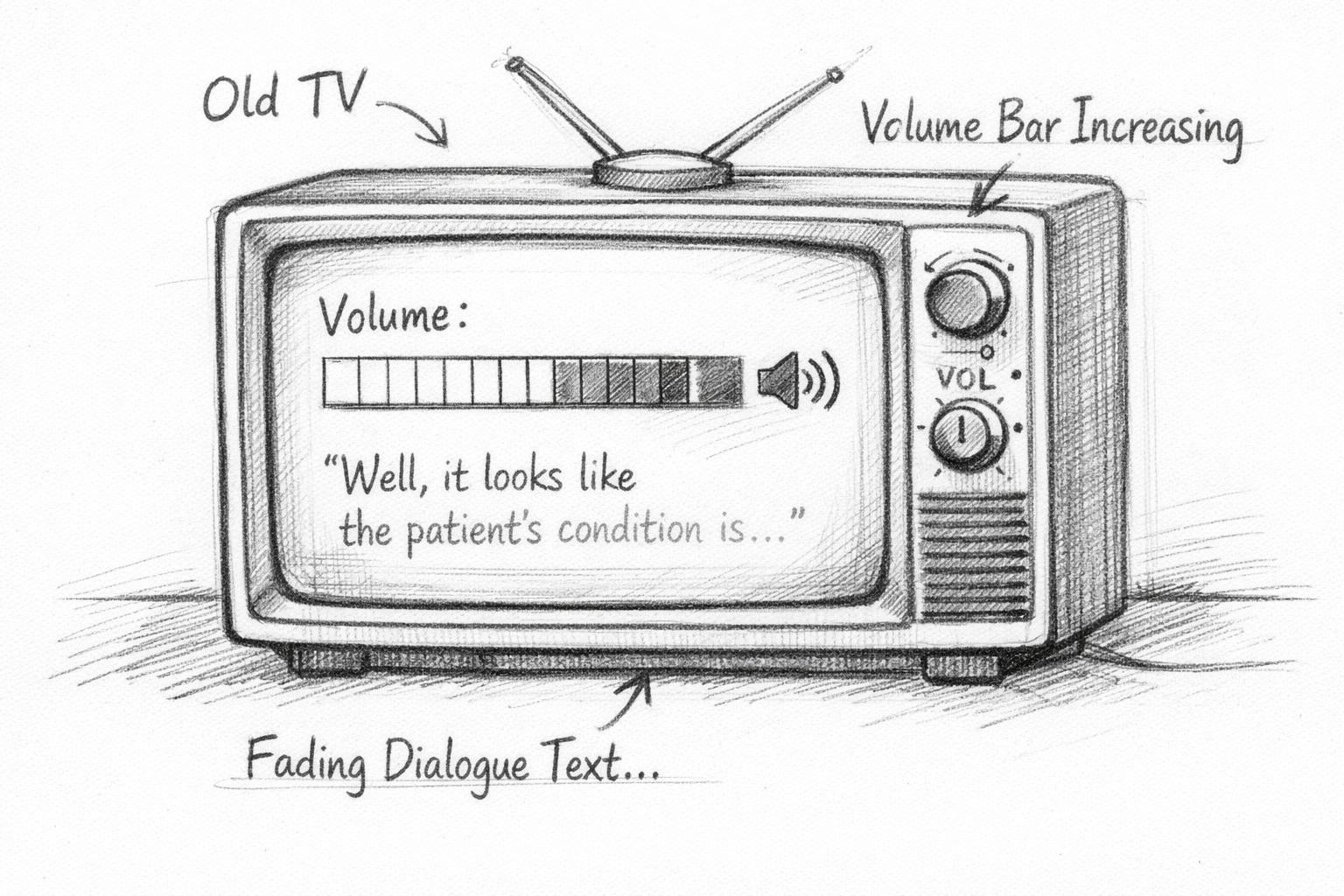
Gradually turning the TV volume up is one of the most common compensations for hearing loss.
Common signs include:
Increasing volume boosts sound but doesn’t restore clarity. A hearing test helps determine whether hearing loss is affecting speech understanding rather than loudness.

Many people notice hearing changes first on the phone.
Phone conversations remove helpful visual cues such as:
You may find yourself:
This is a common sign that hearing support or at least assessment is worth considering.

Hand-drawn sketch of an older adult at home wearing hearing aids, holding their head with a frustrated expression, with question marks above them.
Hearing loss doesn’t just affect hearing it affects energy.
When your brain constantly fills in missing sounds, it works much harder than usual. This can lead to:
Many people only realise how tiring listening has become after they’ve had a hearing test and support.

Loved ones often spot hearing changes early.
Comments such as:
These observations aren’t criticism they’re often concern. Listening to outside perspective can be an important step towards early assessment.

Tinnitus is the perception of sound without an external source. It may present as ringing, buzzing, humming, or whistling.
While tinnitus doesn’t always mean hearing loss, it frequently appears alongside hearing changes. A hearing test helps identify whether tinnitus is linked to hearing sensitivity and what support may help.
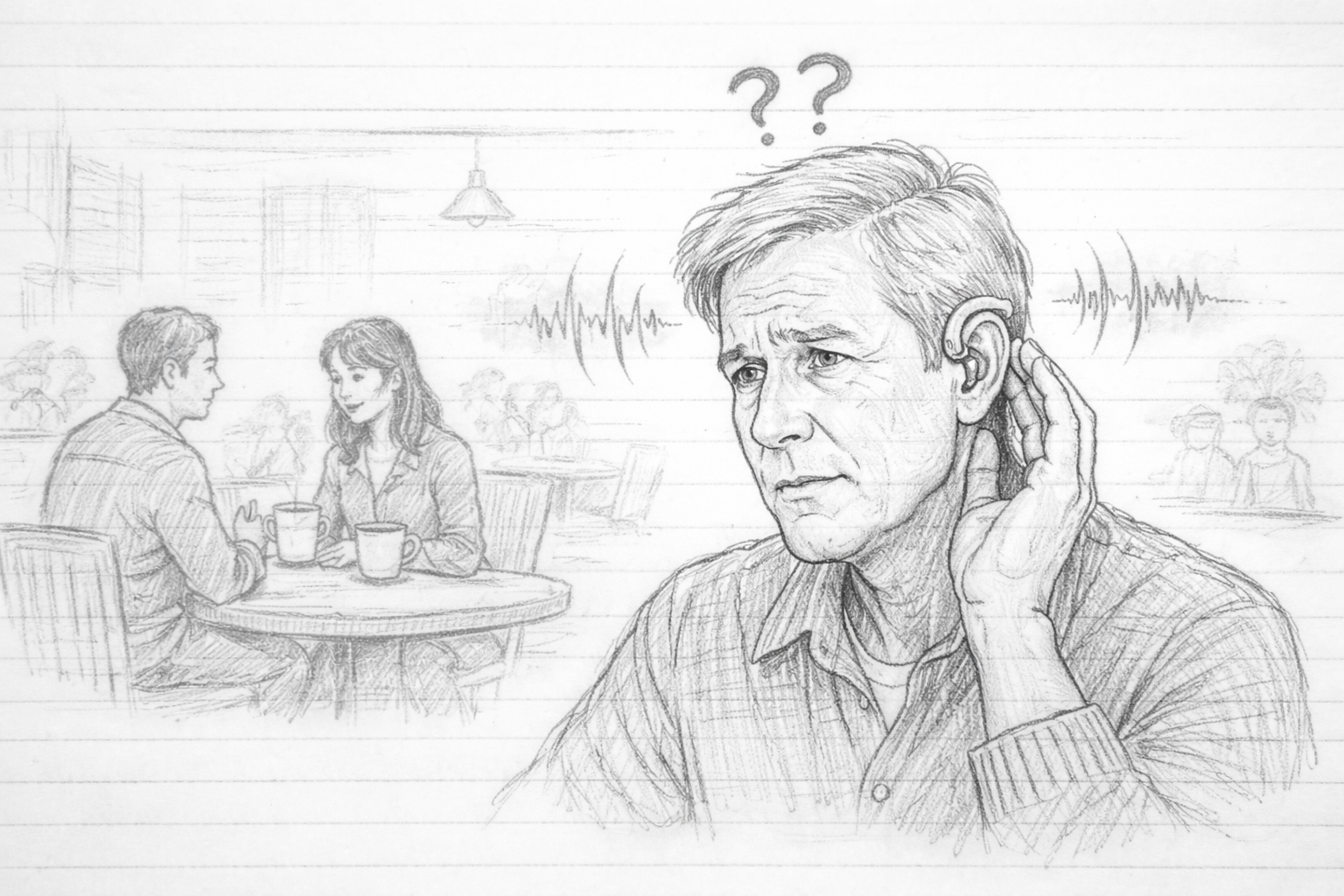
If you already wear hearing aids and they don’t seem to help as much as they used to, this is a strong reason to book a hearing test.
Possible causes include:
A home hearing test allows both hearing levels and hearing aid performance to be reviewed without needing to attend a clinic.
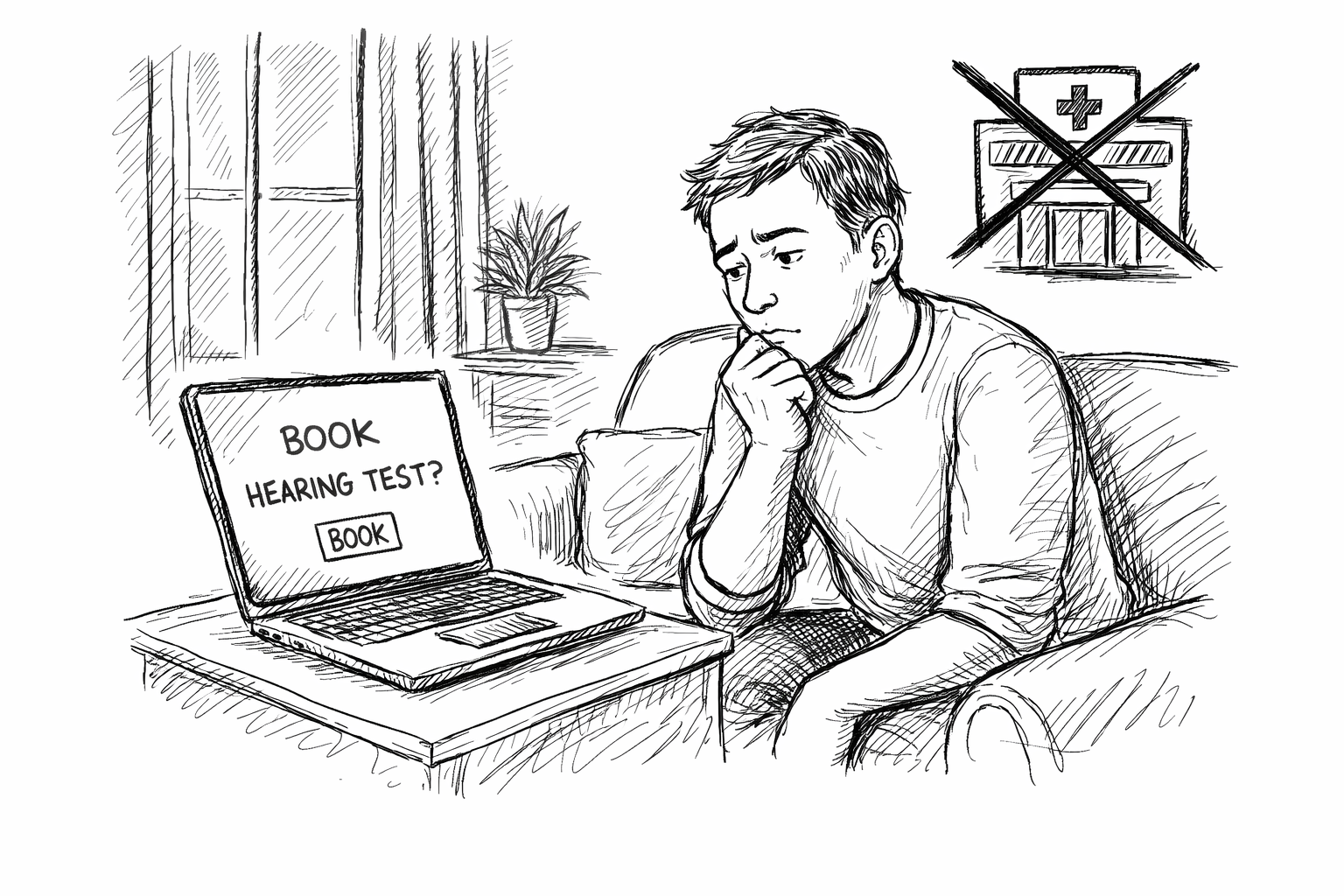
Many people delay hearing tests not because they don’t care but because clinics feel overwhelming.
Common reasons include:
This is exactly why home visit hearing tests have become increasingly popular across the UK.
A home hearing test provides the same professional assessment as a clinic appointment, but in surroundings where you feel relaxed.
Key advantages include:
Being relaxed improves communication and often leads to a more accurate assessment.
A professional home hearing test includes:
There is no obligation to proceed with hearing aids.
Many people avoid hearing tests because they fear being pressured into hearing aids.
In reality:
When hearing aids are appropriate, modern private hearing aids are discreet, comfortable, and tailored to lifestyle and can be fitted at home if preferred.
General UK guidance suggests:
Regular testing helps catch changes early and reduce long-term impact.
Home hearing tests are ideal for:
Is a home hearing test accurate?
Yes. Professional equipment is used the same standard as clinics.
How long does it take?
Typically 45–60 minutes.
Do I need special equipment?
No - everything is provided.
What if my hearing is normal?
You gain reassurance and a clear baseline for the future.
✔ Conversations feel unclear
✔ Background noise is exhausting
✔ TV volume increasing
✔ Phone calls are difficult
✔ Family notices changes
✔ You want privacy and convenience
Hearing changes don’t arrive suddenly they build quietly over time.
Ignoring them doesn’t make them disappear. But checking your hearing doesn’t commit you to anything either.
A professional home hearing test offers clarity, reassurance, and control all from the comfort of your own home.
If you’ve recognised even one of these signs, booking a hearing test could make everyday life noticeably easier.