

As we age, small health issues can begin to have a much bigger impact on everyday life. One of the most common and most overlooked problems affecting older adults is earwax build-up. For many elderly patients, blocked ears can lead to reduced hearing, balance concerns, communication difficulties, and increased isolation.
Across the Midlands, families and carers often notice hearing changes before the patient does. Televisions get louder, conversations become harder to follow, and hearing aids stop working as well as they once did. In many cases, earwax build-up is the underlying cause.
Travelling to a clinic is not always practical for elderly patients. Mobility limitations, health conditions, transport issues, and anxiety can all make clinic visits challenging. This is why professional earwax removal at home has become an increasingly important service for older adults across the West and East Midlands.
At Hazelwood HearCare, we provide safe, professional home visit earwax removal using microsuction, delivered with patience, respect, and dignity directly in the patient’s own home.

Earwax (cerumen) is a natural and important substance that helps protect the ear canal from dust, bacteria, and irritation. However, the way earwax behaves changes significantly with age, which is why blocked ears are far more common in elderly patients than in younger adults.
In older age, earwax is more likely to become dry, hard, and compacted, making it difficult for the ear to clear naturally. Instead of slowly migrating out of the ear canal, wax can build up over time and form a blockage that affects hearing and comfort.
Several age-related factors contribute to this increased risk:
As we get older, the skin produces less natural oil. This affects the composition of earwax, causing it to become firmer and less pliable. Dry earwax is far more likely to stick to the ear canal and become impacted, rather than clearing on its own.
Natural jaw movement from chewing and talking plays an important role in helping earwax migrate out of the ear canal. In elderly patients, reduced chewing, softer diets, or limited jaw movement can slow this process, allowing wax to accumulate more easily.
Hearing aids are a major contributing factor to earwax build-up in older adults. Devices worn in the ear can:
This is why hearing aid users often experience recurring blocked ears and benefit from regular professional earwax removal.
With age, the structure of the ear canal can change. In some elderly patients, the ear canal becomes narrower or less firm, making it easier for wax to become trapped and harder to remove naturally.
In the UK, colder months often mean prolonged use of central heating. Dry indoor air can further harden earwax, increasing the likelihood of blockages particularly for elderly patients who spend more time indoors.
For older adults living in cities such as Birmingham, Coventry, Leicester, and Nottingham, these factors frequently overlap. Hearing aid use, dry indoor environments, and age-related changes together lead to recurring earwax build-up that often requires professional earwax removal, ideally delivered through safe and convenient home visit services.
Understanding why earwax blockages are more common in elderly patients helps families and carers recognise symptoms early and seek appropriate treatment before hearing and comfort are significantly affected.
Blocked ears are not simply a hearing issue. In elderly patients, earwax build-up can affect safety, independence, and wellbeing.
Common effects include:
In some cases, untreated earwax build-up can increase the risk of falls or contribute to confusion, particularly in patients already managing other health conditions.
For many elderly patients, attending a clinic appointment is not simply inconvenient it can be genuinely difficult. Mobility limitations, health conditions, transport issues, and anxiety about unfamiliar environments all act as barriers to accessing timely hearing care. As a result, earwax build-up is often left untreated for longer than it should be.

Home earwax removal removes these barriers entirely by bringing professional hearing care directly to the patient’s door. This approach is increasingly preferred across the Midlands for older adults who value comfort, dignity, and continuity of care.
Receiving professional earwax removal at home allows elderly patients to feel supported, respected, and in control of their care. This is particularly valuable for those who feel vulnerable in medical environments or who have previously avoided treatment due to the stress of clinic visits.
For families and carers across the Midlands, home earwax removal also provides reassurance knowing that safe, effective hearing care can be delivered without disruption, travel, or unnecessary strain on the patient.
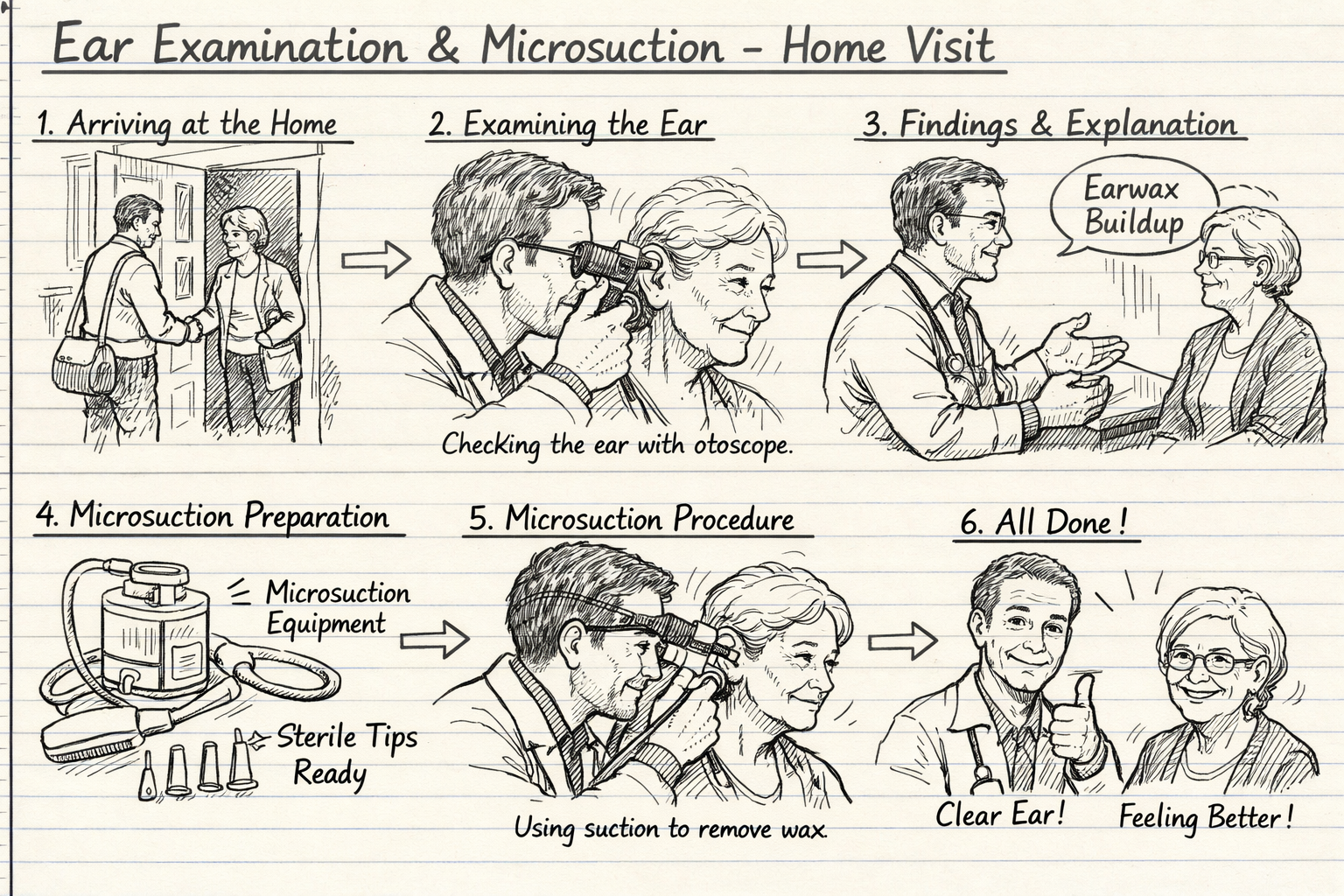
A professional earwax removal appointment at home follows the same clinical standards you would expect from a specialist audiology clinic delivered in a calm, familiar, and unhurried environment. This approach is particularly beneficial for elderly patients, as it removes the stress and physical demands of travelling to appointments.
A qualified hearing care professional arrives at your home with all the necessary equipment and takes time to explain each step before treatment begins. The focus is always on comfort, safety, and clear communication.
Initial ear examination
The appointment begins with a careful examination of the ears using an otoscope. This allows the practitioner to assess the ear canal, check overall ear health, and confirm whether earwax build-up is the cause of the blockage.
Assessment of earwax build-up
The type, amount, and position of the earwax are identified. Earwax can vary in consistency from soft to dry and compacted and understanding this helps determine the safest and most effective method of removal.
Microsuction earwax removal
Earwax is gently removed using microsuction, the gold-standard method for earwax removal in the UK. This technique uses controlled suction under direct visual guidance, allowing wax to be removed precisely without introducing water into the ear canal.
Final ear health check
Once the earwax has been removed, the ears are re-examined to ensure the ear canal is clear and healthy. This final check confirms that the blockage has been resolved and that there are no signs of irritation.
Aftercare advice
Clear, practical advice is provided to help maintain ear health. This may include guidance on hearing aid care, how to reduce the risk of future earwax build-up, and when to consider routine ear checks.
Home earwax removal appointments are carried out slowly and carefully, with plenty of opportunity for patients or carers to ask questions. For elderly patients, this relaxed pace and familiar setting often make the experience far more comfortable than clinic-based treatment.
Across the Midlands, many families choose home visit earwax removal because it combines professional clinical care with dignity, reassurance, and minimal disruption helping restore hearing clarity safely and comfortably.
Microsuction earwax removal is widely regarded as the safest and most suitable method for elderly patients, thanks to its precision, control, and gentle approach. It is now the preferred technique used by hearing care professionals across the UK, particularly when treating older adults.
As we age, the ear canal can become more delicate and sensitive. Balance can also be more easily affected, making it especially important to use a method that minimises risk. Microsuction is designed with these considerations in mind.
Unlike older methods such as ear syringing or irrigation:
Many elderly patients already experience balance issues or use hearing aids. Microsuction’s controlled and gentle nature makes it particularly suitable in these situations, as it avoids sudden pressure changes and unnecessary stimulation of the inner ear.
For older adults with delicate ear canals, recurring earwax build-up, or concerns about dizziness, microsuction offers the safest, most controlled approach to earwax removal whether performed in a clinic or, increasingly, during a professional home visit.
Choosing microsuction helps ensure earwax is removed effectively while prioritising comfort, safety, and dignity for elderly patients across the Midlands.

Elderly patients who wear hearing aids are particularly prone to earwax build-up, and it is one of the most common reasons hearing aids stop working as expected. While hearing aids are essential for improving communication and quality of life, they can unintentionally interfere with the ear’s natural ability to clear wax.
When earwax builds up in hearing aid users, it can:
For elderly patients, this can be frustrating and confusing. Many assume their hearing has worsened or that their hearing aid needs adjustment, when in reality the issue is earwax build-up.
Regular professional earwax removal at home helps:
Home visits are especially helpful for elderly hearing aid users who may struggle to attend clinics or require frequent wax management. By addressing earwax build-up early and safely using microsuction, hearing aids can continue to work as intended helping elderly patients stay connected, confident, and comfortable in everyday life.
For families and carers across the Midlands, arranging earwax removal at home for elderly hearing aid users provides reassurance that hearing support is being maintained without unnecessary disruption or stress.
Home visit earwax removal is particularly well suited to patients living in residential care homes, assisted living facilities, and sheltered housing across the Midlands. In these settings, accessing external clinics can be disruptive, time-consuming, and uncomfortable for residents especially those with limited mobility or complex care needs.
y providing professional earwax removal on-site, residents can receive safe and effective treatment without leaving their familiar environment.
Home visit earwax removal is ideal for:
Appointments can be arranged with carers, nursing staff, or family members present, ensuring clear communication and reassurance throughout the process. This collaborative approach helps residents feel supported and allows carers to stay informed about ear health and aftercare.
Benefits for care homes and assisted living settings include:
For many residents, untreated earwax build-up can contribute to social withdrawal, confusion, or reduced participation in daily activities. Regular professional earwax removal at home helps maintain hearing clarity and comfort, supporting overall wellbeing and quality of life.
Across the Midlands, care providers increasingly choose home visit microsuction earwax removal as a practical, dignified solution for maintaining ear health in elderly and vulnerable residents delivered with patience, professionalism, and respect.
Hazelwood HearCare provides earwax removal at home for elderly patients across the Midlands, including:
Birmingham, Coventry, Leicester, Nottingham, Wolverhampton, Derby
Solihull, Rugby, Nuneaton, Hinckley, Loughborough, Kenilworth, Leamington Spa, Balsall Common
Home visits are available across both urban and rural areas.
There is no single fixed schedule for earwax removal, as everyone produces earwax at a different rate. However, earwax build-up tends to become more common with age, which is why regular monitoring is especially important for elderly patients.
In practice, many older adults benefit from having their ears checked every 6–12 months, even if they are not experiencing obvious symptoms. These routine checks help identify wax build-up early, before it leads to blocked ears or hearing difficulties.
Regular professional earwax removal for elderly patients helps:
For families and carers, arranging routine earwax checks at home provides peace of mind, knowing that ear health is being managed safely and proactively.
Across the Midlands, many elderly patients choose home visit earwax removal as part of their ongoing care, allowing hearing to be maintained comfortably without the stress of clinic appointments.
If you or a loved one is experiencing blocked ears, professional home earwax removal offers a safe, dignified solution. Care is delivered patiently, respectfully, and without the stress of clinic travel.
Blocked ears are common in later life but they don’t have to be accepted as “part of ageing”. With professional earwax removal at home across the Midlands, elderly patients can enjoy clearer hearing, improved comfort, and greater confidence in daily life.