
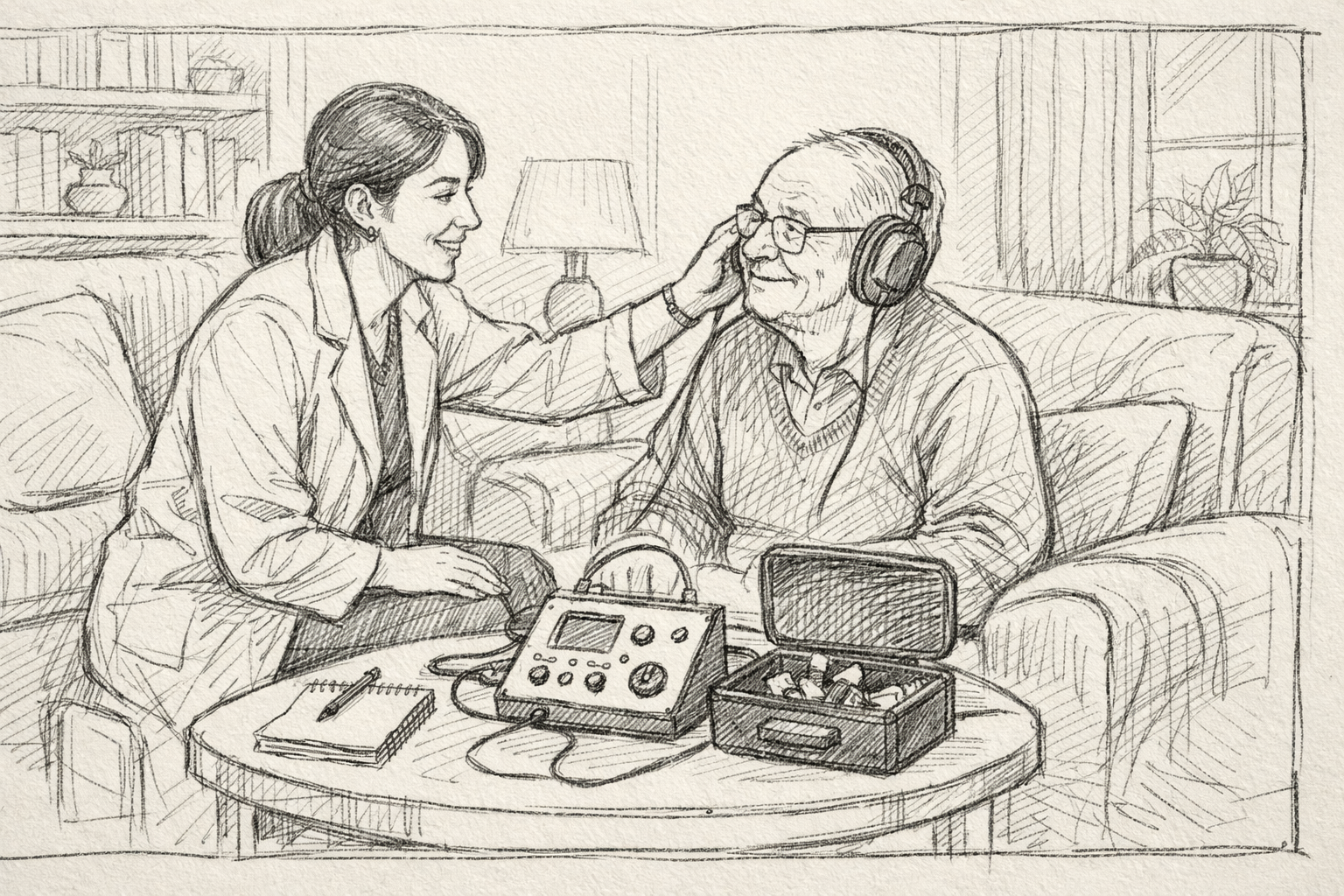
Many people delay addressing hearing loss because they imagine long clinic waits, rushed appointments, and unfamiliar environments. But hearing care has changed and one of the most convenient approaches is a complete home visit service that takes you from first hearing test to final hearing aid fitting without leaving your house.
In this article we’ll walk you through:
Whether you’re considering your first hearing assessment, upgrading existing devices, or exploring home-based support for a loved one, this guide explains each stage clearly and practically.
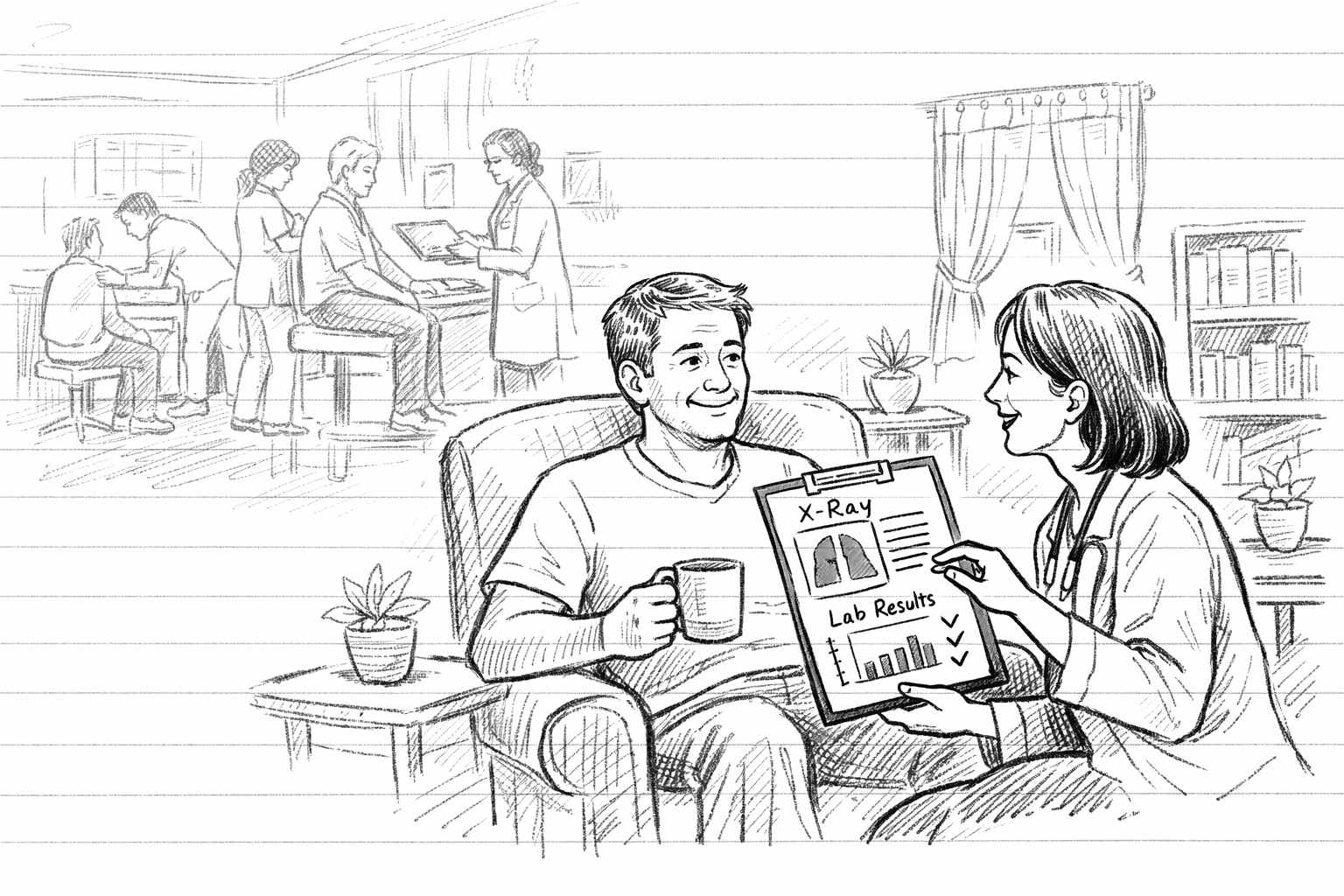
For many adults, especially older adults, the idea of attending another clinic appointment is a barrier mobility needs, transport logistics, anxiety, busy waiting rooms, and scheduling constraints all add friction.
A home visit hearing service removes those barriers:
In short: hearing care that comes to you, not the other way around.
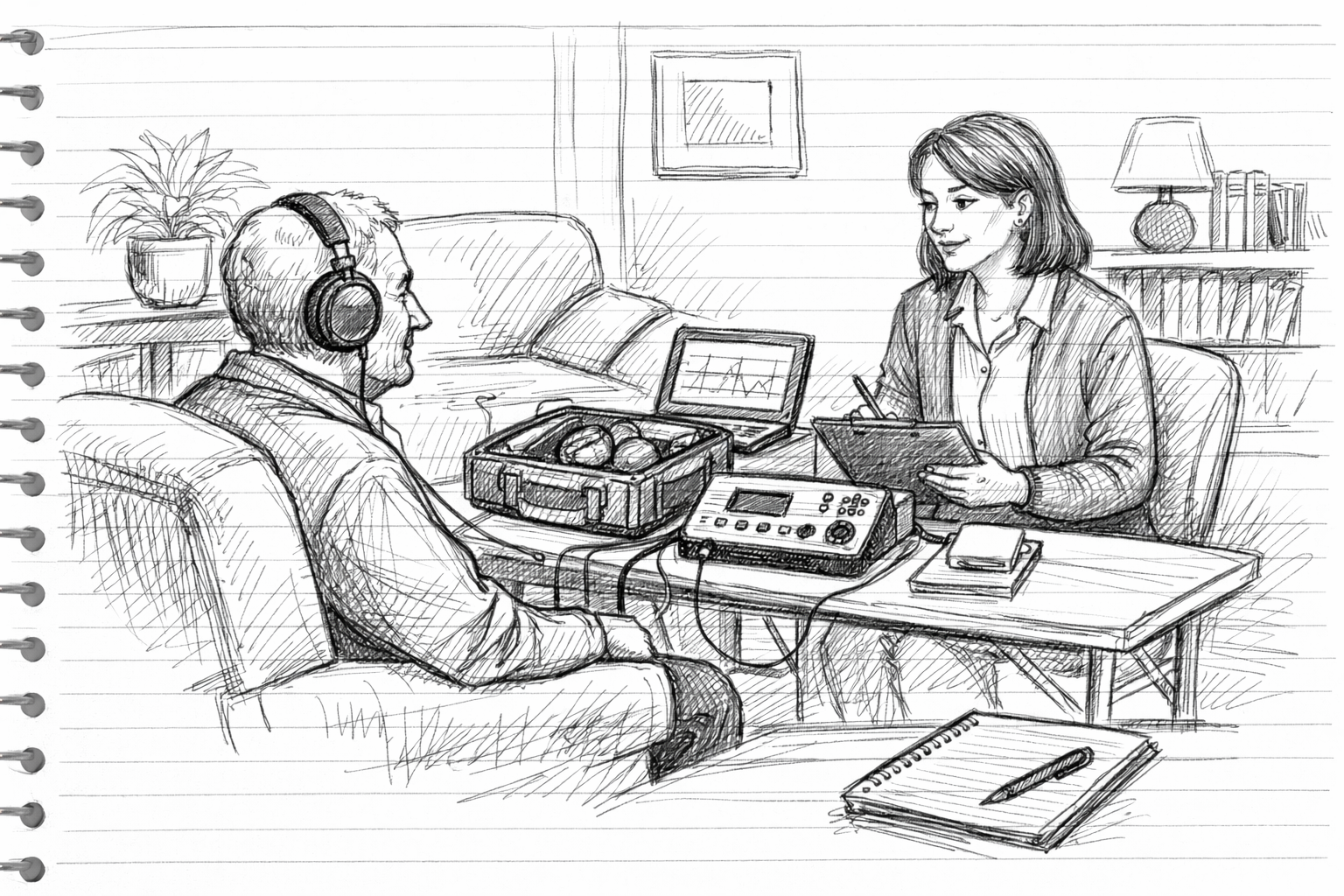
The first step in the pathway is a professional home hearing assessment. Your clinician arrives with portable, clinical-grade audiology equipment. Unlike a rushed clinic appointment, the home hearing test is unhurried and tailored to you.
Before any devices are used, the audiologist will ask about your hearing concerns, history, lifestyle, and daily listening situations. This contextual information is essential hearing isn’t just a number on a graph.
You may explore questions like:
This sets the stage for an accurate assessment.
It’s vital to check the physical condition of your ears before testing. Earwax build-up, inflammation, or blockages can affect results. During the home visit hearing test, the clinician uses an otoscope or similar tool to examine the ear canal and eardrum.
If earwax is present, a safe removal or microsuction may be recommended because accurate testing relies on clear sound conduction.
Using portable audiology equipment, the clinician conducts a hearing assessment much like in a clinic:
You’ll wear comfortable headphones and indicate when you hear tones. Speech tests help understand how well you hear conversation not just tones.
The clinically measured results are plotted into an audiogram, which guides your hearing profile.
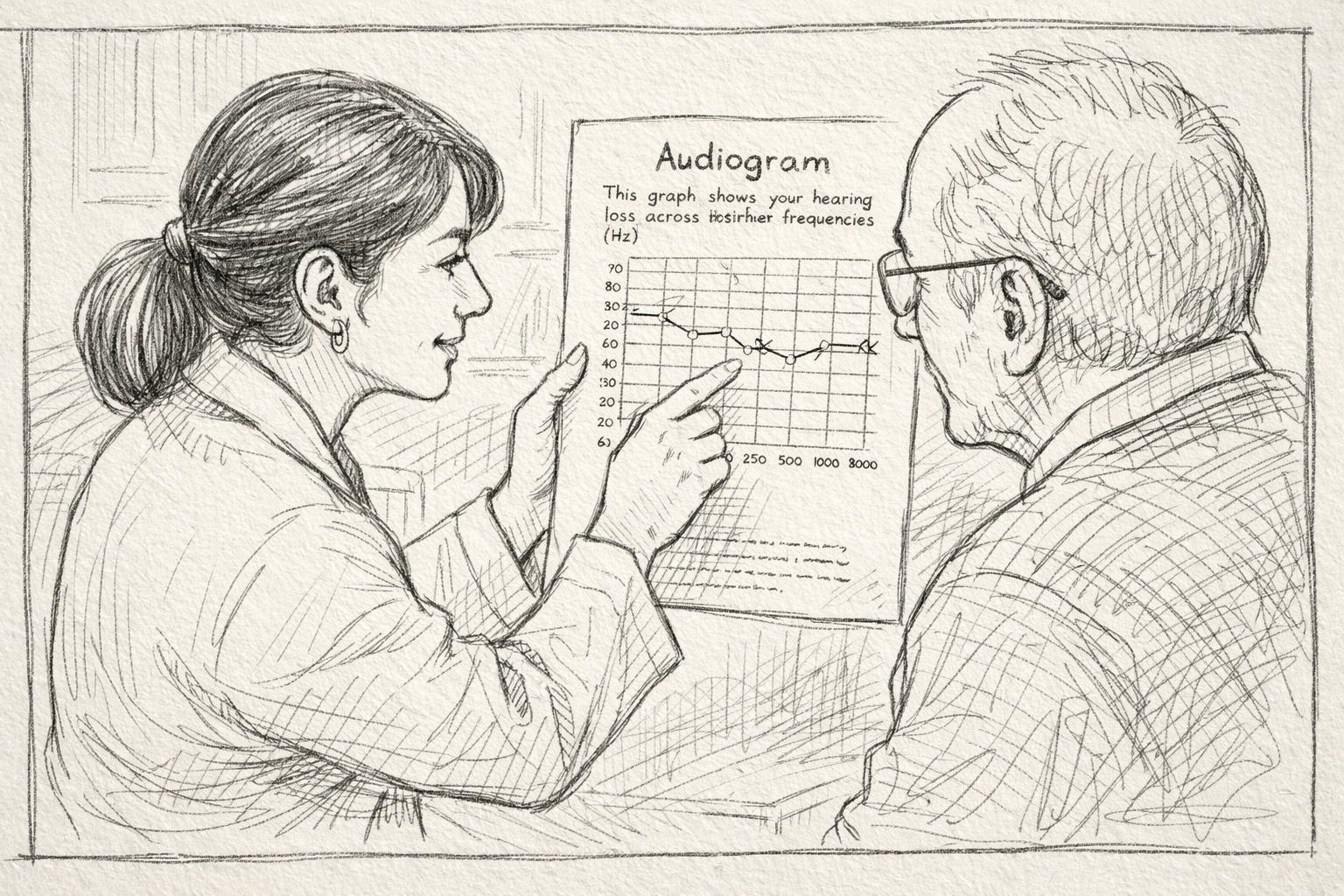
After the assessment, your audiologist explains the results clearly and respectfully. They translate the audiogram into practical implications: what the data means for real life, conversations, TV, phone calls, and noise environments.
A good clinician doesn’t use jargon they help you understand your hearing, how it’s changed, and what your options are.
This conversation covers:
This is also the time to ask questions. A home visit setting makes this easier than a busy clinic.
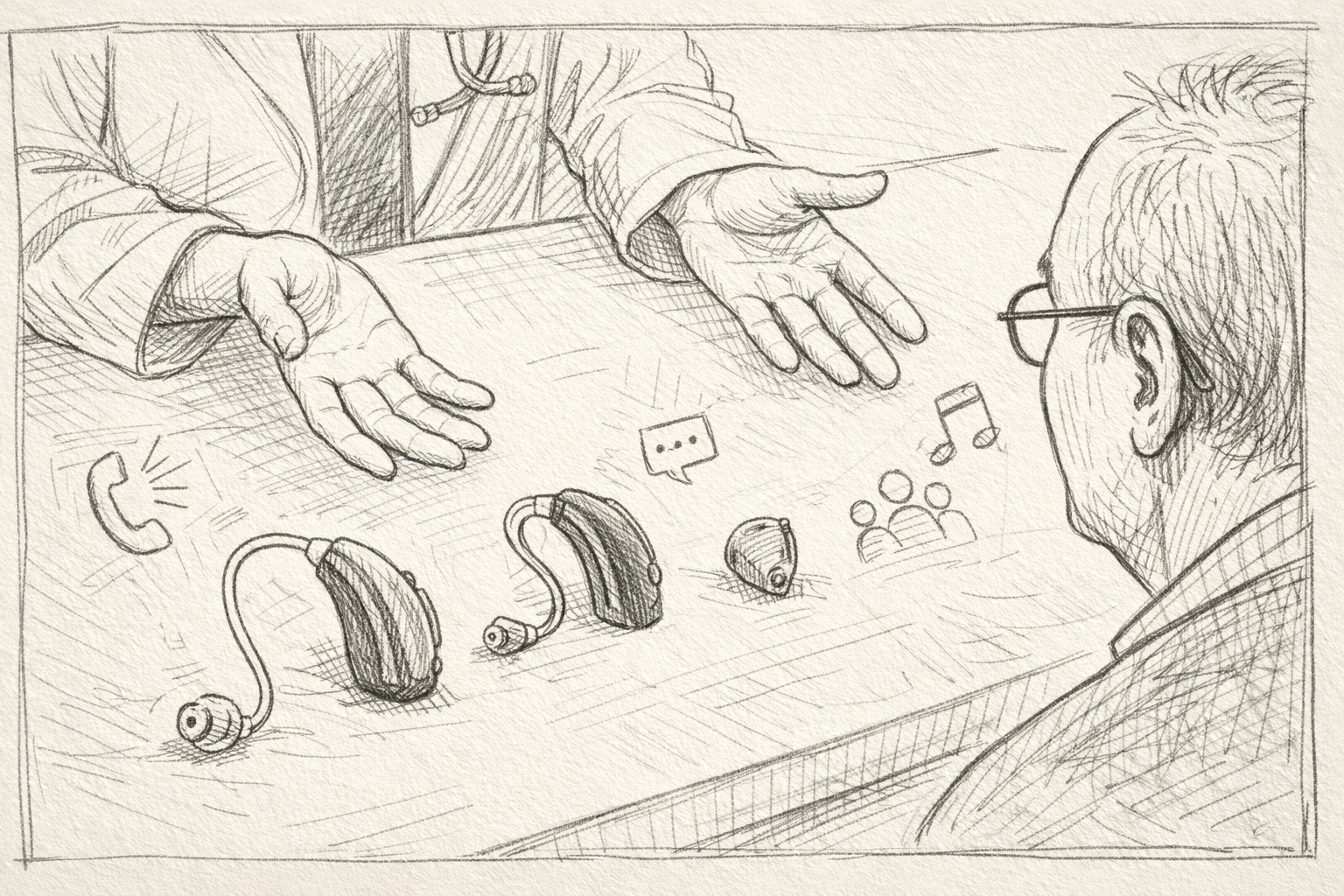
Once the hearing test is complete and your results are understood, the clinician walks you through your options. This might include:
If hearing aids are recommended, your audiologist explains different styles, technologies, features, and how they match your lifestyle.
You’re not sold a device you are guided toward the best solution for you.
Home visit services typically supply a range of modern hearing aids including:
Many options also include advanced features like Bluetooth connectivity, automatic environment adjustment, telecoil, and smartphone app control.
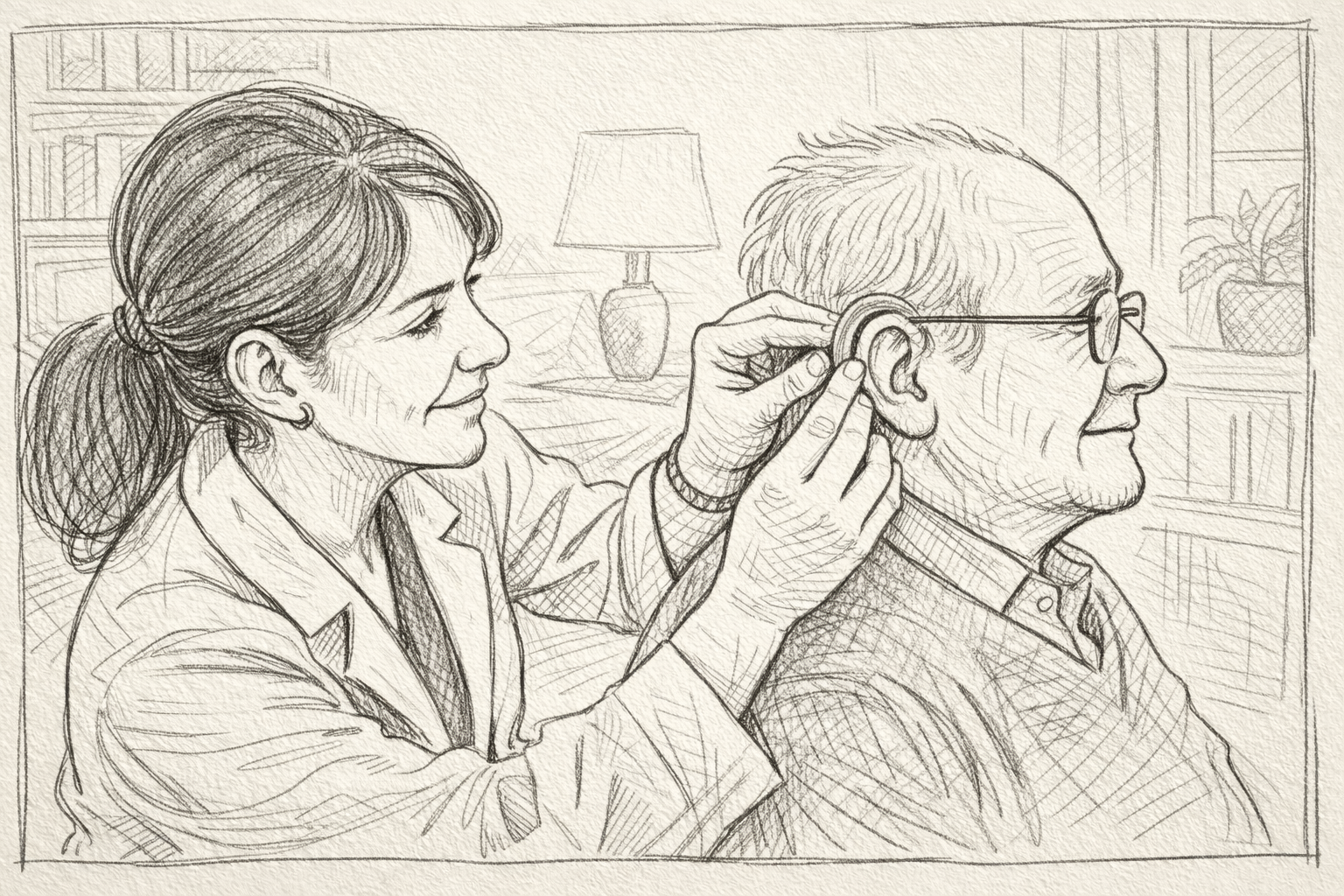
Choosing a hearing aid is only half the journey. The other half is fitting and programming.
During the home visit fitting, the audiologist:
This process takes time and that’s exactly why home visits are beneficial. There’s no clock running against you. Every adjustment is made with your feedback.
Because you’re in your own home, the clinician can also simulate real-world listening situations like:
These checks help fine-tune the devices beyond what a clinic booth can achieve.
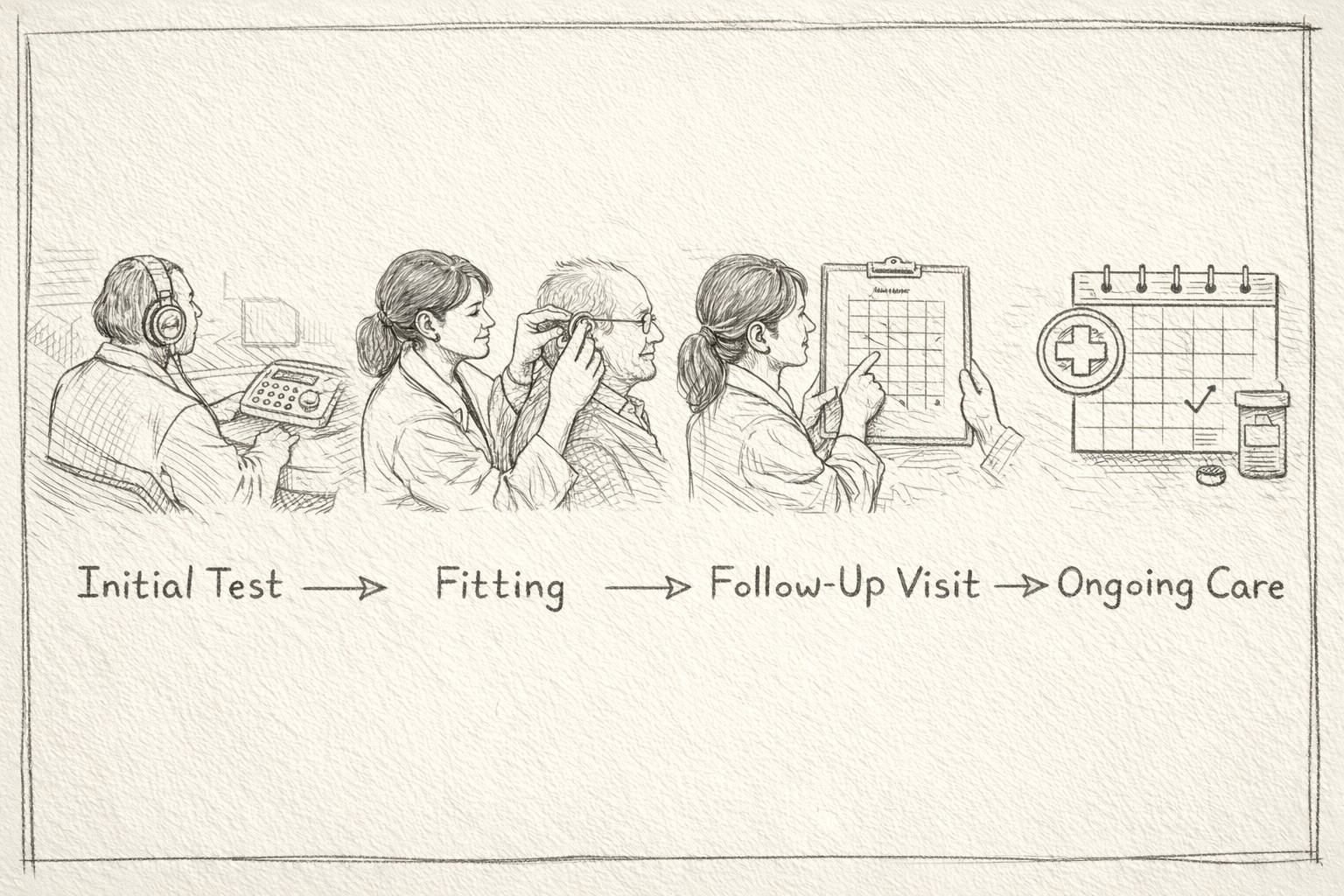
A hearing aid is not a one-and-done purchase.
Good hearing care includes ongoing support:
Shortly after your fitting, the clinician returns or checks in to:
Many people notice small differences in how sounds are perceived and that’s normal. Early follow-ups help smooth the transition.
Hearing changes slowly over time. Your hearing aids may need periodic re-programming to match your evolving needs.
Regular aftercare also includes:
Your hearing professional is a partner not a salesperson.
New hearing aid users often report sound quality feels unfamiliar at first. Softer sounds may be new birds, utensils, background hums.
This phase is normal and temporary. Your brain needs time to adjust.
Some people initially turn volume up too high. Proper fitting ensures comfortable loudness without distortion.

Home visit hearing care is particularly valuable for:
Everyone deserves access to comfortable, personalised hearing care regardless of mobility or schedule.
False. Many people with mild hearing difficulty benefit significantly especially in noise.
False. Modern devices are increasingly intuitive, with automatic adjustments and smartphone control.
False. Many models are discreet, nearly invisible, and designed with aesthetics in mind.
General guidance suggests:
Hearing changes slowly regular checks help catch shifts early and maintain confidence.

A hearing test diagnoses your profile.
A hearing aid fitting tailors devices to your brain and listening needs.
Both steps are equally important. Skipping either leads to sub-optimal outcomes.
The home visit model integrates both seamlessly.
Neither is strictly better but they serve different needs.
Clinics are valuable for busy patients who can travel easily.
Home visits are ideal when:
Both pathways can deliver excellent results the choice is what best suits you.
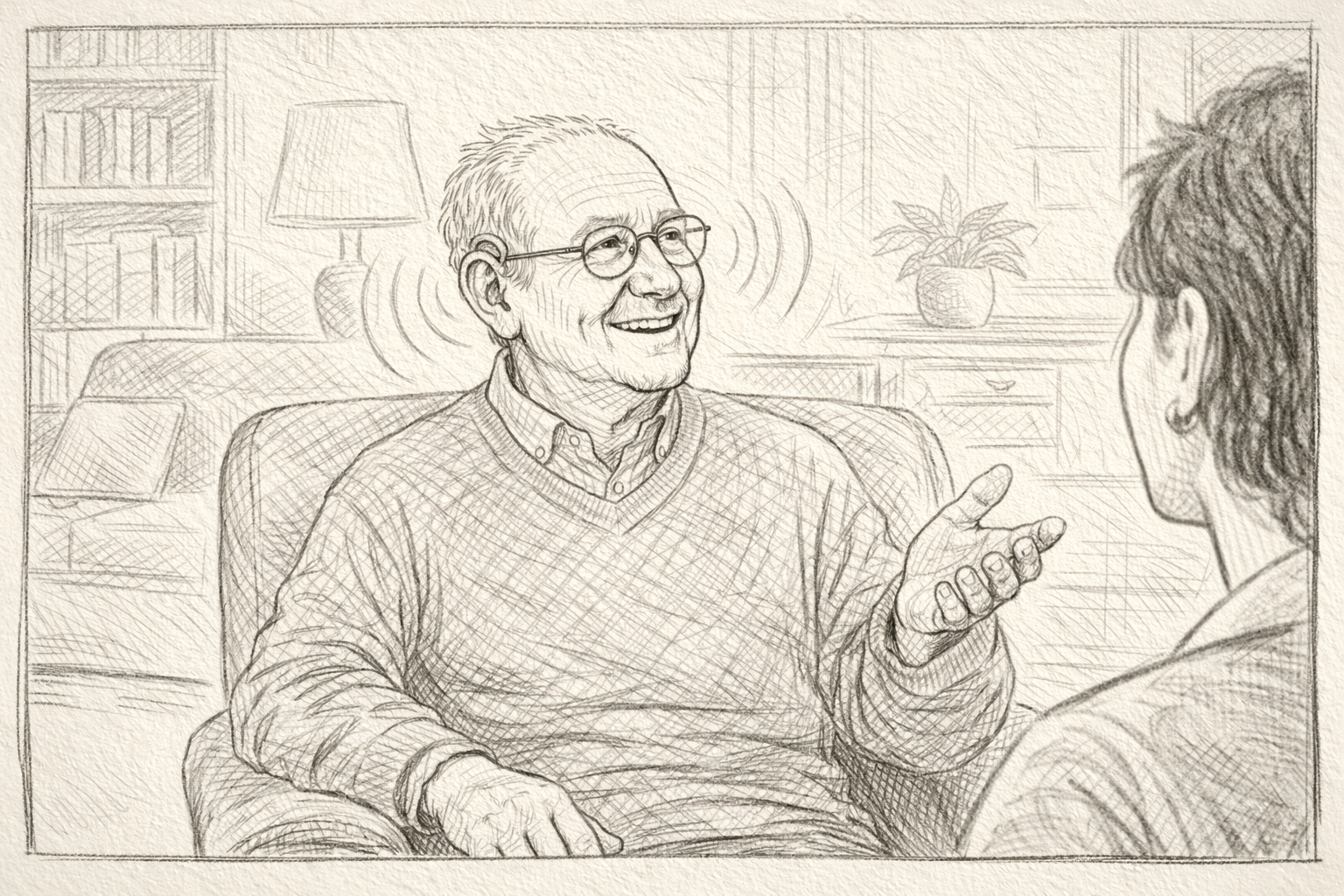
The journey from first hearing test to personalised hearing aids is a process not a transaction. When delivered through a home visit service, that process becomes:
With the right guidance, you won’t just “get hearing aids” you’ll gain clearer communication, confidence, and connection.
If you or a loved one have noticed changes in hearing, a complete home visit service can help you understand and address them with expert care.