
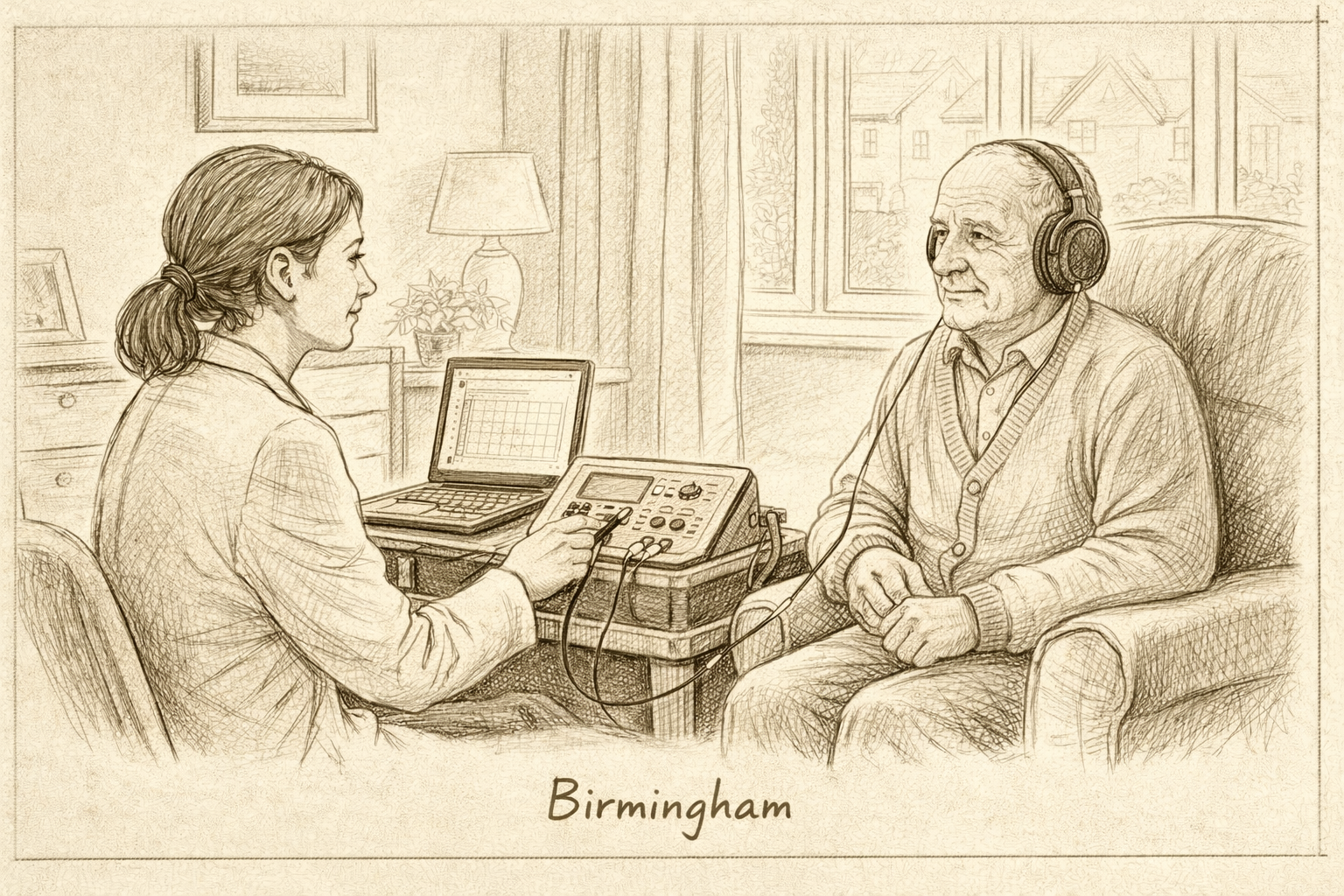
If you are considering a home visit hearing test, you likely want two things:
That is completely understandable.
For many people especially older adults travelling to a clinic can feel tiring, stressful, or simply unnecessary. A hearing assessment at home provides the same standard of care you would expect in a specialist setting, but delivered in a familiar environment with time to explain everything properly.
This guide explains each stage of a private hearing test at home, step by step, in plain English. It is written for patients and families who want clarity, dignity and calm, home-based care.

A home visit appointment is often chosen for practical reasons, but it also offers important emotional benefits.
A key benefit is that the audiologist can see how hearing difficulties affect everyday life in the environment where conversations actually happen your home.
A professional home visit hearing test usually takes 60–90 minutes. Some appointments may be shorter or longer depending on medical history, communication needs and whether earwax is present.
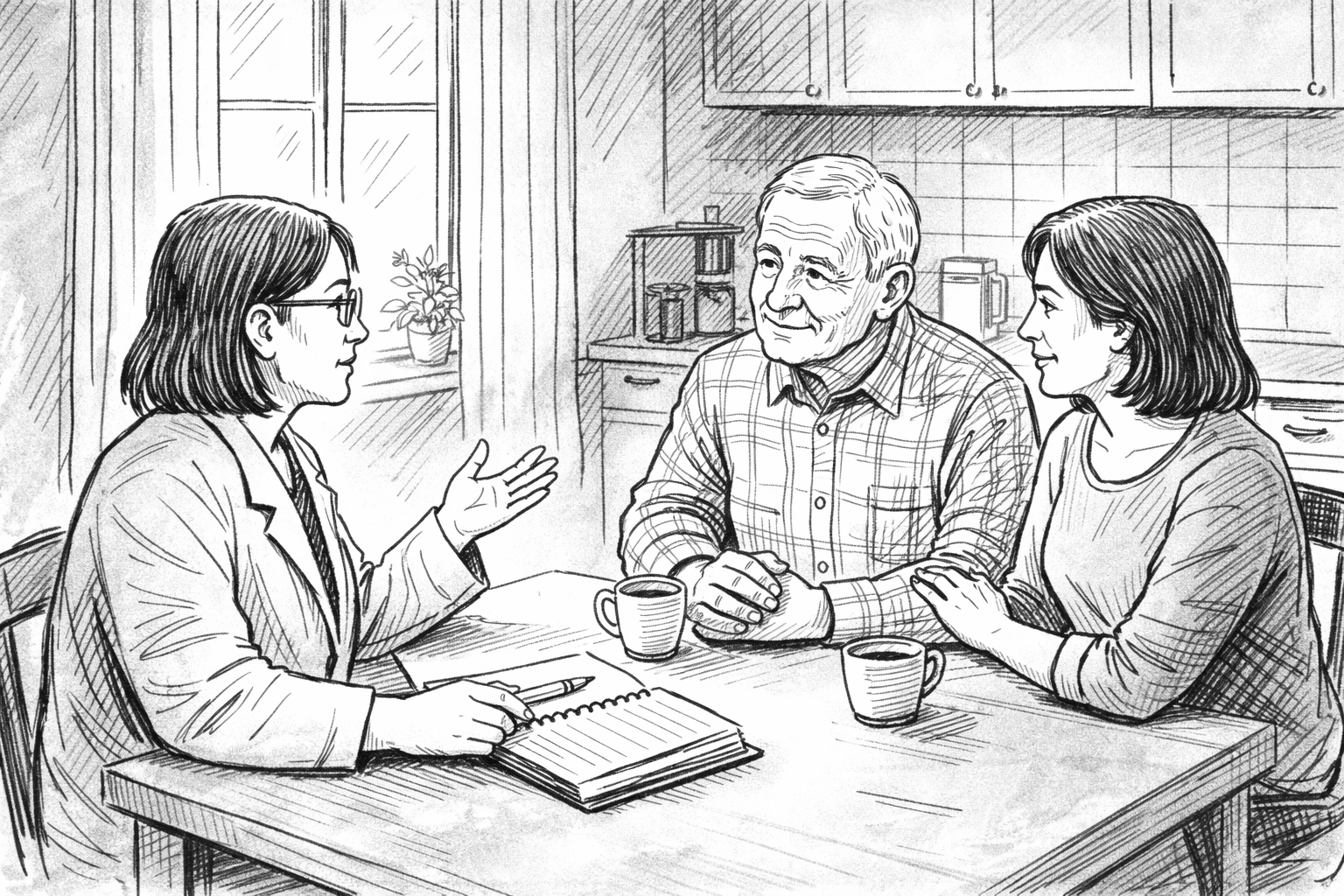
The audiologist will arrive with portable, professional testing equipment. This is designed specifically for hearing assessments at home, allowing accurate testing outside a clinic environment.
You do not need to prepare anything complex. Most people simply choose a quiet room with comfortable seating.
The audiologist will:
This first step is important. The aim is to make you feel comfortable, not rushed.
Before any testing begins, the audiologist will ask questions to understand your hearing concerns.
This may include:
This part is not a formality. It helps the audiologist interpret test results properly and recommend suitable next steps.
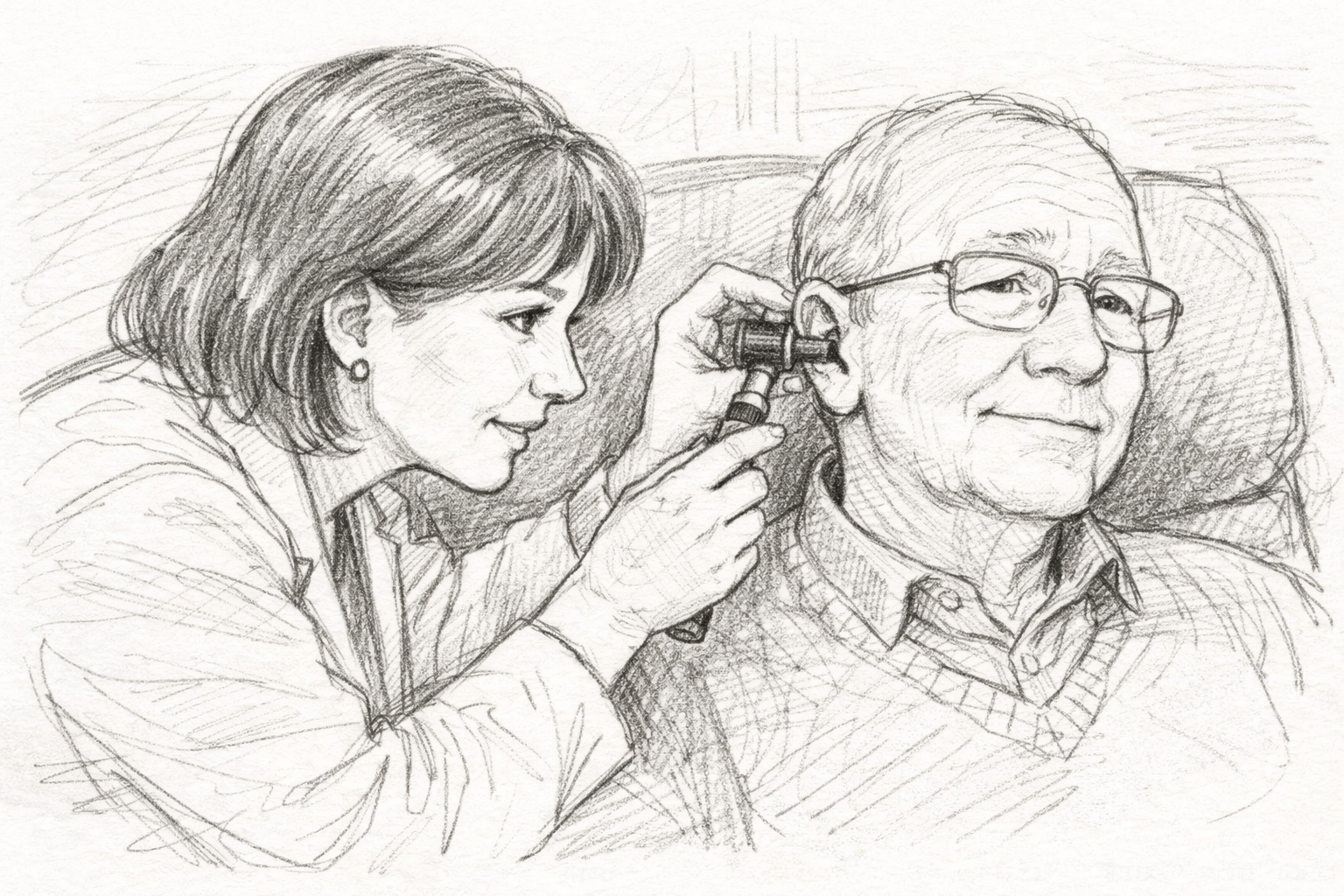
Next, the audiologist will examine both ears using an otoscope (a small medical device with a light).
This checks for:
If earwax is present and significantly blocking the canal, it can affect hearing test accuracy. In those cases, the audiologist may recommend earwax removal first, then a full hearing test after the ears are clear.
This is an important safeguard accurate results depend on a clear ear canal.

This is the part most people think of as “the hearing test”.
You will wear headphones, and the audiologist will play gentle tones at different pitches and volumes. You will be asked to indicate each time you hear a sound often by raising a hand or pressing a button.
This measures:
The test is painless and non-invasive.
It is also surprisingly simple. Many older adults worry they will “get it wrong,” but there is no pass or fail. The audiologist only needs your best effort and honest responses.
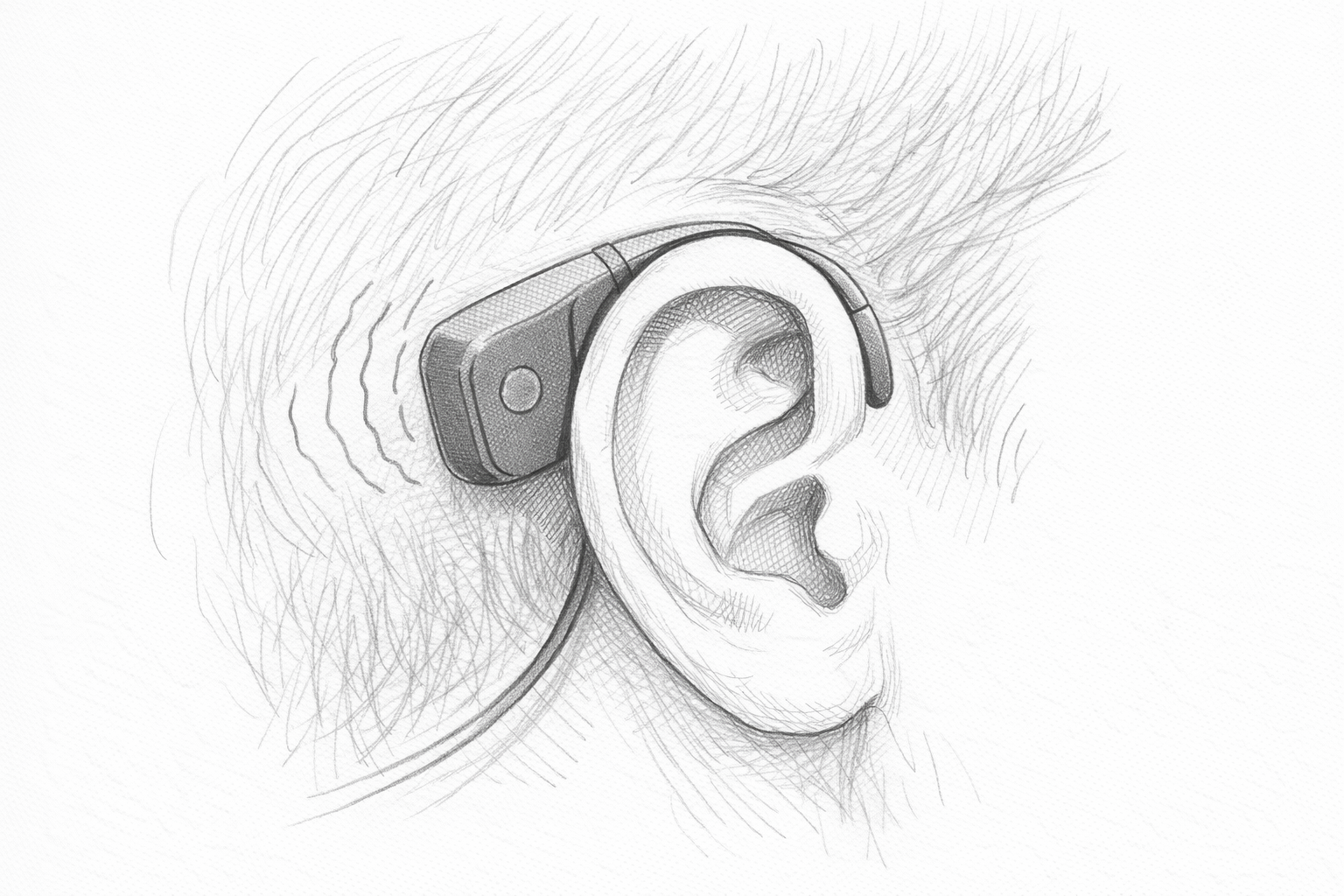
If results suggest it would be useful, the audiologist may perform bone conduction testing.
This involves a small vibrating device placed behind the ear. It helps determine whether hearing loss is:
This step allows clearer diagnosis and ensures the right advice is given.
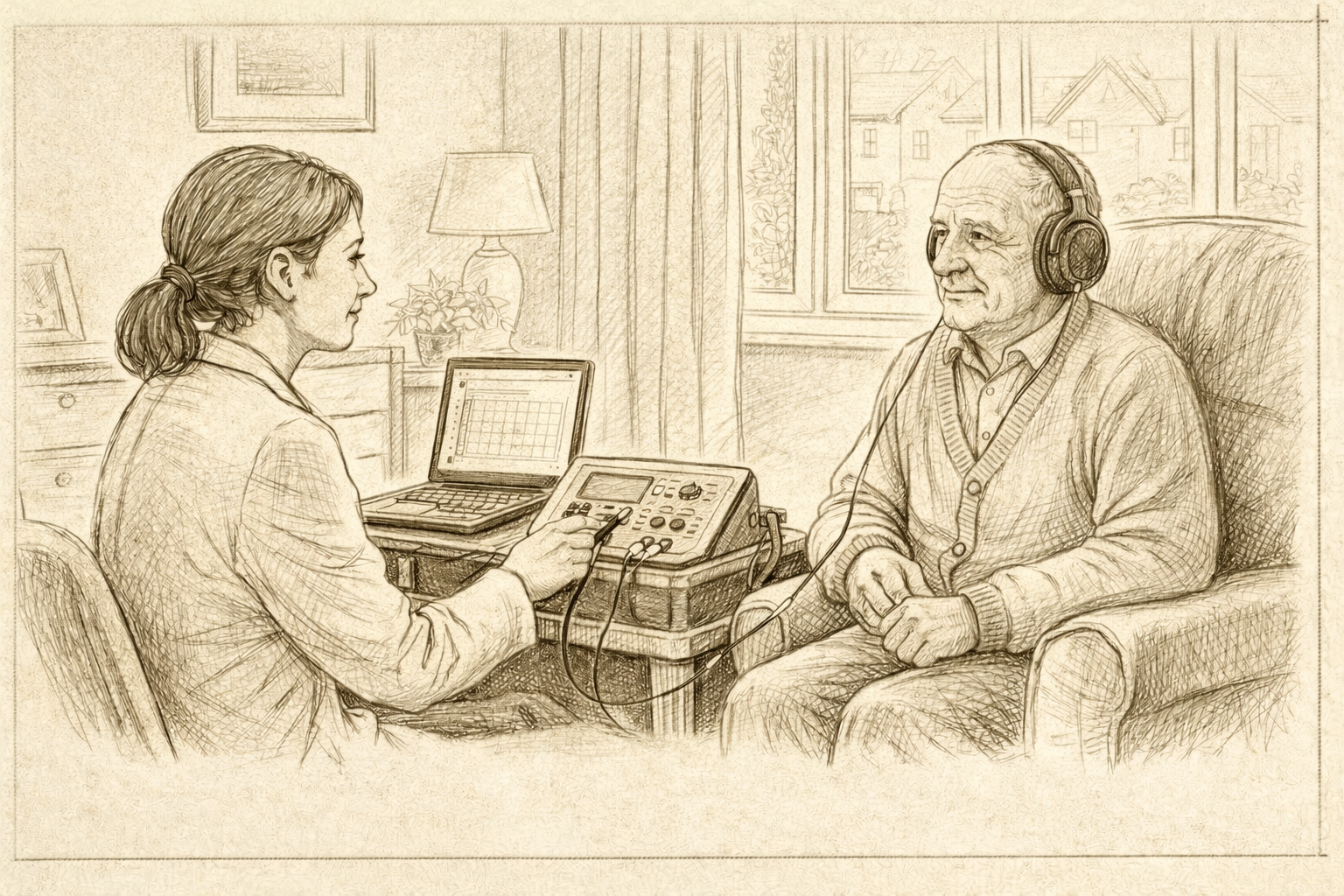
Many people can “hear sounds” but struggle with speech clarity especially in busy environments.
Speech testing helps assess:
This stage is particularly helpful for families, because it connects the results to real-life situations: conversations, TV, and social settings.
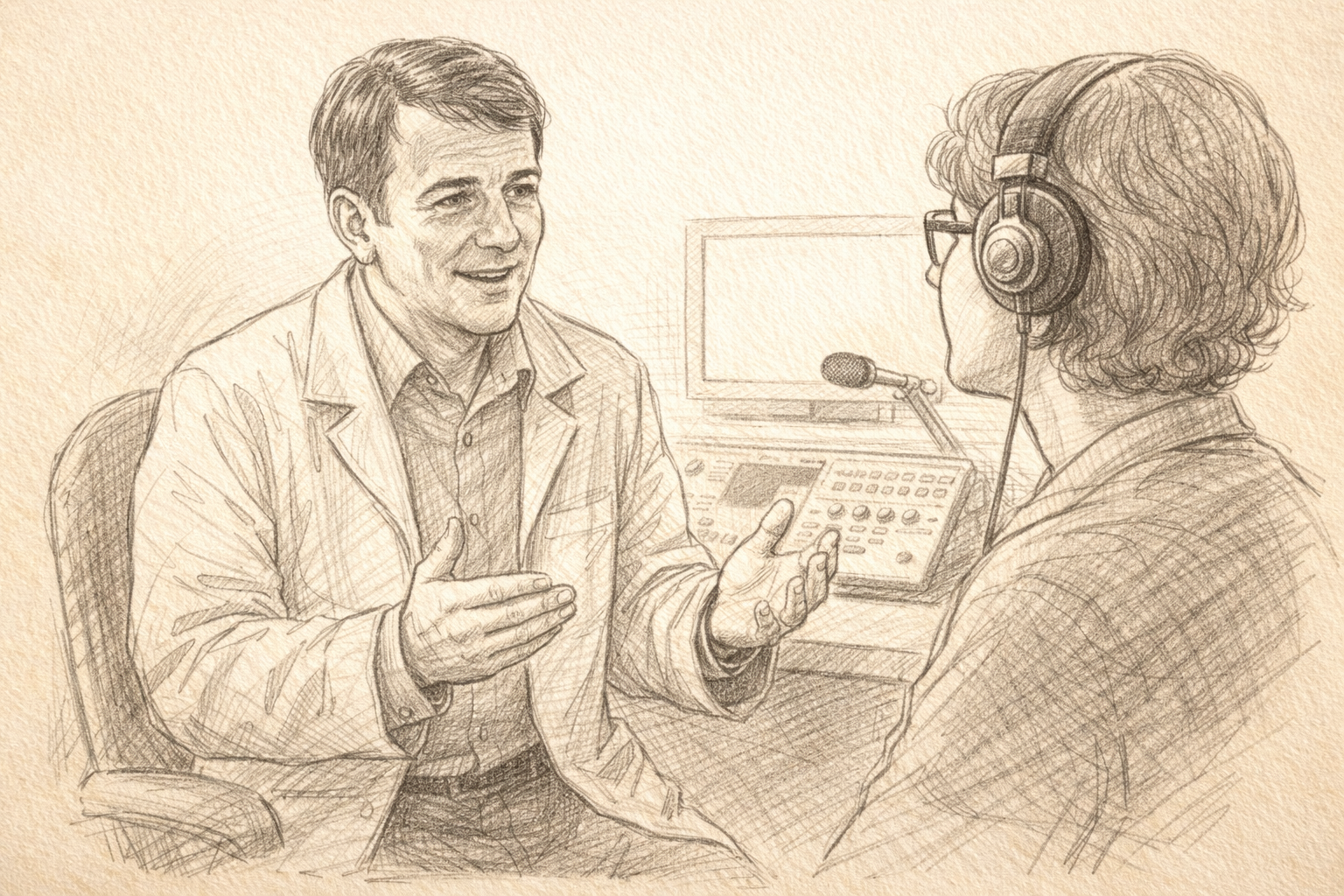
After testing, the audiologist explains results clearly and slowly, using an audiogram (a hearing chart).
You should expect:
A professional private hearing test at home should never leave you confused. You should finish the appointment understanding exactly what has been found.
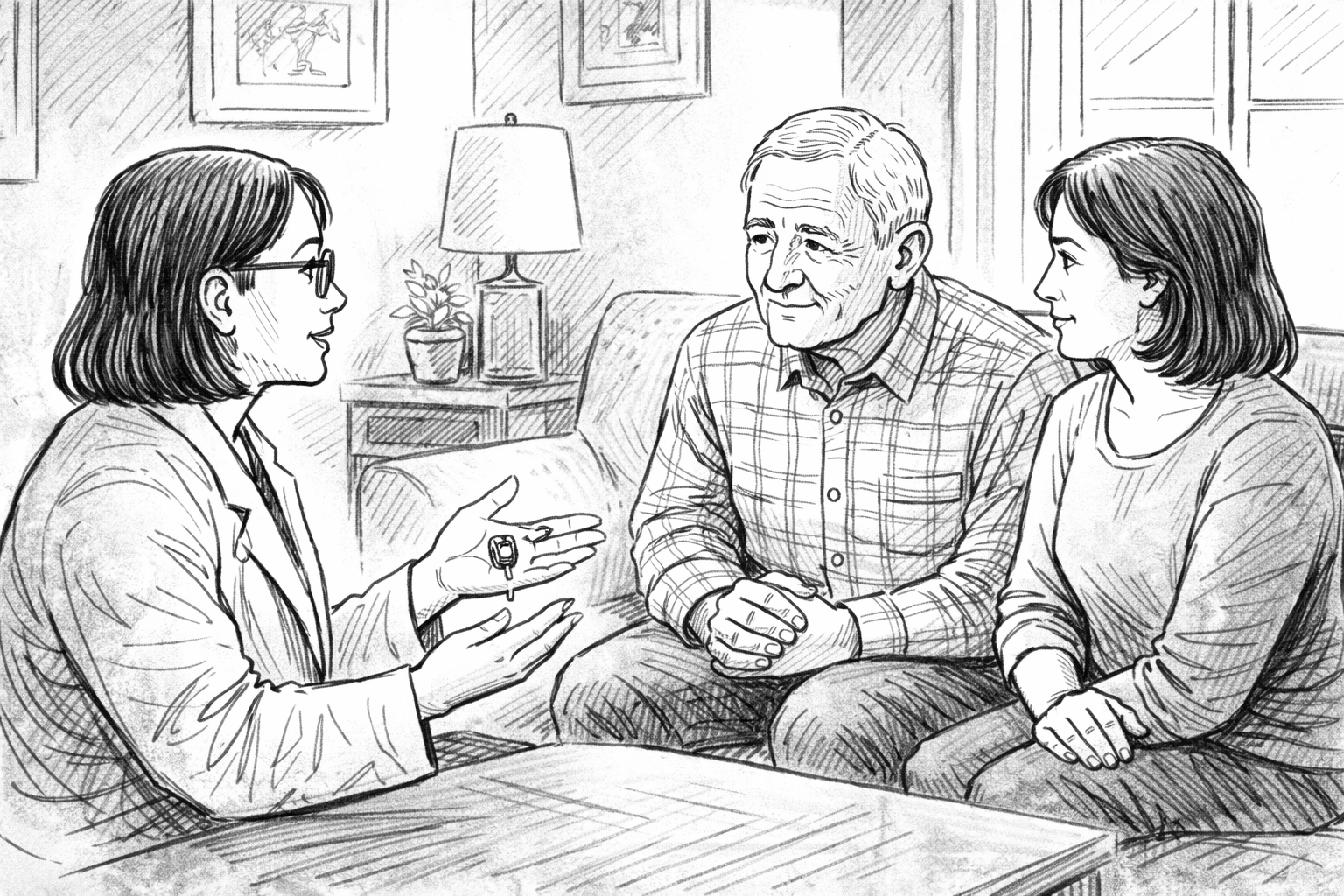
Depending on your results, next steps may include:
If hearing aids are appropriate, many providers offer home fitting as well. This can be especially helpful for older adults because adjustments can be made in the real listening environment your home.
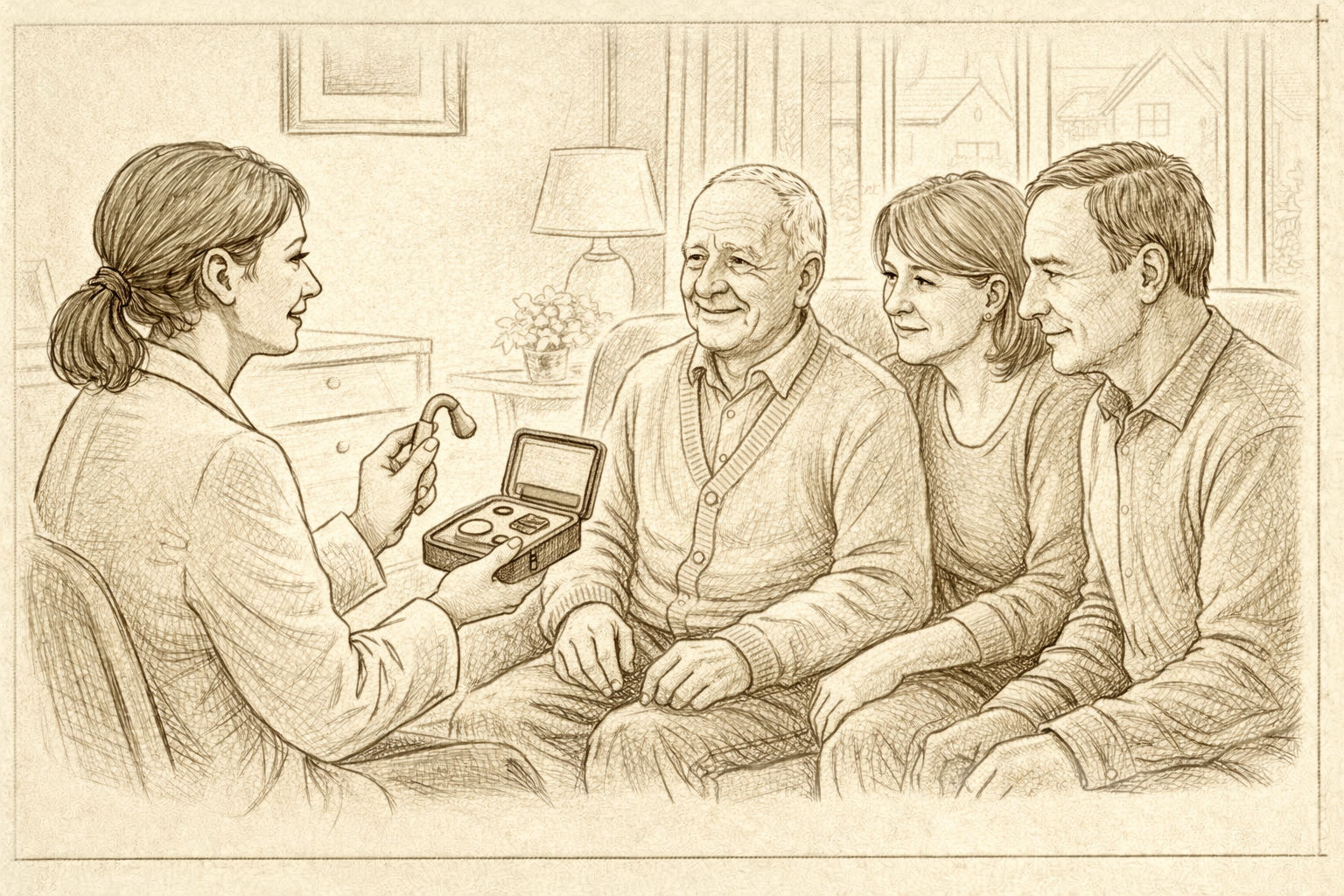
In clinic settings, people sometimes feel rushed, particularly if there are multiple appointments scheduled back-to-back.
A hearing assessment at home often feels more personal because:
For many older adults, this reduces anxiety and leads to better long-term outcomes.

You do not need to do much.
Helpful preparation includes:
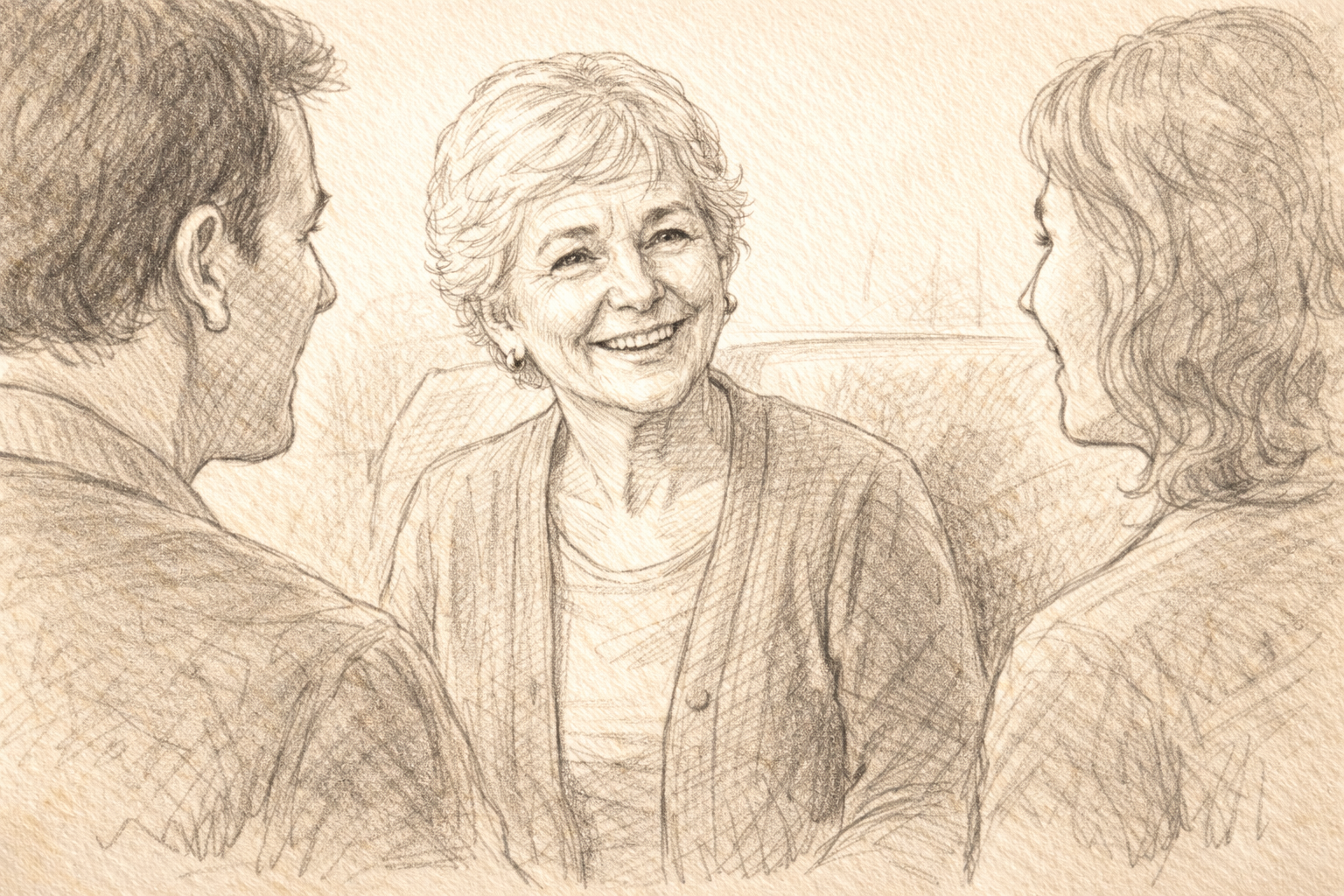
If a family member is supporting you, it helps if they are present for the discussion and results section.
After your home hearing test, you should receive:
If you proceed with hearing aids, the next stage is usually a fitting appointment and adjustment period with follow-up support.
Yes. When carried out by a qualified audiologist using calibrated equipment, a home visit hearing test is accurate and clinically reliable. A quiet home environment can support excellent testing conditions.
Typically 60–90 minutes. This allows time for discussion, ear examination, full hearing assessment and explanation of results without rushing.
Usually not. Most private hearing tests at home can be booked directly. If a medical issue is suspected, the audiologist may advise speaking with your GP.
Yes. Ear examination is a standard part of the appointment. If earwax is present and affecting the canal, it may need to be removed before accurate testing can be completed.
No. Hearing tests are painless. You listen to sounds through headphones and respond when you hear them. If bone conduction testing is used, it may feel like gentle vibration, not pain.
Absolutely. In fact, family involvement can be very helpful especially for older adults. It ensures everyone understands the results and recommended next steps.
Home hearing care can be especially suitable in these cases because familiar surroundings reduce anxiety. The audiologist can adapt the pace, simplify instructions and involve carers to support communication.
A reputable provider will not pressure you. The purpose of the test is clarity and informed choice. If hearing aids are appropriate, options should be explained calmly and without obligation.
Yes, many providers offer home hearing aid fitting and aftercare. This is often convenient for those with mobility issues and allows adjustments to be made in real home listening conditions.
For adults over 60, hearing is often checked every 1–2 years. If changes occur suddenly, or if tinnitus or balance issues develop, earlier assessment is recommended.
A home visit hearing test is designed to offer professional standards without the stress of travel, clinics or waiting rooms.
It is a calm process:
For older adults and families, a private hearing test at home can be the simplest and most dignified way to understand hearing health and plan future care.