
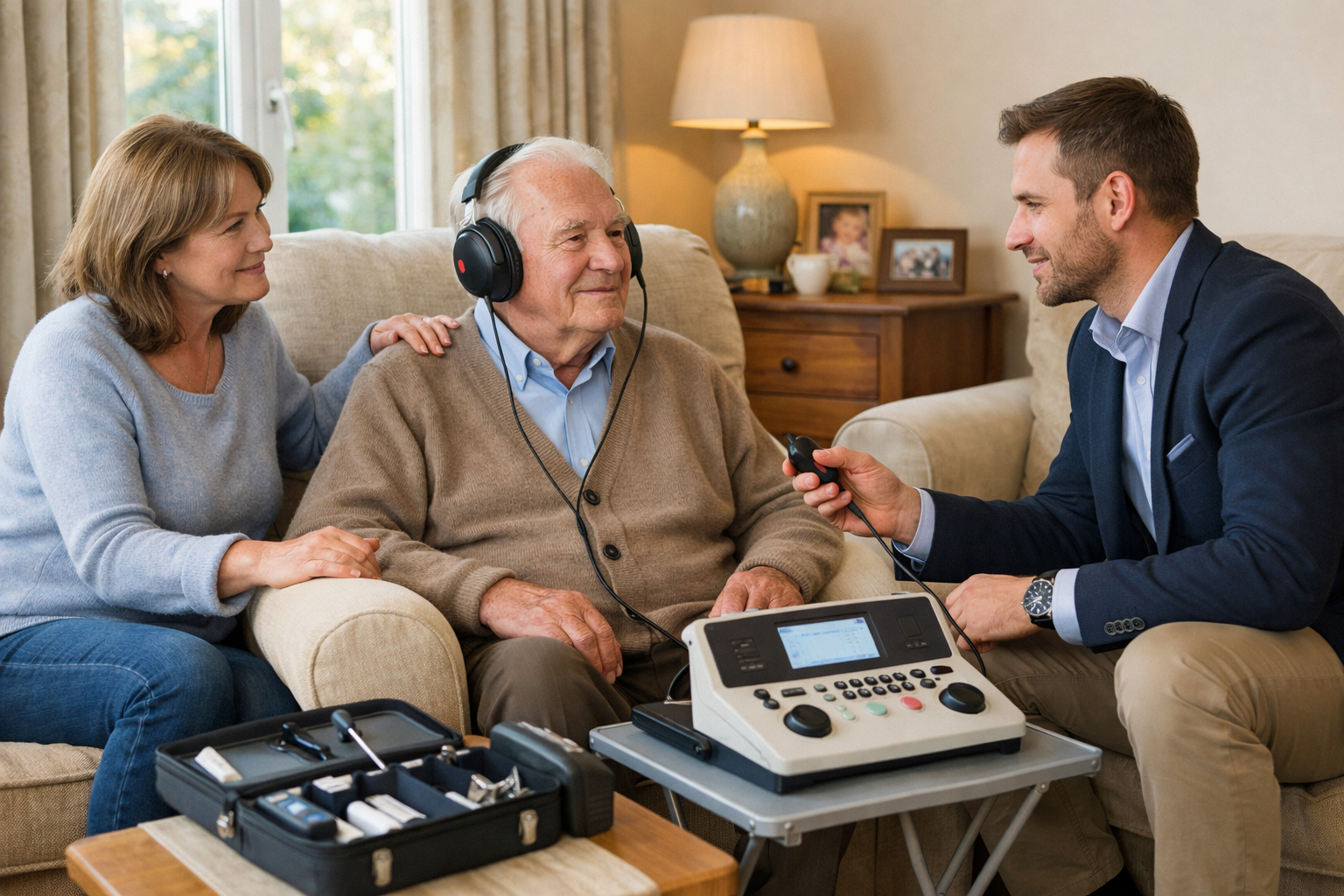
Hearing is central to how we remain connected to family conversations, to friendships, to community life and to our sense of independence. Yet hearing changes often develop quietly and gradually. Many older adults adapt without fully realising that their hearing has altered.
For some, arranging an appointment at a clinic feels straightforward. For others, travel, mobility, anxiety or health concerns make this more difficult. In these situations, a hearing check at home offers a practical and respectful alternative.
This article explores who may benefit most from a home hearing assessment, what it involves, and why early understanding of hearing changes can make a meaningful difference.
Before considering who should book a home hearing test, it is helpful to understand how hearing commonly changes with age.
Age-related hearing loss, medically known as presbycusis, is extremely common. Research suggests that:
Age-related hearing loss usually affects the ability to hear higher-frequency sounds first. This means speech may seem less clear rather than simply quieter. Consonants such as “s”, “f” and “th” may become harder to distinguish. In background noise, conversations can feel particularly challenging.
Importantly, this change is typically gradual. It is rarely dramatic or sudden.
Many individuals begin to notice small differences in their hearing from their sixties onwards. These changes may include:
If these signs are present, a hearing test for elderly individuals can provide clarity.
For some, travelling to a clinic feels inconvenient or tiring. A hearing check at home allows assessment in familiar surroundings, reducing stress and making the process more comfortable.
Mobility concerns are one of the most common reasons families seek a hearing test for seniors in the UK at home.
Older adults may experience:
A visit from a mobile audiologist removes these obstacles. The assessment is conducted using calibrated, professional equipment, brought directly into the home.
There is no need to navigate car parks, public transport or waiting rooms.
Older adults often manage multiple health conditions alongside hearing changes. These may include:
Managing appointments can become burdensome. In such cases, a hearing check at home reduces strain and conserves energy.
Home-based care also allows the audiologist to observe communication within the individual’s usual environment, offering practical advice tailored to real-life situations.
Hearing loss and cognitive decline can sometimes occur together. Research has shown that untreated hearing loss is associated with increased listening effort, which may contribute to social withdrawal and fatigue.
For individuals living with dementia:
A home hearing assessment can therefore be especially supportive.
It is important to note that hearing loss does not cause dementia. However, improving hearing clarity may reduce unnecessary strain and support better engagement in conversation.
Some older adults feel uneasy in medical environments. Reasons may include:
A home hearing appointment offers a calmer alternative. There is time to explain each step clearly and to answer questions without haste.
A hearing assessment is not a commitment to hearing aids. It is simply an opportunity to understand current hearing levels.
Often, it is family who first notice changes:
Discussing hearing can feel sensitive. Some older adults worry that acknowledging hearing loss signals loss of independence.
Arranging a hearing test for elderly family members at home can feel less confrontational and more supportive. It becomes a shared conversation rather than a clinical instruction.
Care home residents often benefit greatly from improved hearing clarity. Hearing well supports:
Transporting residents to clinics can be logistically complex. A mobile audiologist visiting the care setting ensures assessment is conducted efficiently and respectfully.

Many people wonder whether a hearing check at home is as thorough as one conducted in a clinic.
The answer is yes.
Professional home hearing assessments typically include:
The audiologist will ask about:
This discussion is important and unhurried.
The ears are examined using a lighted instrument to check for:
Earwax is a common cause of temporary hearing difficulty, particularly in older adults.
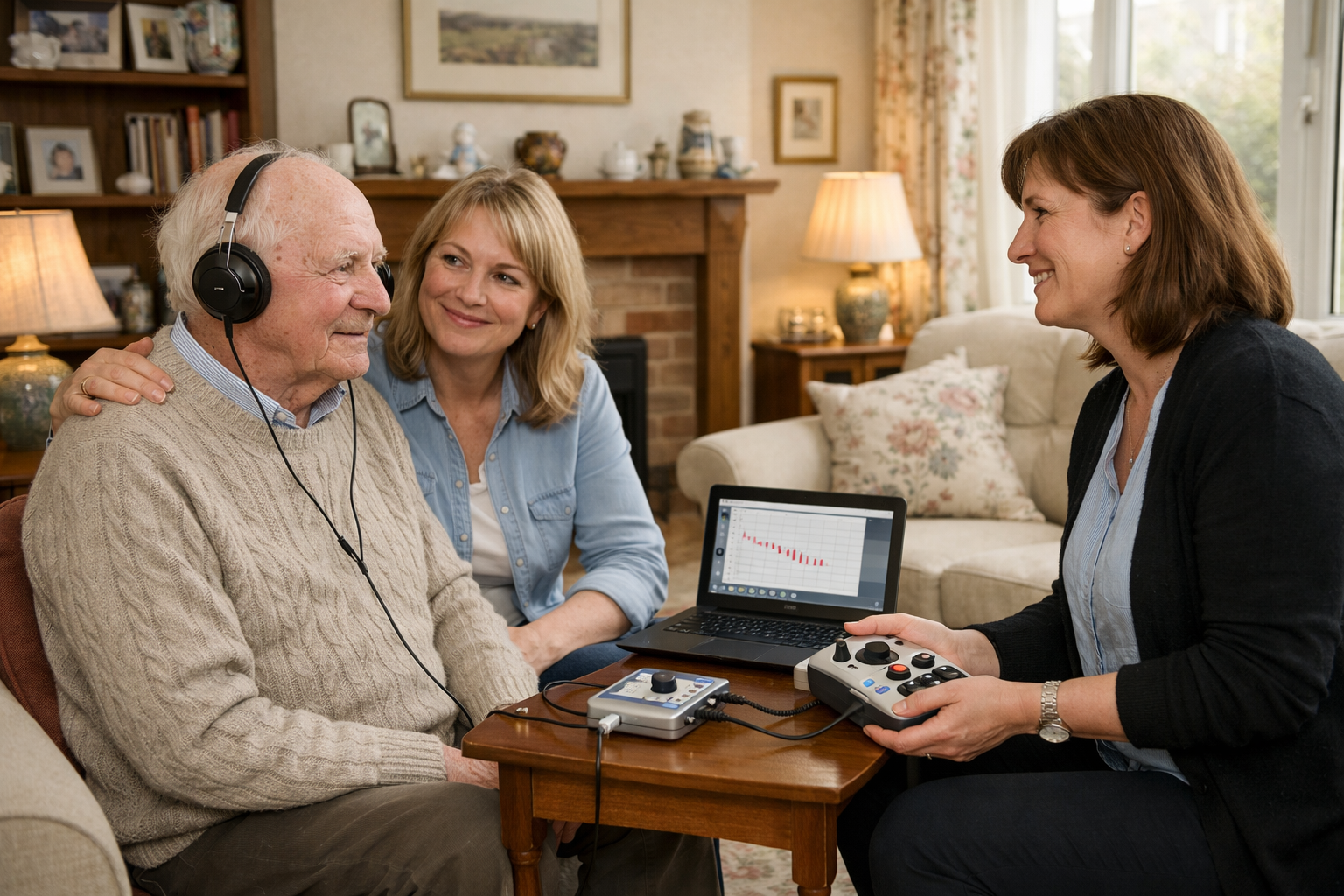
Using calibrated portable equipment, tones are presented at different frequencies and volumes to determine hearing thresholds.
Understanding speech in quiet and sometimes in background noise is assessed.
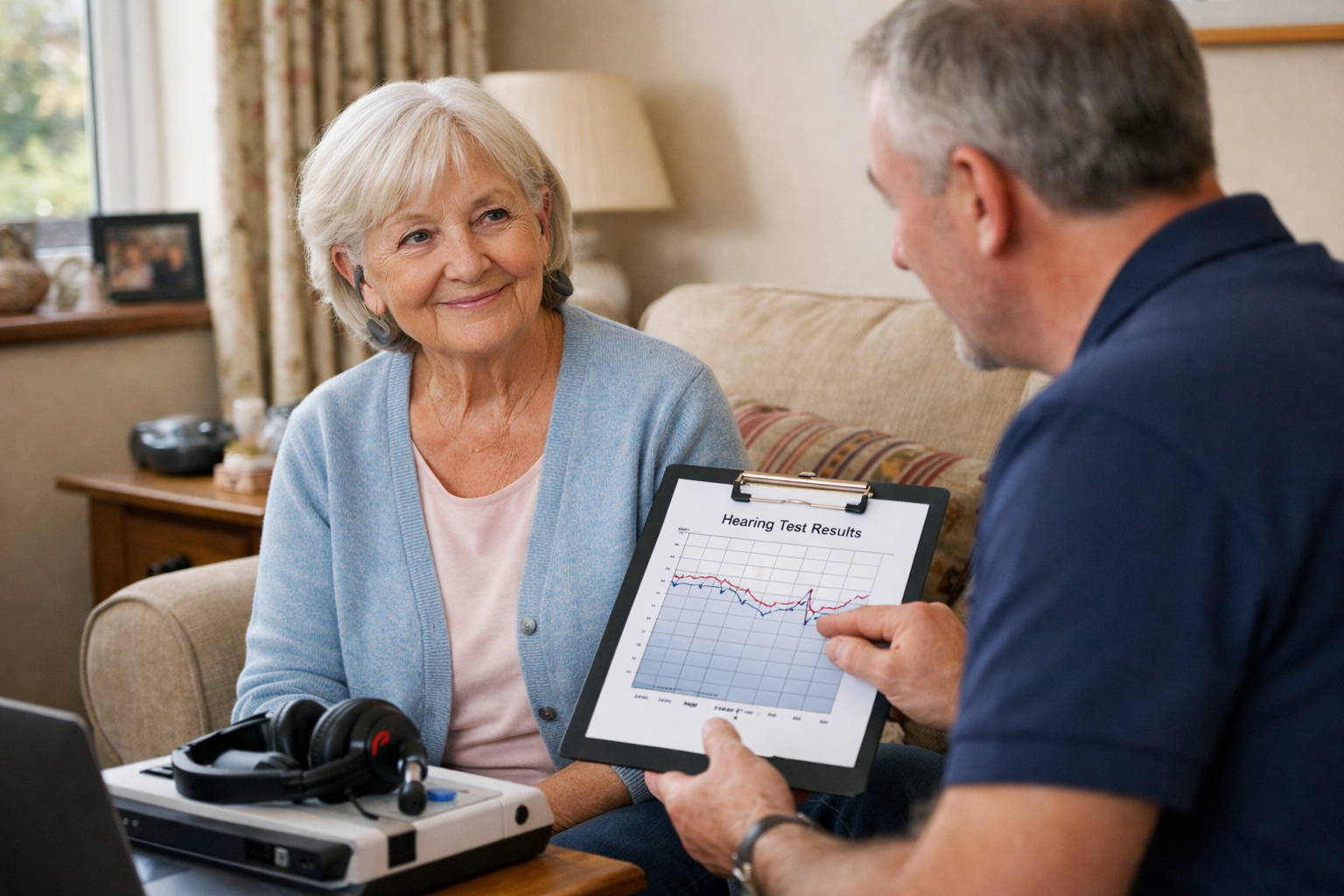
Results are clearly explained using an audiogram chart. The individual and family can ask questions freely.
If hearing aids are recommended, options are discussed carefully and without pressure.
Many people delay a hearing test for seniors UK because they feel the issue is not serious enough.
However, early assessment offers several benefits:
Small changes are often simpler to manage than more advanced hearing loss.

Professional mobile equipment is calibrated to the same standards as clinic equipment. Testing conditions are carefully managed within the home.
A hearing test provides information. Decisions about hearing aids are entirely the individual’s choice.
Home hearing assessments are appropriate for mild, moderate or severe hearing changes.
Hearing changes are not only physical. They can affect:
Many older adults quietly withdraw from busy environments because they feel embarrassed asking for repetition.
Addressing hearing with dignity supports emotional wellbeing as well as communication.

A mobile audiologist provides:
For many Midlands families, this approach feels more natural and respectful.
Most hearing changes are gradual and not urgent. However, immediate medical advice should be sought if hearing loss is:
These situations require prompt medical assessment.
For gradual changes, a routine home hearing test is entirely appropriate.
Hearing well supports autonomy.
When older adults can follow conversations comfortably, they are more likely to:
A hearing test for elderly individuals is not about labelling. It is about maintaining connection.
If you are considering whether a loved one might benefit from assessment, ask yourself:
If the answer is yes, a hearing check at home may provide clarity.
There is no obligation beyond understanding.
For families across the Midlands, home-based audiology offers:
Every appointment is conducted with respect, clarity and patience.

If you or a loved one would benefit from a calm, professional hearing assessment in the comfort of home, we are here to help.
A home visit hearing test provides:
There is no pressure simply careful, respectful guidance about your hearing health.
To arrange your home visit hearing test across the Midlands, please visit:
👉 Book Your Home Visit Hearing Test now
We look forward to supporting you with clarity, dignity and care.