

In brief
Hearing loss affects millions of people across the UK, and for those who are profoundly deaf or hard
Key takeaways
- Hearing aids are selected using your hearing results and everyday listening needs.
- Devices can be fitted and programmed in your own surroundings.
- Follow-up adjustments and aftercare support comfortable long-term use.
How this guide answers your question
Use these points to move from the concern you noticed to a sensible next step.
How Do Hearing Aids Work for the Deaf?How Do Hearing Aids Work for the Deaf?
A Helpful Guide by Hazelwood Hearcare
Hearing loss affects millions of people across the UK, and for those who are profoundly deaf or hard of hearing, hearing aids can play a transformative role. But how do hearing aids actually work for the deaf, and what can users realistically expect from them?
At Hazelwood Hearcare, we believe in empowering individuals and families with the knowledge they need to make informed hearing care decisions. In this guide, we’ll explain how hearing aids function, what types are best for different levels of hearing loss, and what profoundly deaf individuals can expect from these advanced devices.
Understanding Hearing Loss

Before diving into how hearing aids work, it's essential to understand the spectrum of hearing loss. Hearing loss is measured in decibels (dB) and can be categorized into:
- Mild (26–40 dB)
- Moderate (41–55 dB)
- Moderately severe (56–70 dB)
- Severe (71–90 dB)
- Profound (91 dB and above)
People who are profoundly deaf have little to no hearing ability, even when sounds are amplified. However, many with profound hearing loss can still benefit from hearing aids, depending on their specific condition and type of deafness.
How Do Hearing Aids Work?

Hearing aids are small electronic devices designed to make sounds louder and clearer for people with hearing loss. They consist of three main parts:
- Microphone – Picks up sound from the environment.
- Amplifier – Increases the volume of the sound signals.
- Speaker (Receiver) – Sends the amplified sound into the ear.
Modern hearing aids are far more advanced than simple sound amplifiers. They come equipped with digital signal processing, noise reduction, directional microphones, and even Bluetooth connectivity for smartphones and TVs.
Can Hearing Aids Help Profoundly Deaf People?

Yes, in many cases, hearing aids can help those who are profoundly deaf, but it depends on the nature and cause of their hearing loss.
When Hearing Aids Can Help:
- Residual Hearing Exists: Even minimal hearing ability can be enhanced by high-powered hearing aids.
- Sensorineural Hearing Loss: If the hearing loss is due to damage in the inner ear (cochlea), hearing aids can often improve clarity and volume.
- Bilateral Loss: Many people benefit from wearing two hearing aids for balanced sound perception.
When Hearing Aids Might Not Be Effective:
- Complete Deafness: If the auditory nerve is damaged or there is no residual hearing, traditional hearing aids may not work.
- Auditory Neuropathy: In some conditions, even amplified sound may not be interpreted correctly by the brain.
In such cases, cochlear implants or bone-anchored hearing systems may be more appropriate alternatives.
Types of Hearing Aids for Severe and Profound Hearing Loss

- Behind-the-Ear (BTE) Hearing Aids
- Most suitable for profound hearing loss.
- Powerful amplification and longer battery life.
- Durable and easy to handle.
- Receiver-in-Canal (RIC) Hearing Aids
- Can support high amplification.
- Discreet design with advanced sound clarity.
- Best for moderate to severe hearing loss.
- Custom-Made In-the-Ear Aids
- Less commonly used for profound loss.
- Limited power, but some advanced models are exceptions.
Advanced Features in Modern Hearing Aids

Today's hearing aids include a range of features that improve both comfort and clarity for profoundly deaf users:
- Digital Noise Reduction – Minimises background noise.
- Directional Microphones – Focuses on speech sounds in front of the user.
- Feedback Cancellation – Prevents whistling or feedback sounds.
- Connectivity – Pairs with smartphones, TVs, and other devices for direct audio streaming.
- Remote Adjustments – Audiologists can fine-tune settings via telehealth.
At Hazelwood Hearcare, we fit hearing aids from leading brands such as Phonak, Oticon, and Starkey many of which are designed specifically for severe and profound hearing loss.
Setting Realistic Expectations

Hearing aids are incredibly helpful, but they do not restore natural hearing. For the profoundly deaf:
- Sounds may still feel quieter or distorted, especially in noisy environments.
- Lip reading, sign language, and visual cues may still be necessary for effective communication.
- It takes time to adapt—consistent use and proper fitting are key to success.
With the right device and professional support, many users report significant improvements in speech understanding, environmental awareness, and overall quality of life.
FAQs About Hearing Aids and Deafness

❓ Can profoundly deaf people hear with hearing aids?
Yes, if they have some residual hearing, powerful hearing aids can amplify sounds to a usable level. However, not all forms of deafness respond to amplification.
❓ What is the best hearing aid for profound hearing loss?
Behind-the-ear hearing aids with custom earmolds and advanced digital processing are generally the best choice.
❓ Will hearing aids work for someone who is completely deaf?
If there is no residual hearing or a damaged auditory nerve, traditional hearing aids may not work. Cochlear implants are often the better solution.
❓ Do hearing aids restore normal hearing?
No. They amplify sounds to help users hear better, but they do not cure or fully correct hearing loss.
Final Thoughts: A World of Sound Is Still Within Reach
Hearing aids have come a long way in offering life-changing benefits to those with severe or profound hearing loss. While they may not restore hearing completely, they can offer significant improvement in communication, independence, and quality of life.
If you or a loved one is struggling with hearing loss, don’t wait. Book your home hearing test with Hazelwood Hearcare today and take the first step toward better hearing and a better life.
For appointment information rather than general guidance, see Explore private hearing aids. Check current postcode coverage before arranging a visit.
What shapes a suitable hearing-aid choice
The right option depends on more than device size. Hearing results, daily listening needs, handling and aftercare all contribute.
| Decision area | What to consider | How it helps |
|---|---|---|
| Hearing results | The pattern and degree of hearing change | Guides appropriate programming and technology |
| Daily listening | Conversation, television, telephone and background noise | Focuses the fitting on real situations |
| Comfort and handling | Fit, controls, charging and maintenance | Supports confident, consistent use |
Considering hearing aids at home?
Learn about assessment, fitting and ongoing support in your own surroundings.
Explore private hearing aids →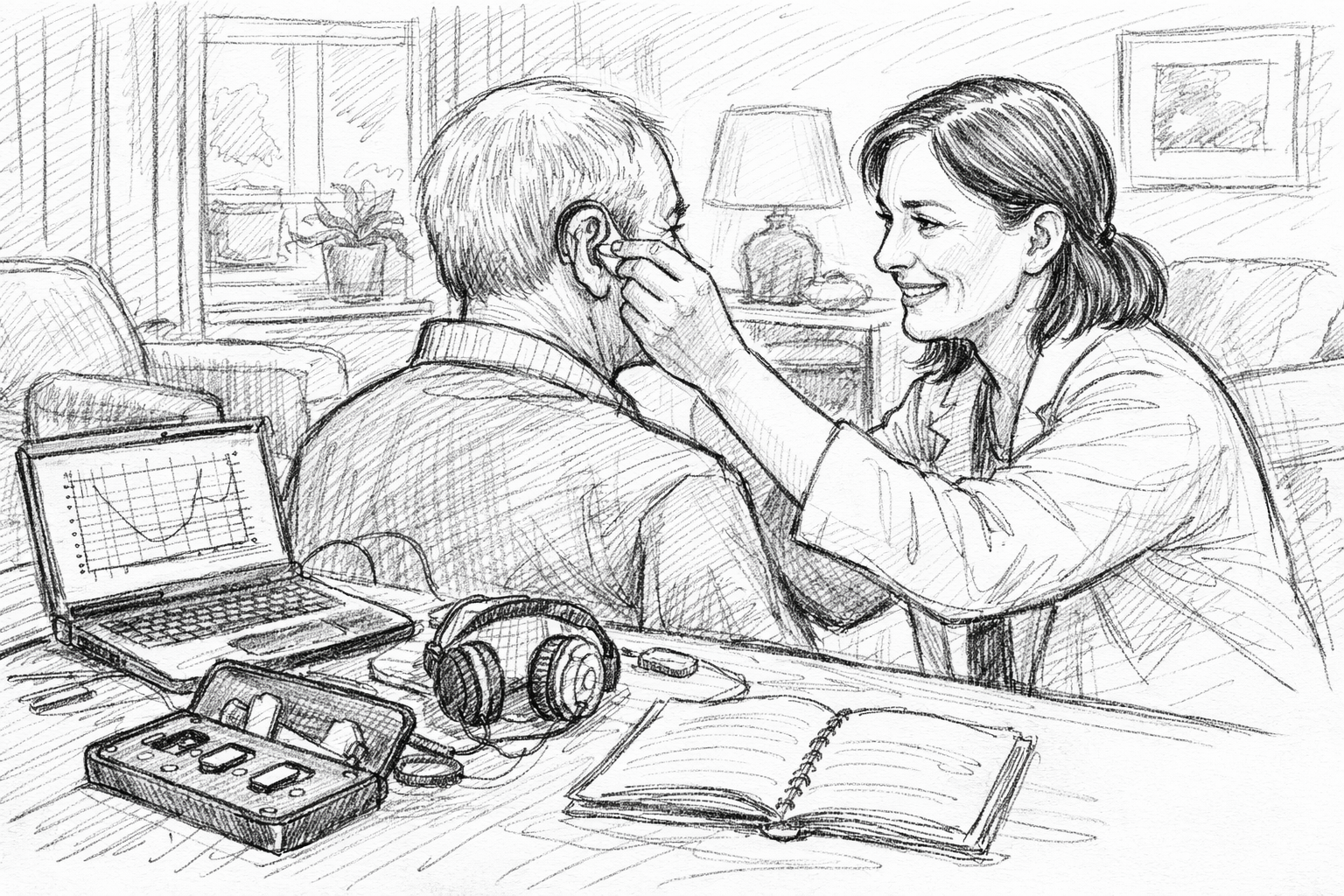 Hearing Aids
 Hearing Aids
 Hearing Aids