
Hearing Aids
8 min read

Hearing Aids Fitted at Home. Comfort, Privacy & Expert Care

February 5, 2026
Professional hearing aids fitted at home across the Midlands. Private assessments, expert fitting, and ongoing aftercare all in your own home.
Written by
Rizwan Makda
Published on
February 5, 2026

Choosing hearing aids is a personal decision. It affects how you communicate, how confident you feel, and how comfortable everyday life becomes. Yet for many people, the traditional clinic pathway  travel, waiting rooms, rushed appointments can feel overwhelming or impractical.

That’s why hearing aids fitted at home are becoming the preferred option for patients across the UK, particularly in the Midlands. Home fitting offers the same professional standards as a clinic, delivered in a calmer, more private setting  your own home.

This guide explains what home hearing-aid fitting involves, why comfort and privacy matter so much, and how expert care delivered at home can lead to better long-term outcomes.

Why More People Are Choosing Home-Fitted Hearing Aids

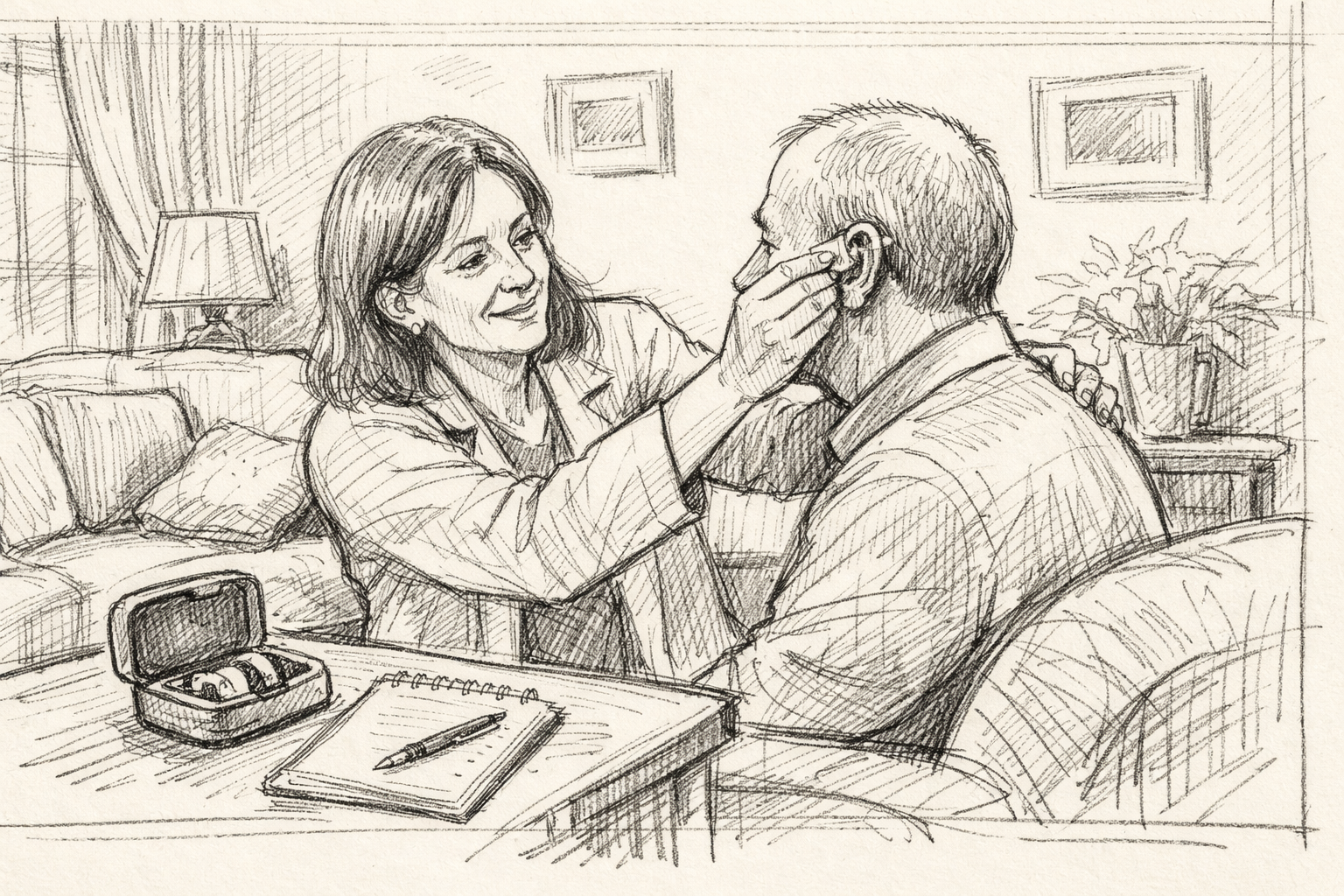
Hand-drawn, notebook-style illustration of a relaxed patient sitting at home in a comfortable chair, smiling while a hearing care professional visits and takes notes. A calm living-room setting with a coffee cup and hearing device contrasts with a small background icon showing a busy hearing clinic, emphasizing home care versus clinic care

Home-based hearing care isn’t about convenience alone. For many patients, it’s about access, dignity, and better results.

People commonly choose home hearing-aid fitting because:

  • Travel to clinics is difficult or exhausting
  • Mobility, balance, or health conditions make outings stressful
  • Anxiety increases in medical or busy environments
  • Privacy matters when discussing hearing concerns
  • They want unhurried, one-to-one care

Home visits remove these barriers entirely, allowing hearing care to fit naturally into daily life.
What Does “Hearing Aids Fitted at Home” Actually Mean?

Hand-drawn illustration of a calm home hearing aid fitting, with gentle sound waves and medical notebook details.

Hearing aids fitted at home are the same modern devices you would receive in a clinic including advanced digital and rechargeable models but fitted by a qualified hearing professional during a home visit.

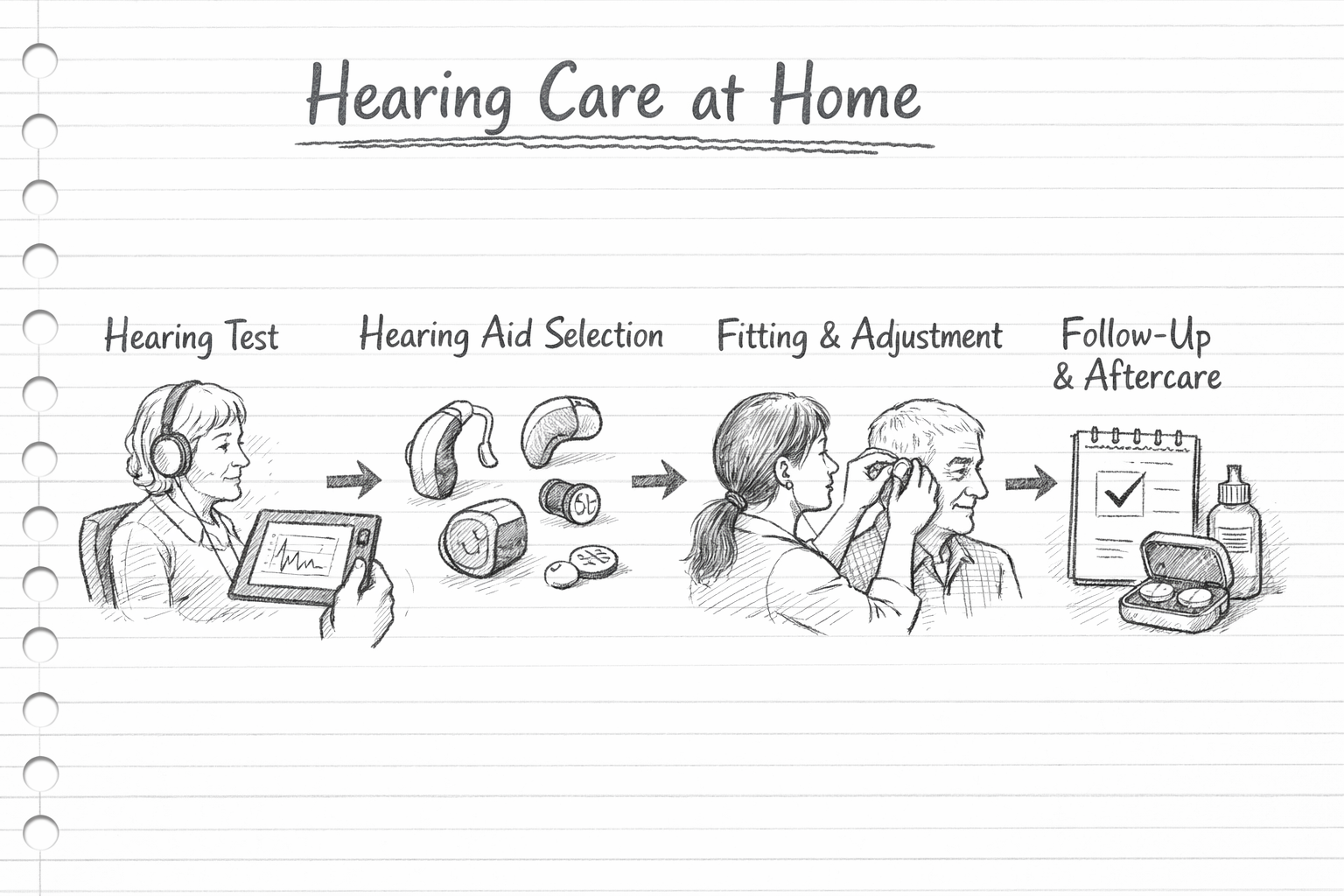
A complete home-based hearing-aid service includes:

  • A professional hearing test at home
  • Personalised hearing-aid recommendations
  • Supply of suitable hearing aids
  • Precise fitting and programming
  • Education, support, and aftercare

The difference is not the technology  it’s the experience and setting.
Comfort: Why the Home Environment Makes a Difference

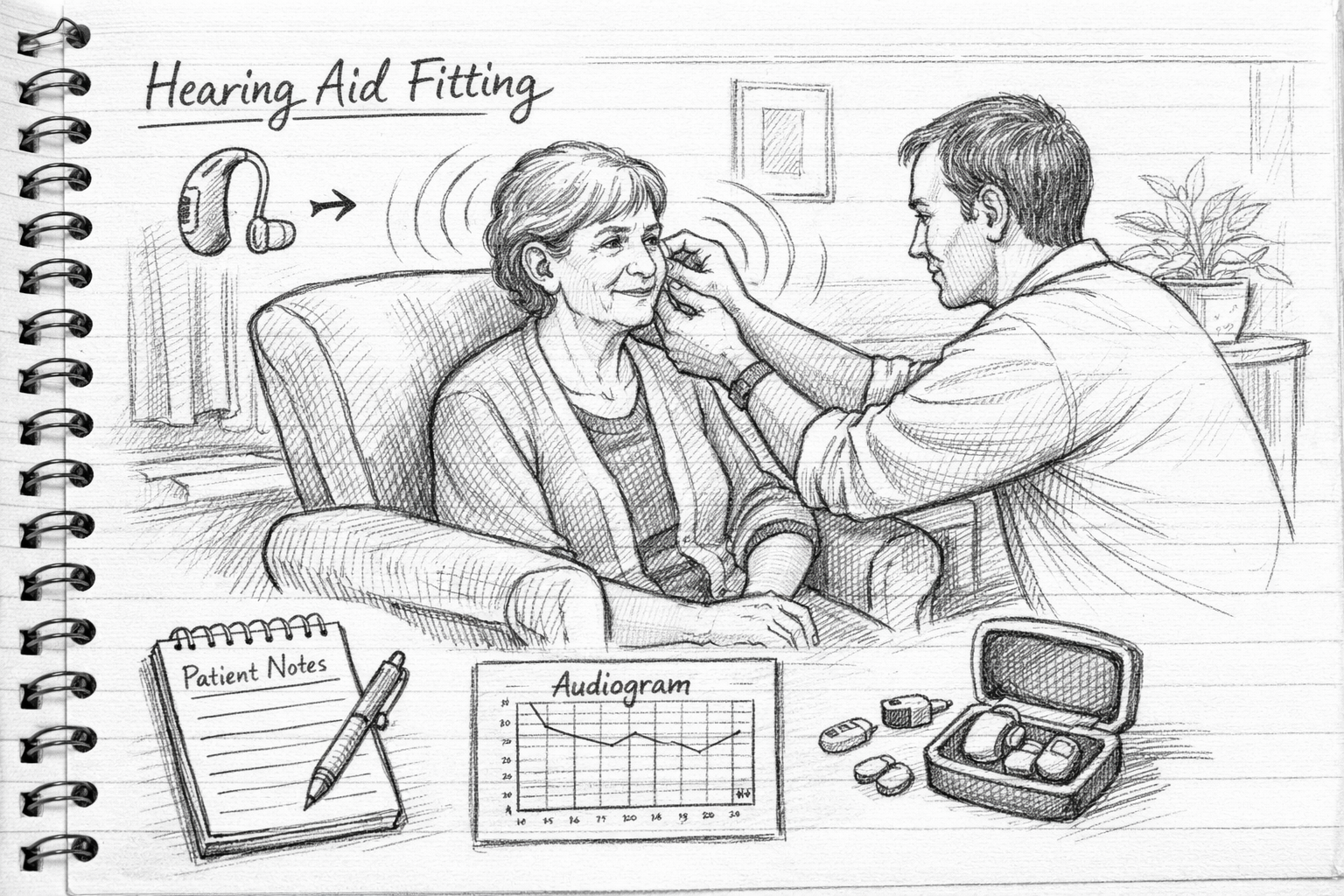
Hand-drawn illustration of a calm home hearing aid fitting, with gentle sound waves and medical notebook details.

Comfort is not a luxury in hearing care; it directly affects outcomes.

When hearing aids are fitted at home:

  • Patients are more relaxed
  • Communication is clearer
  • Appointments are unhurried
  • Adjustments are more accurate

Hearing aids fitted in a calm environment are more likely to be accepted and used consistently. Anxiety or discomfort during fitting can make new sounds feel overwhelming, leading to rejection of the devices.

At home, patients adjust gradually, in surroundings they already understand.
Privacy: A Key Benefit Many People Overlook

Hand-drawn notebook-style sketch showing portable audiology equipment used in both a clinic and a home, with an equal sign highlighting equivalent care.

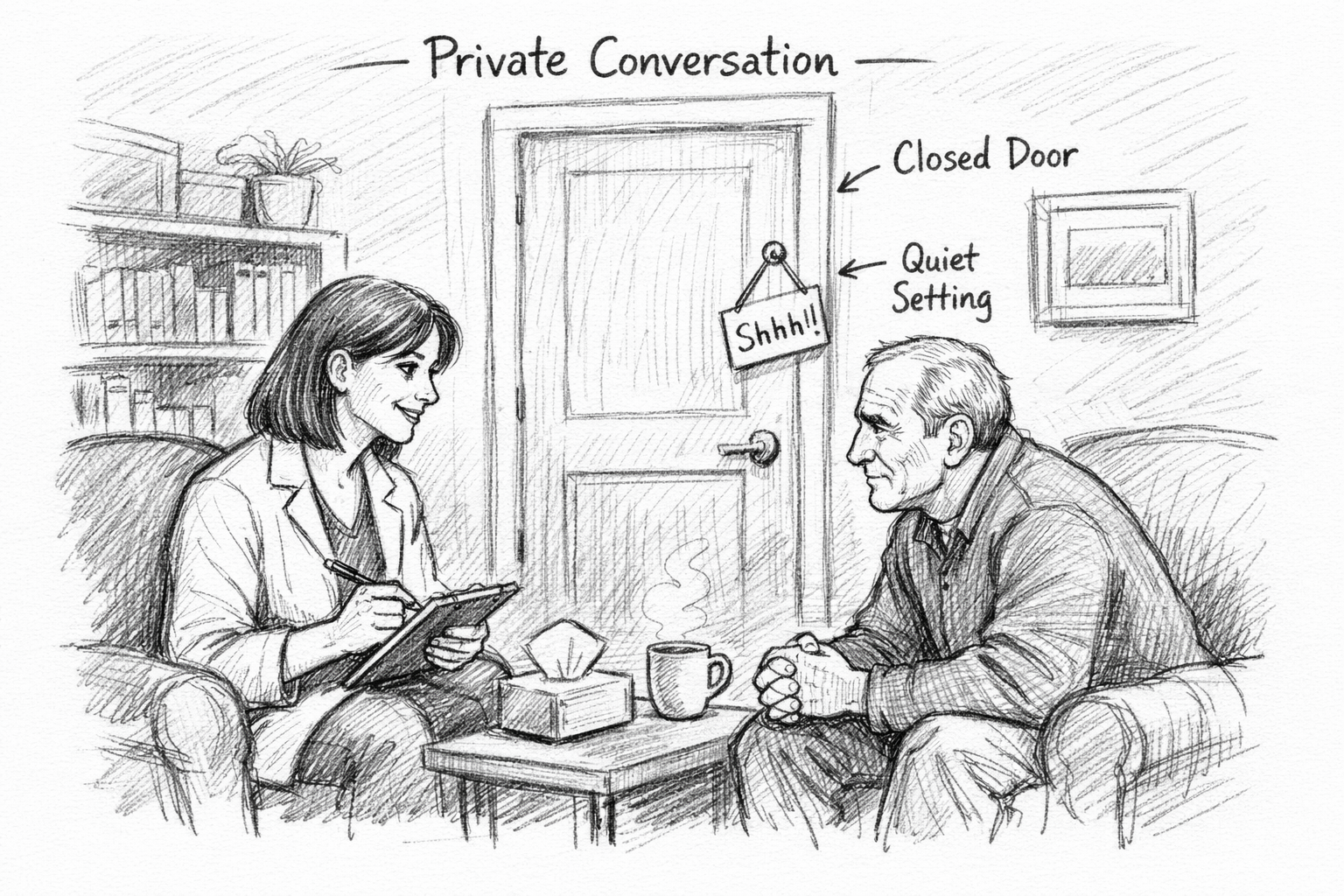
Hearing concerns are personal. Some people feel uncomfortable discussing them in public spaces or clinics with thin walls and busy waiting rooms.

Home fitting offers:

  • Complete privacy
  • Discreet conversations
  • No fear of being overheard
  • Greater confidence asking questions

For many older adults and first-time hearing-aid users, this privacy makes it easier to engage honestly with the process.

Expert Care Doesn’t Stop at the Clinic Door

Hand-drawn notebook-style sketch showing portable audiology equipment used in both a clinic and a home, with an equal sign highlighting equivalent care.

There’s a misconception that home services are “less professional” than clinic-based care. In reality, modern audiology equipment is fully portable, allowing clinicians to deliver clinical-grade assessments and fittings in the home.

Expert home care includes:

  • Qualified hearing professionals
  • Calibrated testing equipment
  • Evidence-based fitting protocols
  • Ongoing professional support

The expertise comes from the clinician  not the building.

Step 1: Professional Hearing Test at Home

Every successful hearing-aid fitting begins with a thorough assessment.

A home hearing test typically includes:

  • A detailed discussion of hearing concerns
  • Medical and lifestyle history
  • Examination of ear health (including earwax checks)
  • Accurate hearing assessment using portable audiology equipment

Results are explained clearly, without jargon, so patients and families fully understand the findings.

Learn more about Home Hearing Tests at /hearing-test
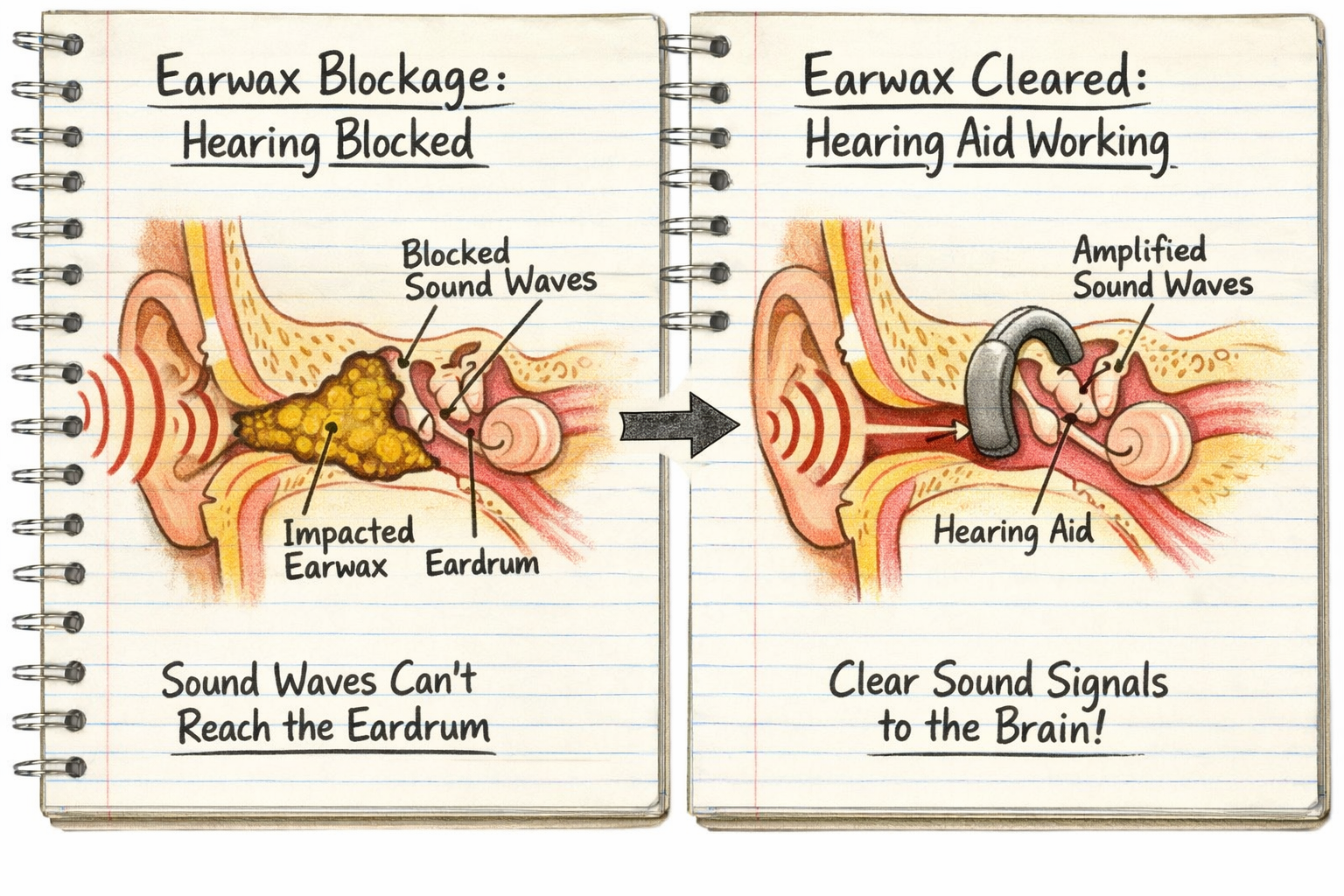
Earwax Checks: An Essential Part of Accurate Fitting

Earwax build-up is one of the most common causes of hearing difficulty and can significantly affect hearing-aid performance.

During a home assessment, earwax is checked carefully. If wax is present:

  • Hearing-aid fitting may be postponed
  • Safe removal (such as microsuction) can be arranged
  • Results are reassessed once ears are clear

This ensures hearing aids are recommended only when appropriate.

Professional Microsuction Earwax Removal at Home /earwax-removal

Step 2: Choosing the Right Hearing Aids for You
Hand-drawn notebook-style sketch comparing hearing aid types—BTE, RIC, and discreet—with labeled illustrations.

Not all hearing aids are suitable for every person. Expert home fitting focuses on matching technology to real-world needs, not selling the most advanced device.

Factors considered include:

  • Degree and type of hearing loss
  • Daily listening environments
  • Manual dexterity and eyesight
  • Previous hearing-aid experience
  • Comfort and cosmetic preferences

Types of Hearing Aids Commonly Fitted at Home

  • Behind-the-ear (BTE) hearing aids
  • Receiver-in-canal (RIC) hearing aids
  • Discreet or near-invisible models
  • Rechargeable hearing aids
  • Bluetooth-enabled devices

Private Hearing Aids vs NHS Pathways

Many patients ask whether private home-fitted hearing aids are worth considering.

NHS Hearing Aids
  • Free of charge
  • Limited choice of models
  • Longer waiting times
  • Clinic-based fitting only

Private Hearing Aids Fitted at Home

  • Wider choice of modern technology
  • Faster access
  • Home-based assessments and fittings
  • Dedicated aftercare and follow-up

For many patients, private home fitting offers greater flexibility and continuity of care.

Step 3: Hearing Aid Fitting Why This Stage Matters Most

Hearing-aid fitting is not just placing a device behind the ear. It’s a process of fine-tuning sound to the individual brain.

During a home fitting, the clinician:

  • Programmes hearing aids to precise hearing levels
  • Adjusts sound clarity and comfort
  • Ensures physical fit is secure and comfortable
  • Tests speech understanding
  • Makes real-time adjustments based on feedback

Home fitting allows more time for this critical stage, reducing the need for repeated adjustments later.

Learning to Use Hearing Aids at Your Own Pace

New hearing aids require an adjustment period. Sounds may feel sharper or unfamiliar at first.

At home, patients can:

  • Practise inserting and removing devices
  • Learn cleaning and charging routines
  • Ask questions without pressure
  • Involve family or carers

This education phase is often rushed in clinics but is essential for long-term success.

Why Aftercare Is as Important as the Hearing Aids

Hearing aids are not “fit-and-forget” devices. Without proper aftercare, even high-quality aids can become uncomfortable or ineffective.

Professional aftercare includes:

  • Follow-up adjustments
  • Hearing-aid cleaning and maintenance
  • Monitoring changes in hearing
  • Ongoing advice and reassurance

Home-based aftercare ensures support remains accessible, especially as needs change over time.

Hearing Aids Fitted at Home for Elderly Patients

Older adults often benefit most from home-based hearing care.

Advantages include:

  • No travel or fatigue
  • Familiar surroundings reduce anxiety
  • Slower, clearer explanations
  • Carers can be present

This approach often leads to better hearing-aid acceptance and daily use.

Hearing Aids for Patients with Mobility or Health Challenges

For individuals with mobility limitations, chronic conditions, or balance issues, home fitting removes physical barriers entirely.

Care is delivered safely, comfortably, and without compromising quality.

Home Fitting vs Clinic Fitting: Is Accuracy the Same?

Yes. When delivered by a qualified professional, hearing aids fitted at home are just as accurate as clinic fittings.

In many cases, they are more effective because:

  • The environment is calmer
  • Appointments are longer
  • Adjustments are based on real-life listening situations

Areas Served Across the Midlands

Map-Areas Served Across the Midlands

Home hearing-aid fitting is particularly valuable across the Midlands, including:

  • Birmingham
  • Coventry
  • Leicester
  • Nottingham
  • Wolverhampton
  • Derby
  • Solihull
  • Surrounding towns and villages

Home visits ensure specialist care is accessible even outside major city centres.

Common Questions About Home-Fitted Hearing Aids

Will I be pressured to buy hearing aids?
No. Ethical providers focus on assessment, education, and informed choice.

Are home visits suitable for first-time users?
Yes. In fact, first-time users often adjust better at home.

Is home fitting more expensive?
Costs are often comparable to clinic services when aftercare is included.

When Home-Fitted Hearing Aids Are the Best Choice

Home hearing-aid fitting is ideal if you:

  • Value comfort and privacy
  • Prefer one-to-one care
  • Have mobility or travel challenges
  • Want ongoing support at home

Final Thoughts: Hearing Care That Respects Your Space

Hearing aids are more than technology  they are part of everyday life. Where and how they are fitted matters.

Hearing aids fitted at home combine expert care with comfort, privacy, and personal attention. For many people across the Midlands, this approach leads to better understanding, better adjustment, and better long-term outcomes.

If you or a loved one are considering hearing aids, home fitting may be the most supportive and effective option.

Complete Hearing Care Near You
We provide professional earwax removal, accurate hearing tests, and expert hearing aid services all in one place. Our experienced team is here to help you hear clearly, comfortably, and with confidence.
Read about our privacy policy.
Thank you! Your submission has been received!
Oops! Something went wrong while submitting the form.

Struggling with Your Hearing? We're Here to Help.

Struggling with your hearing? We offer safe, professional earwax removal across the Midlands — with home visits in Leamington Spa, Nottingham, Leicester, Dudley, Peterborough, Corby, Coventry, and Nuneaton.

A English young man point at book an appointment